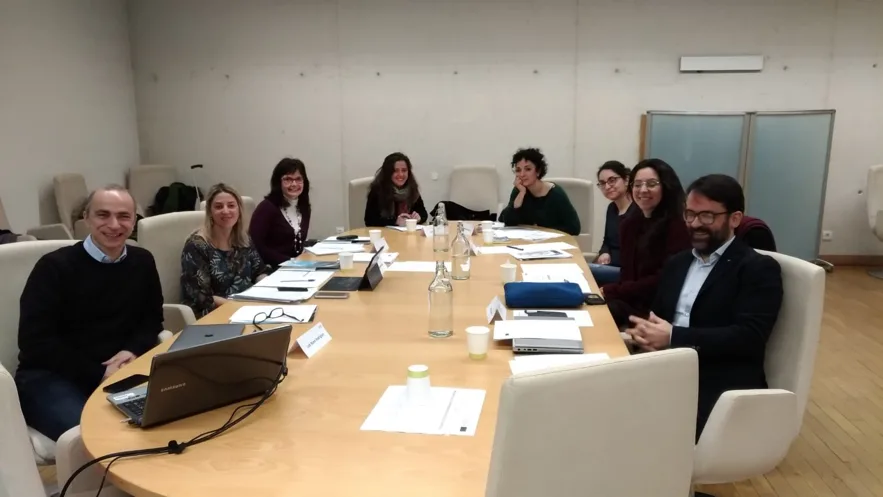
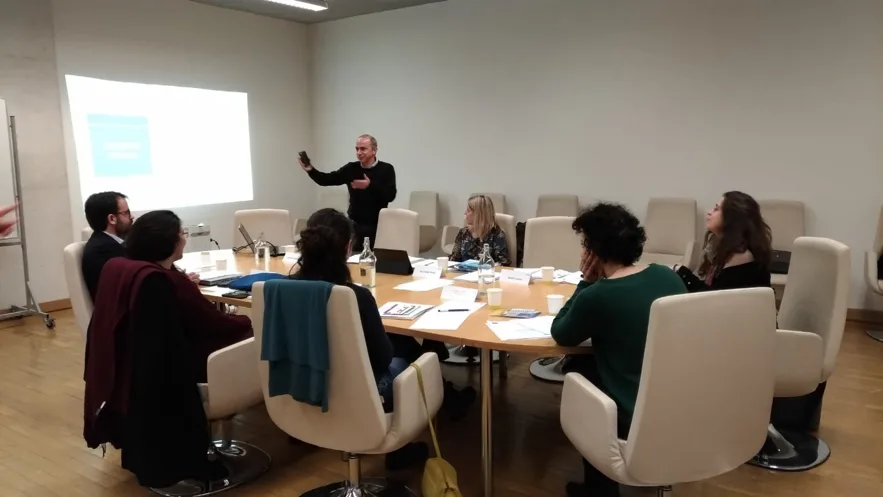
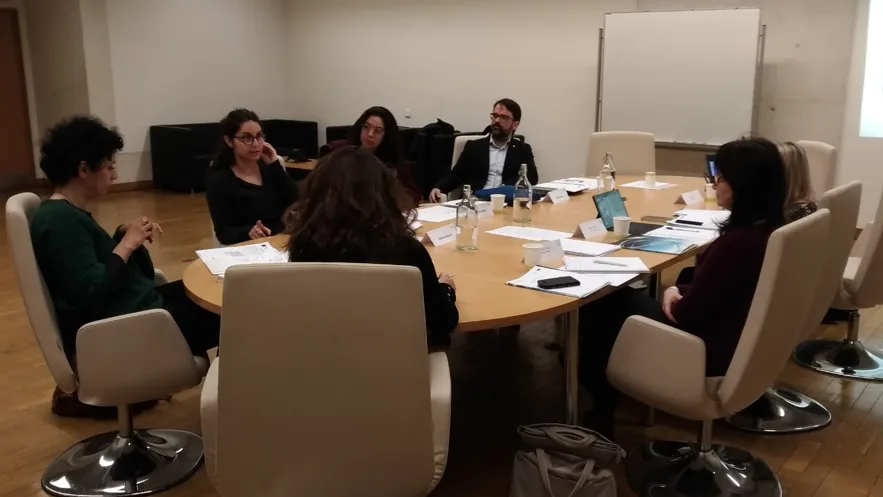
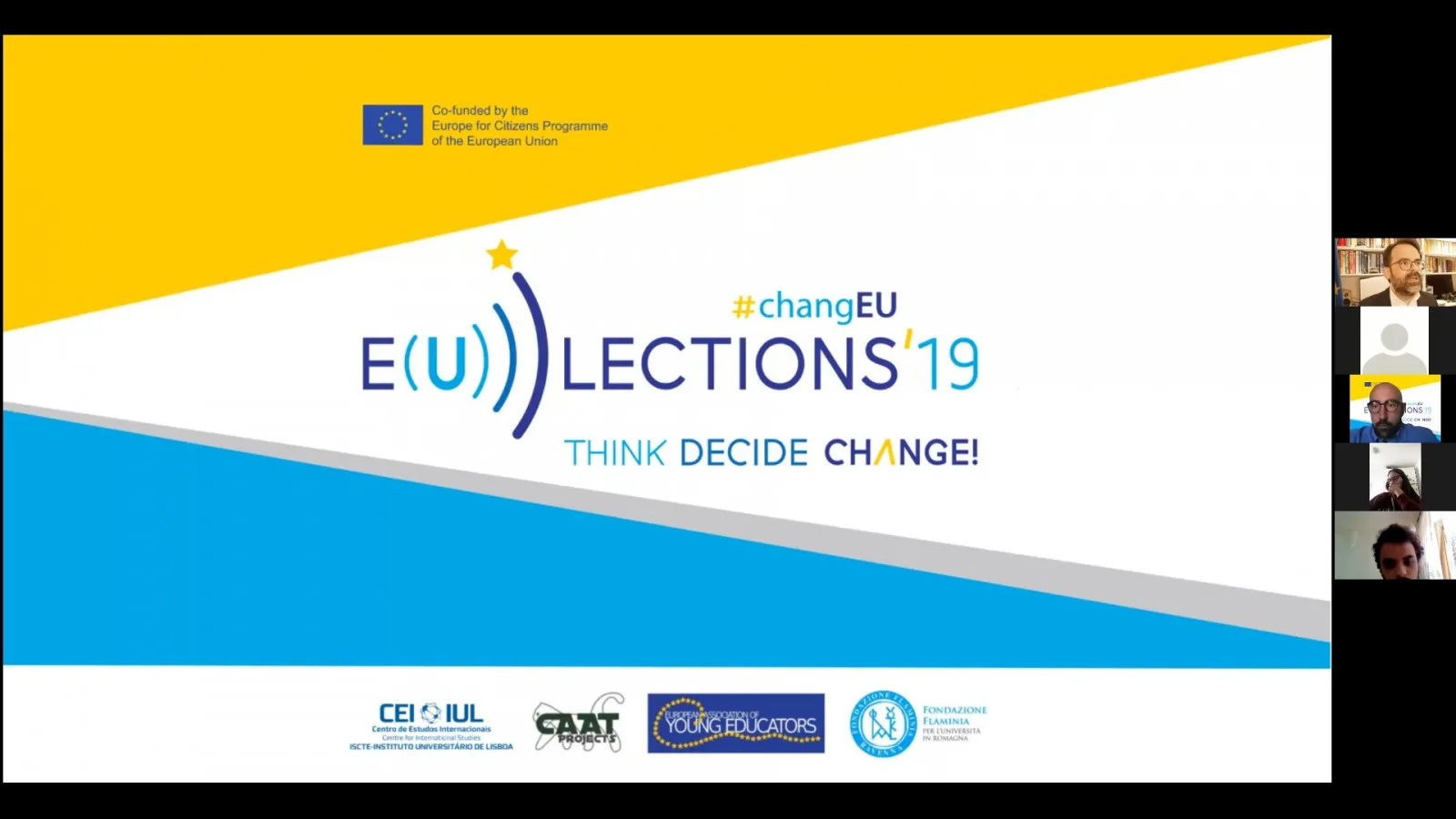
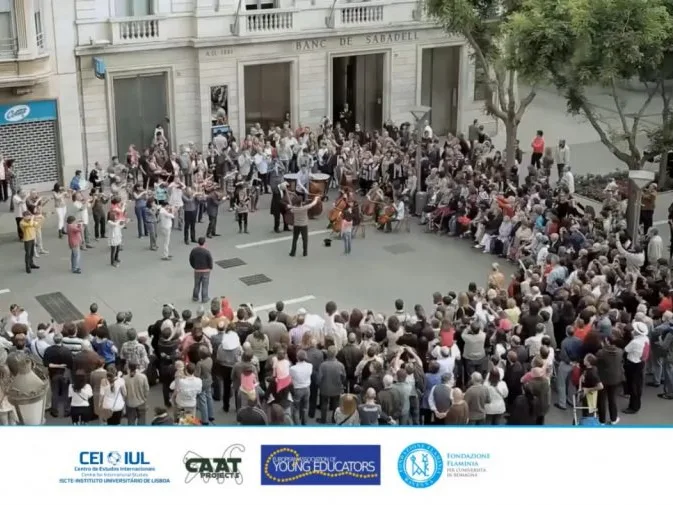
The kick-off meeting of EULECTIONS’19 took place at Iscte- Instituto Universitário de Lisboa, Lisbon, Portugal, on January, 24, 2019.
It was the first time that the representatives from the four organizations, CEI-Iscte and EAYE (Portugal), Fondazione Flaminia (Italy) and CAAT Projects (The Netherlands) had the chance to meet in person, discuss general ideas about the project and set common outputs.
This full day preparatory activity involved 8 participants (5 from Portugal, 2 from Italy, 1 from The Netherlands) in brainstorming and planning sessions to prepare the project’s activities, develop the communication strategy, reflect about methods and evaluation.
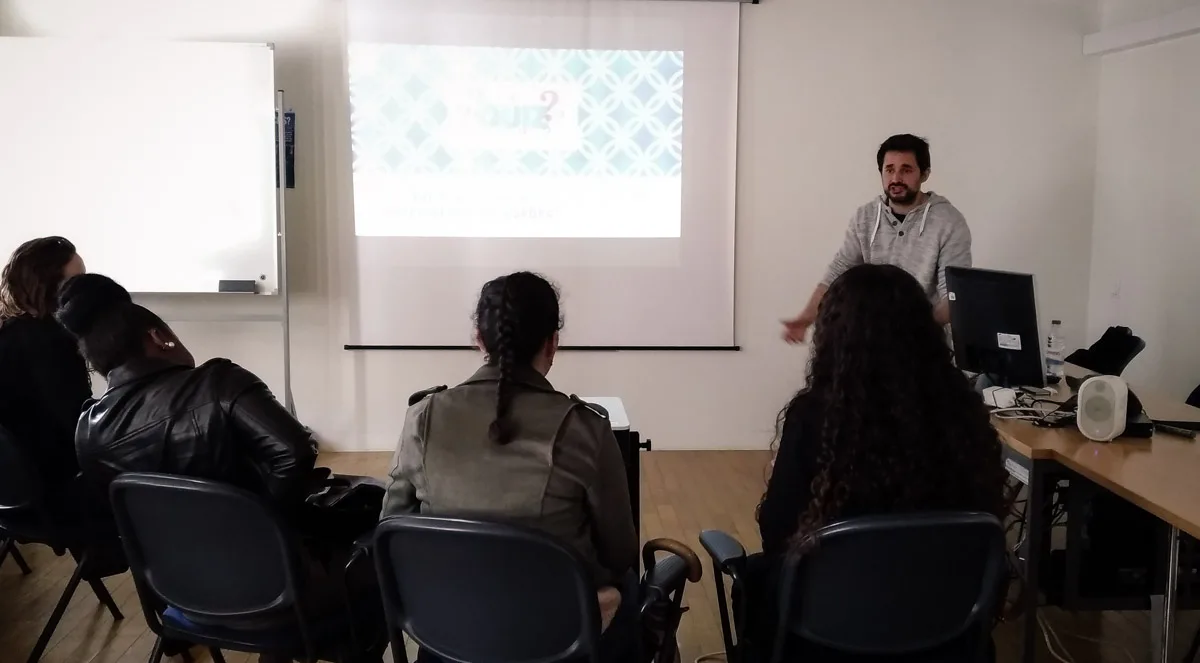
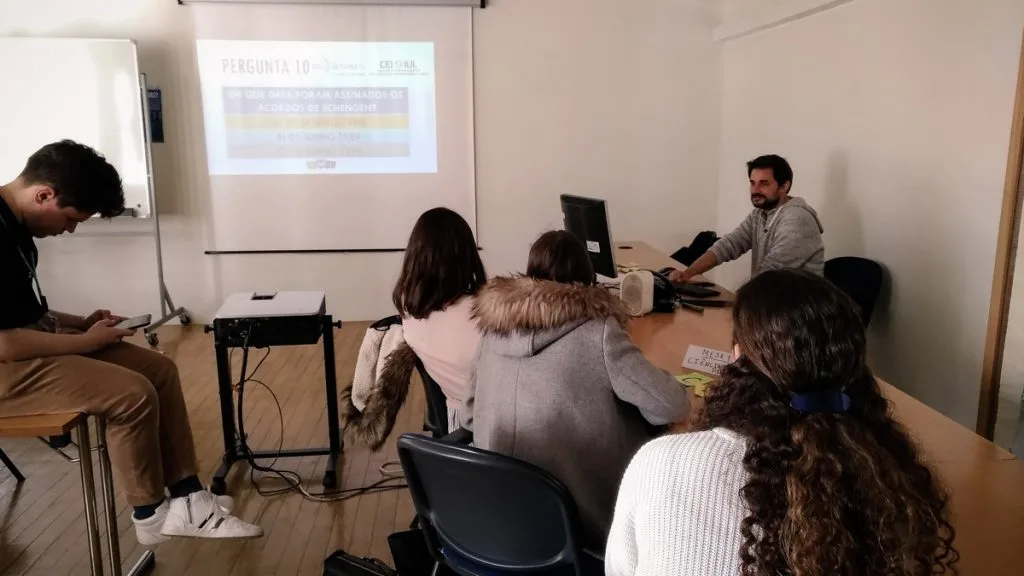
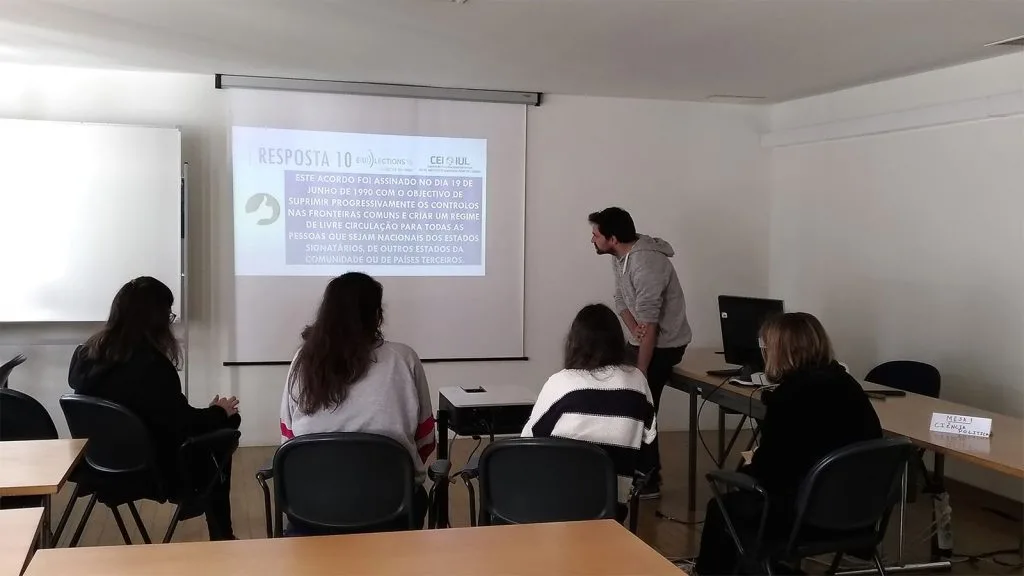
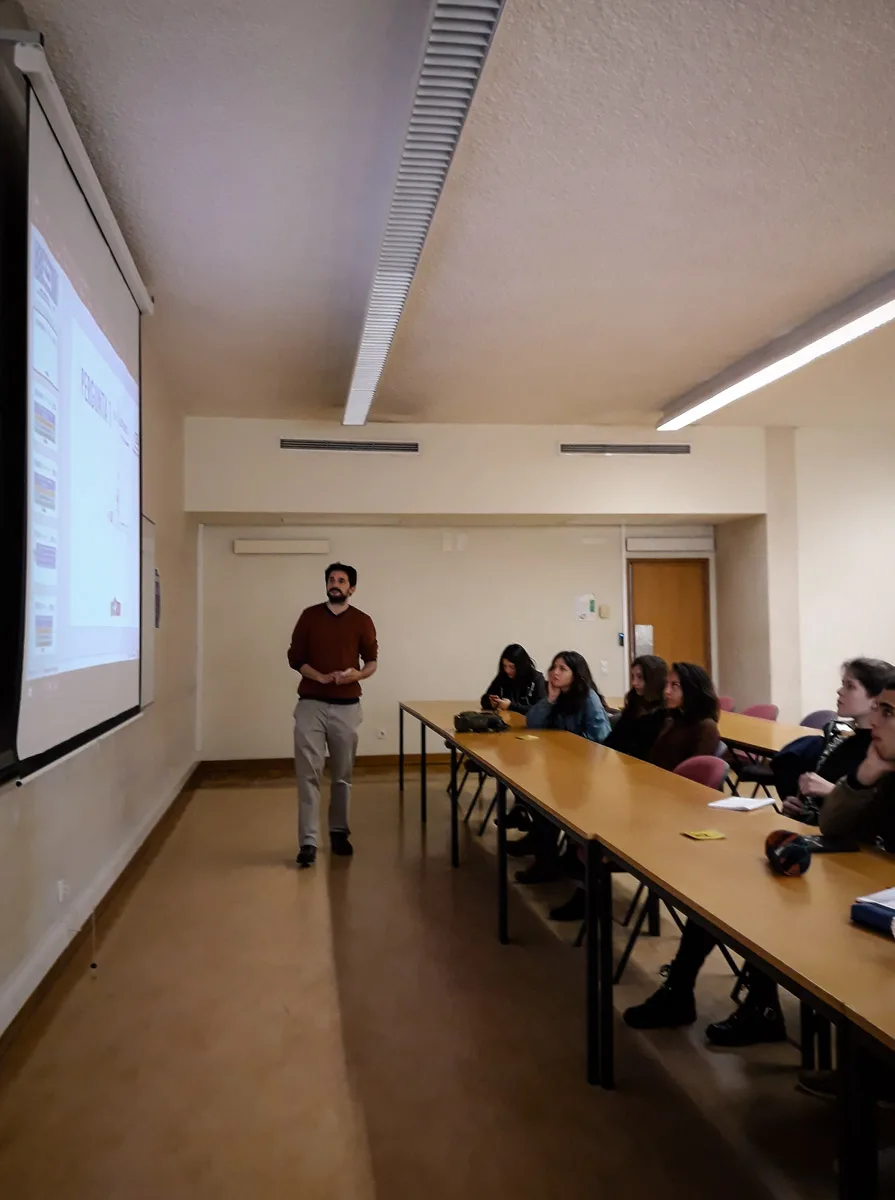
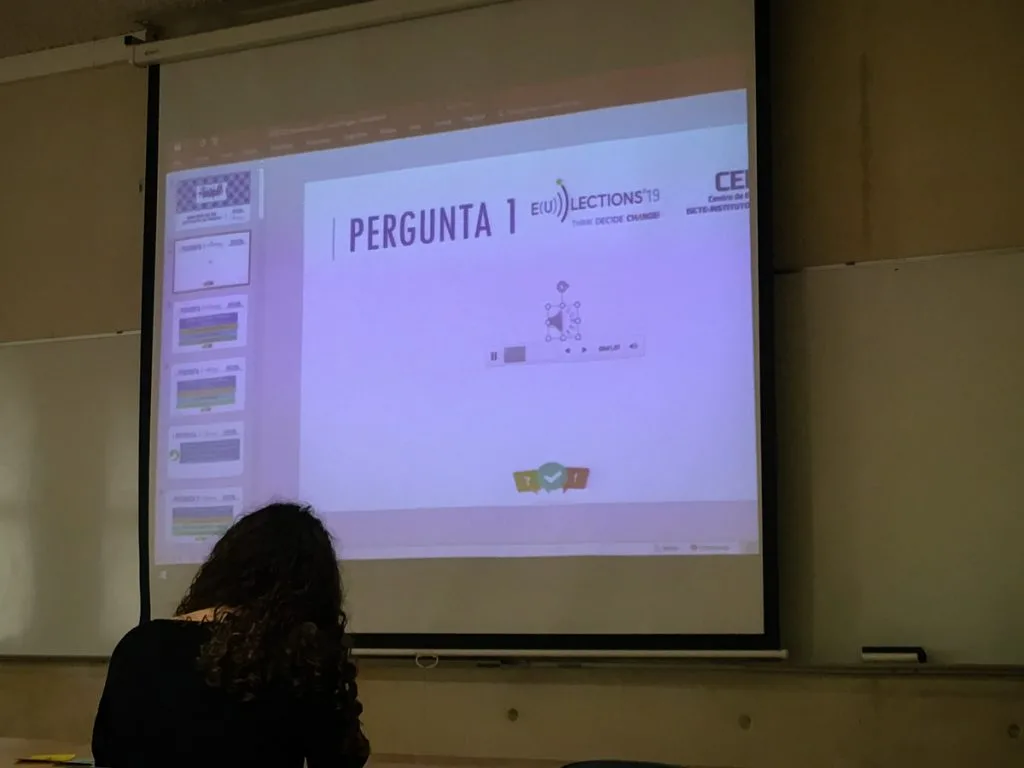
On April, 9, 2019, an initiative for high school students took place at ISCTE-IUL. The Academy ISCTE-IUL opens the doors of the University to the students and gives them the opportunity to live and experience the university and the job market.
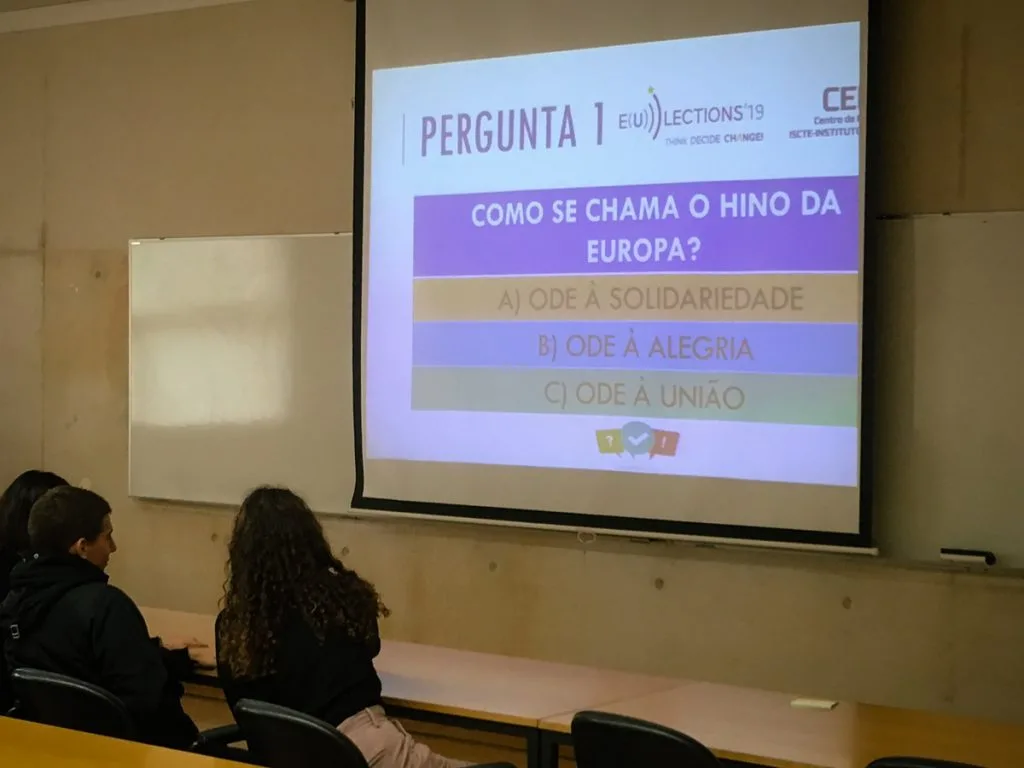
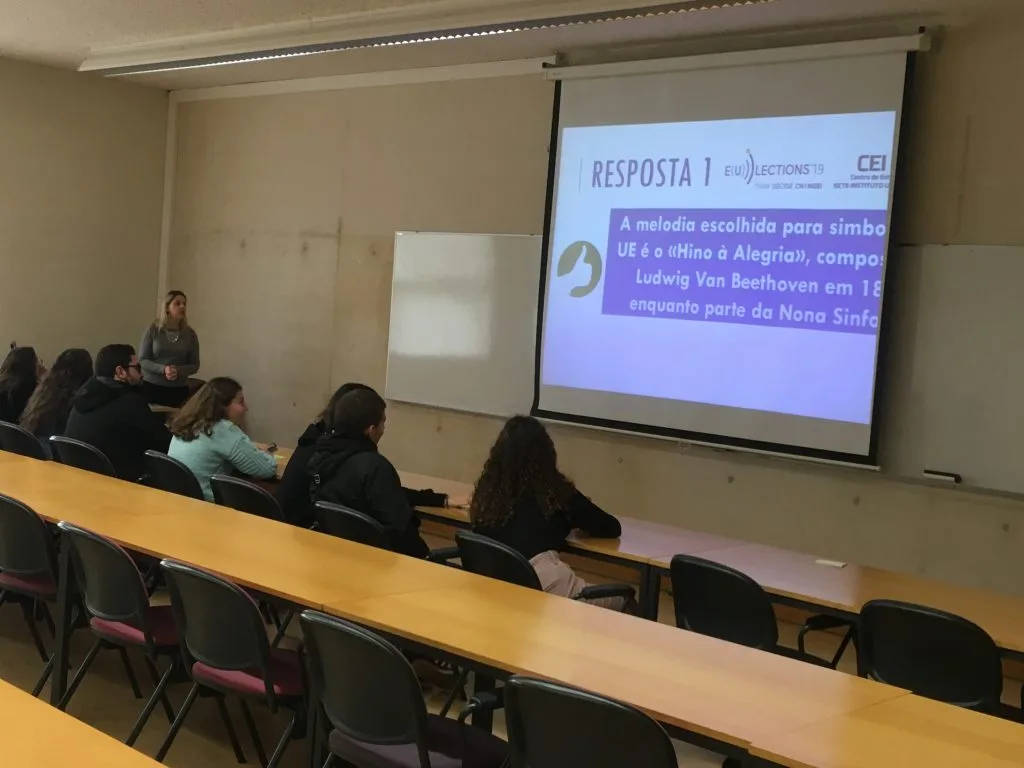
This was a great opportunity to present the EULECTIONS’19 project, through a quiz with questions about the European Union and a debate, to students who will vote for the first time in the forthcoming elections for the European Parliament.
E(u)lections´19: Think, Decide, Change! was represented by its project manager, and was also a great opportunity to collect inputs from young people in the preparation of the project’s activities.
The second edition of Academy ISCTE-IUL happened on the 17th April and it was an opportunity to present the project to high school students and collect inputs from young citizens regarding the project’s activities. Through the “Who wants to be Euromillionaire” quiz and a debate, they had an opportunity to know more about European Union and about the objectives of E(u)lections´19 project, which was represented by the project coordinator and project manager.
The students were also invited to participate on the first event of the project which will take place on 10th May at ISCTE-IUL.
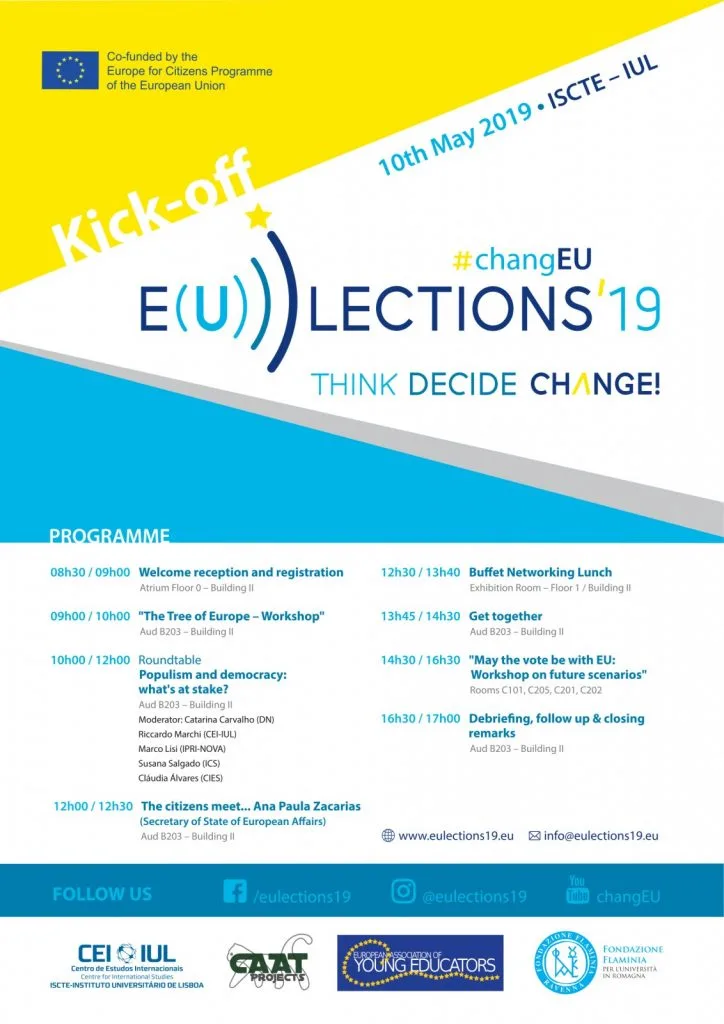
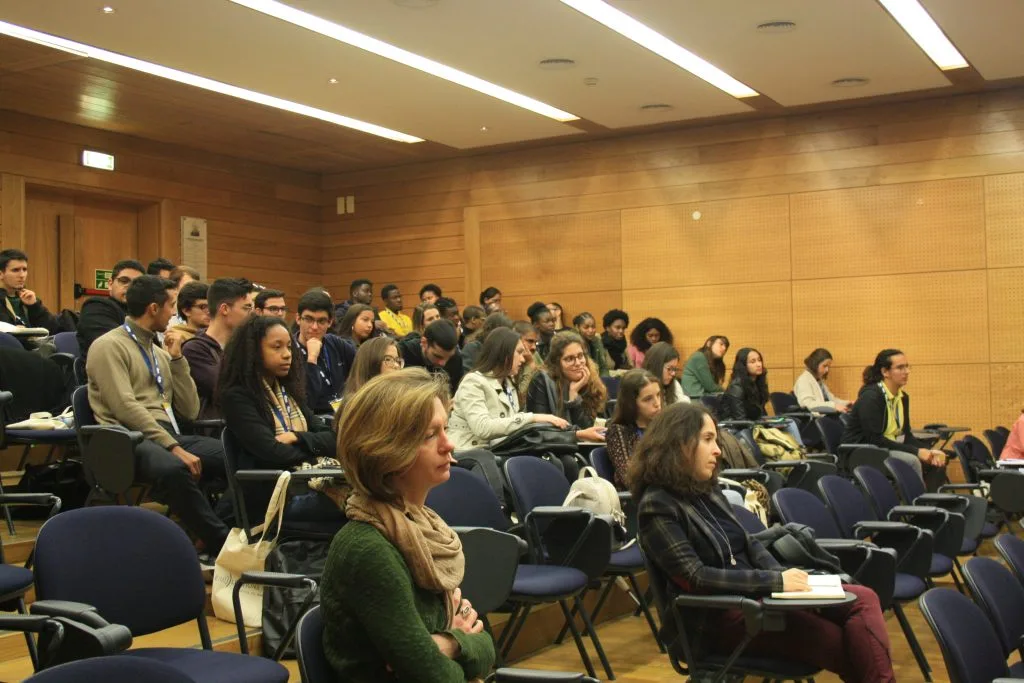
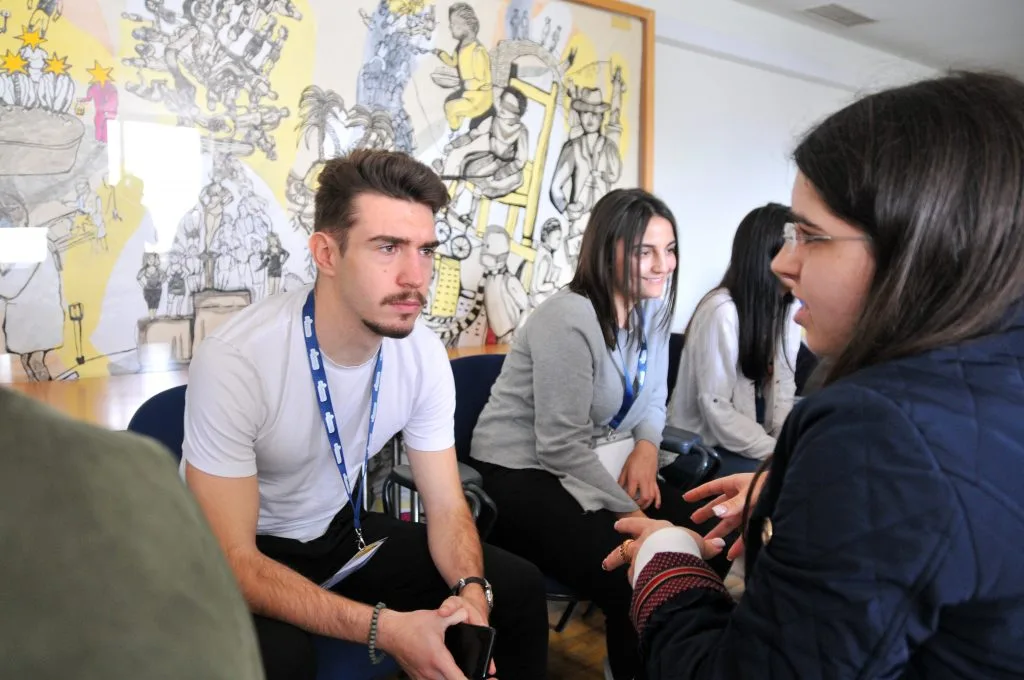
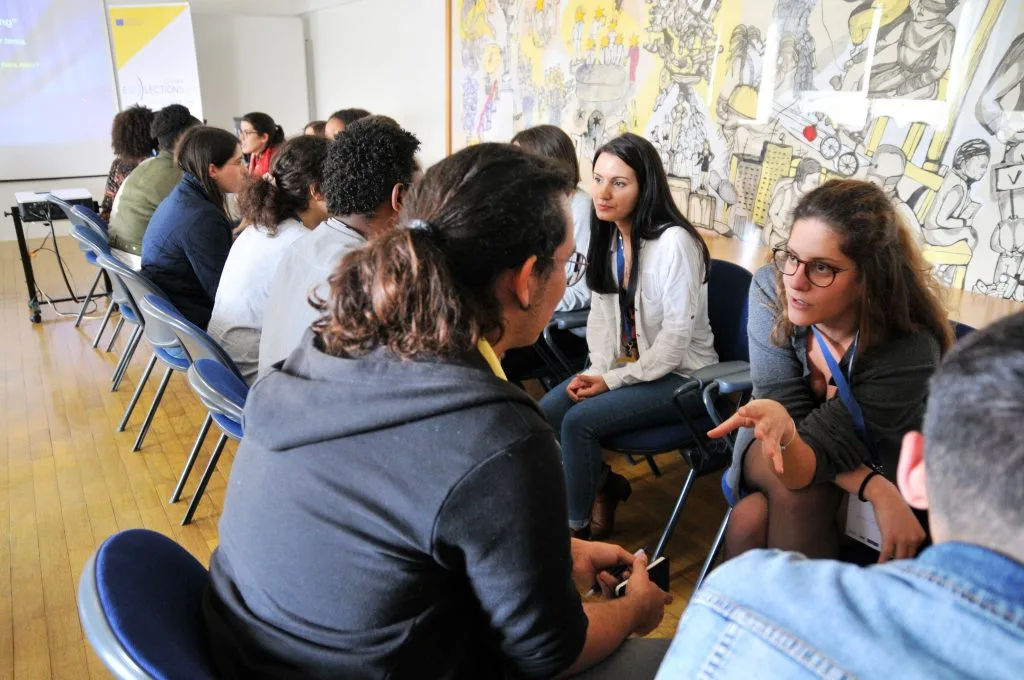
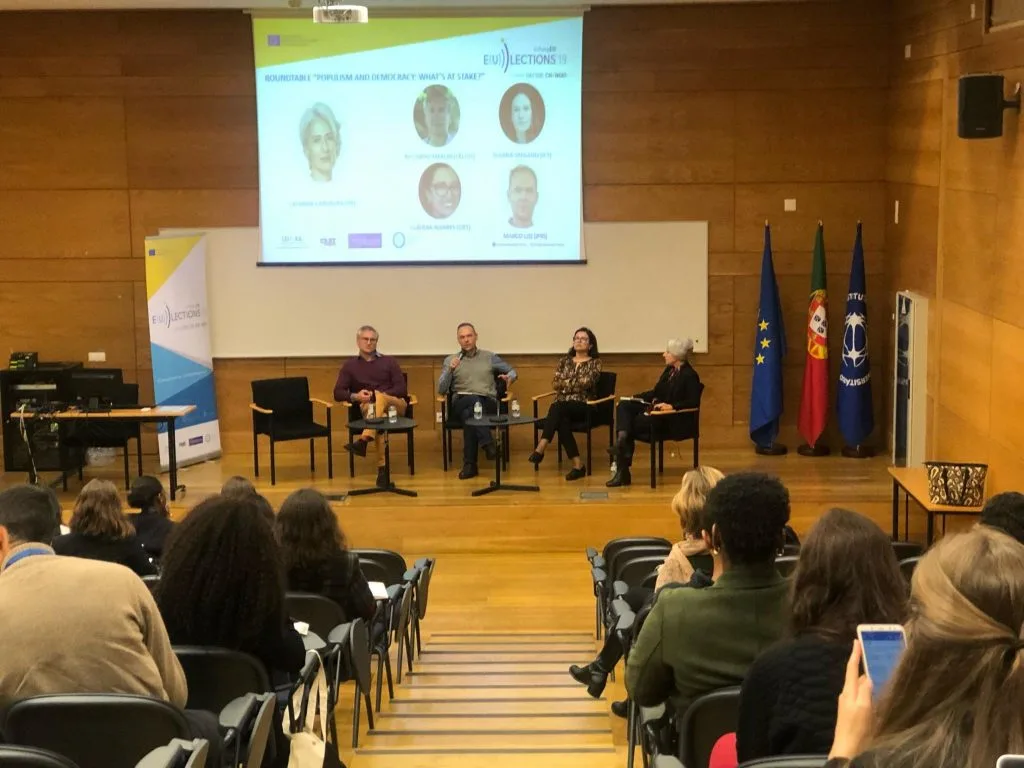
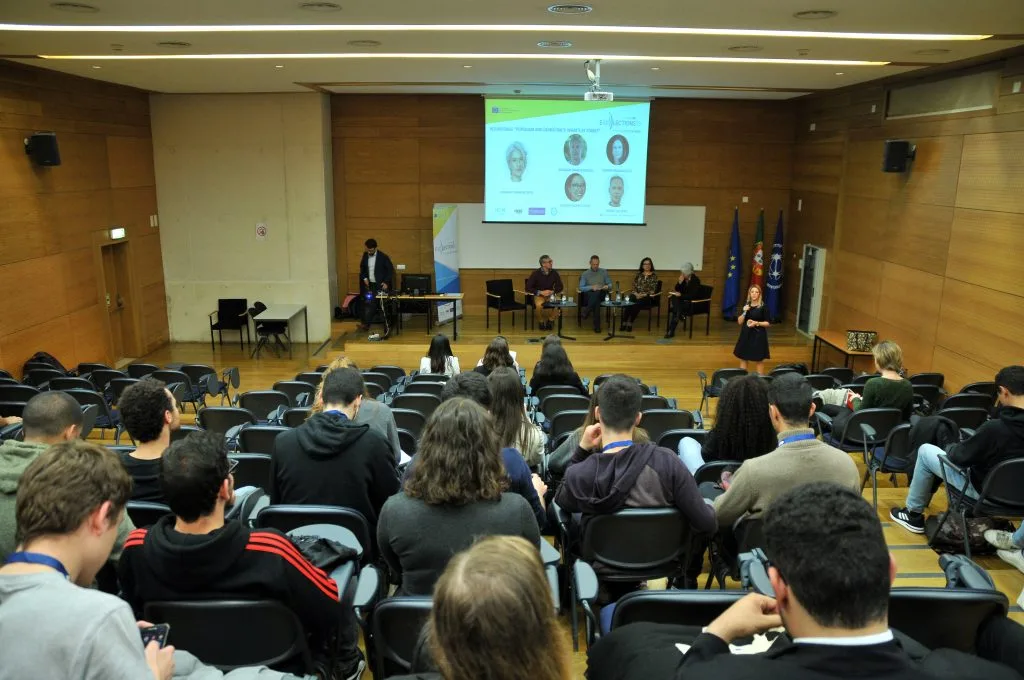
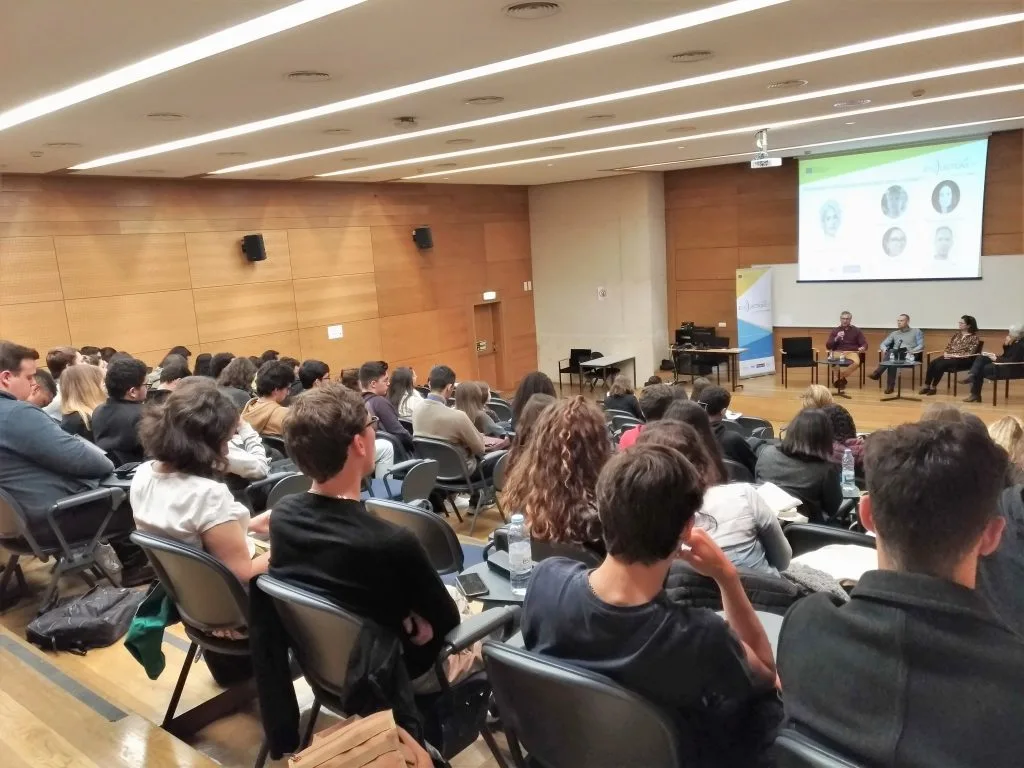
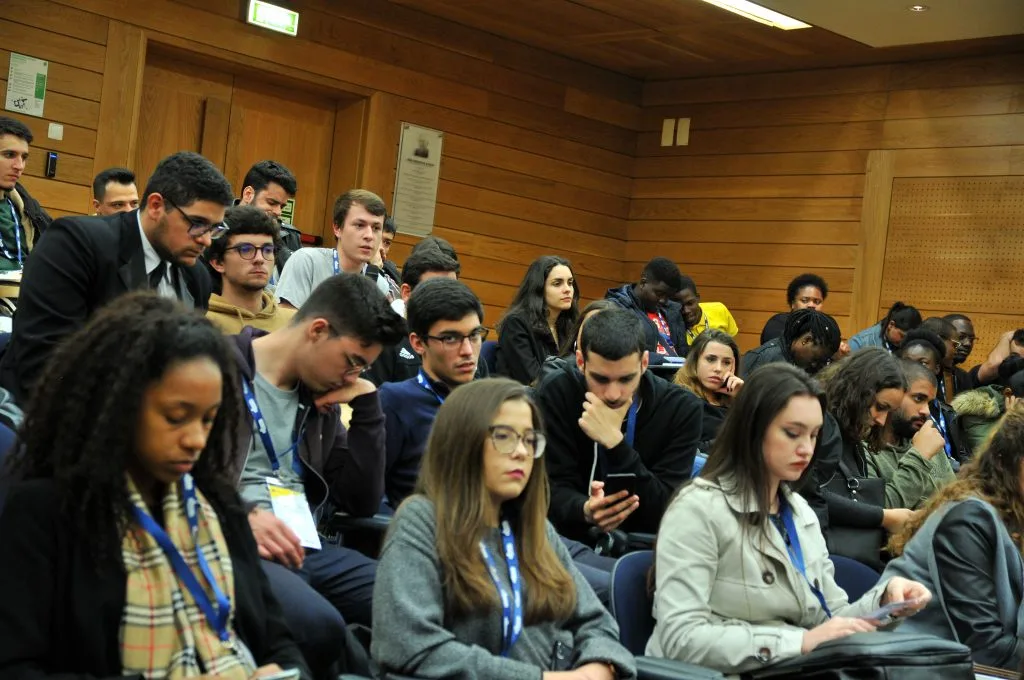
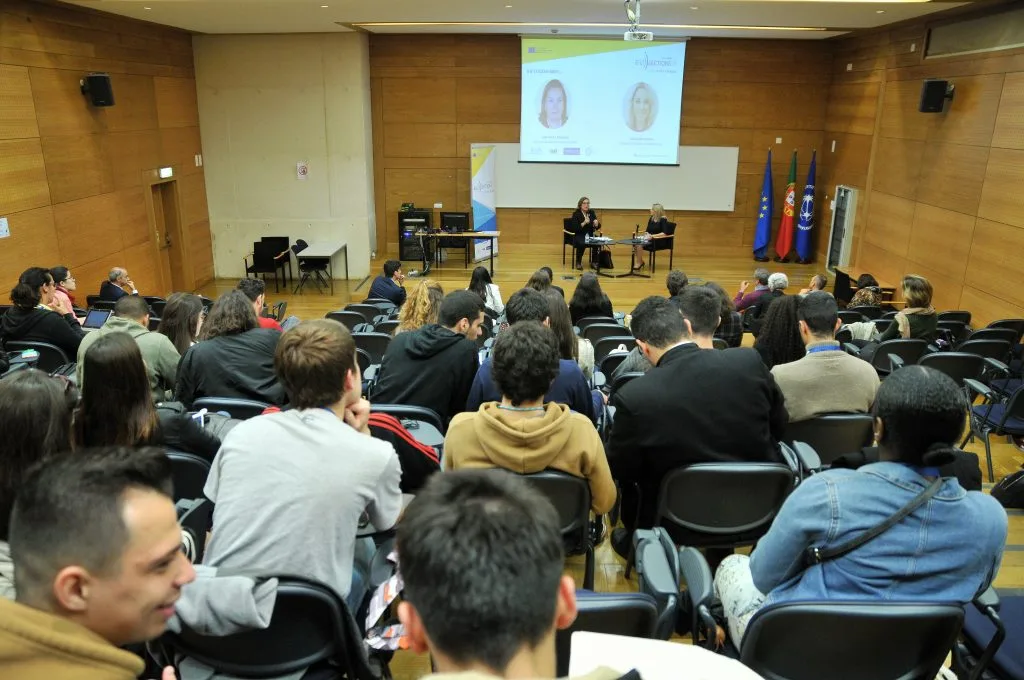
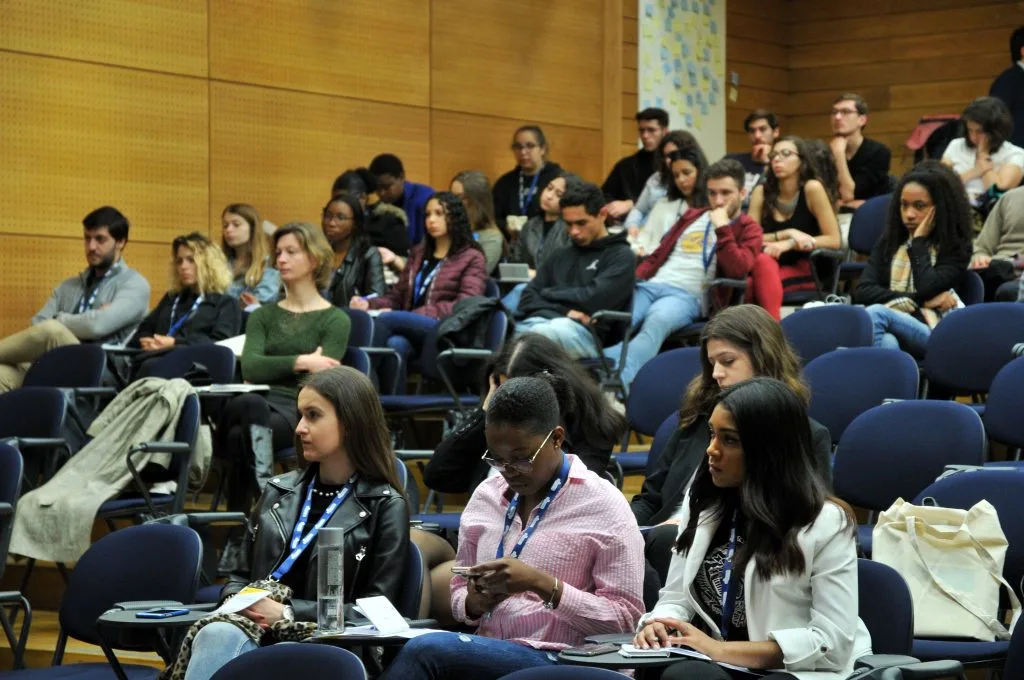
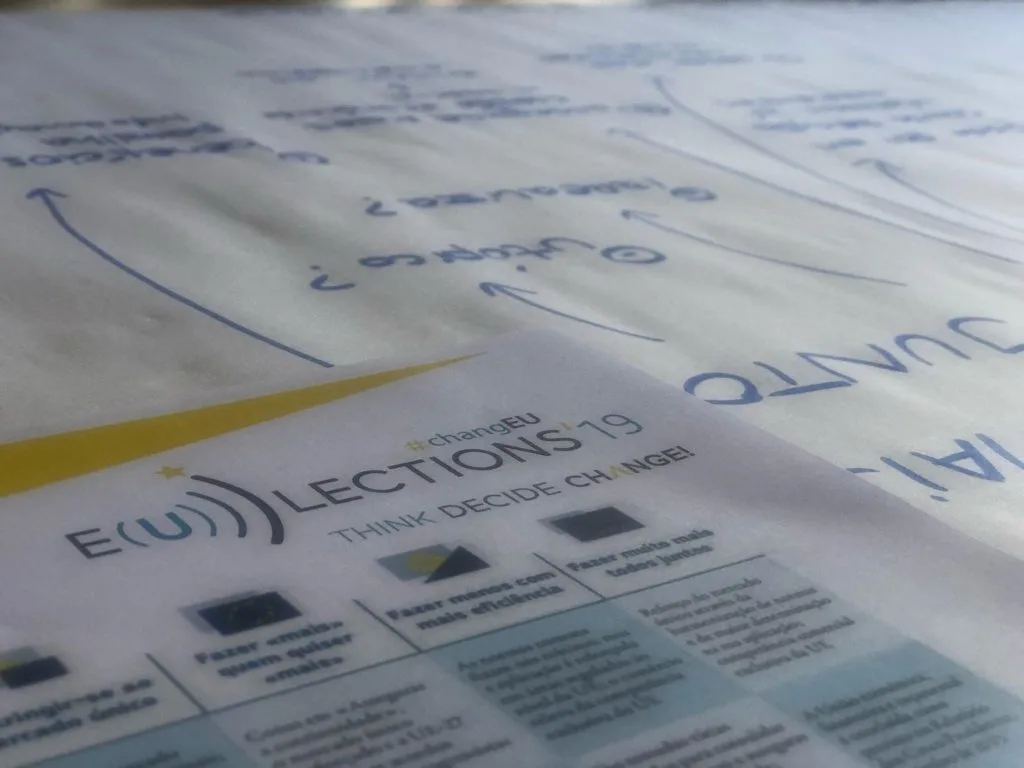
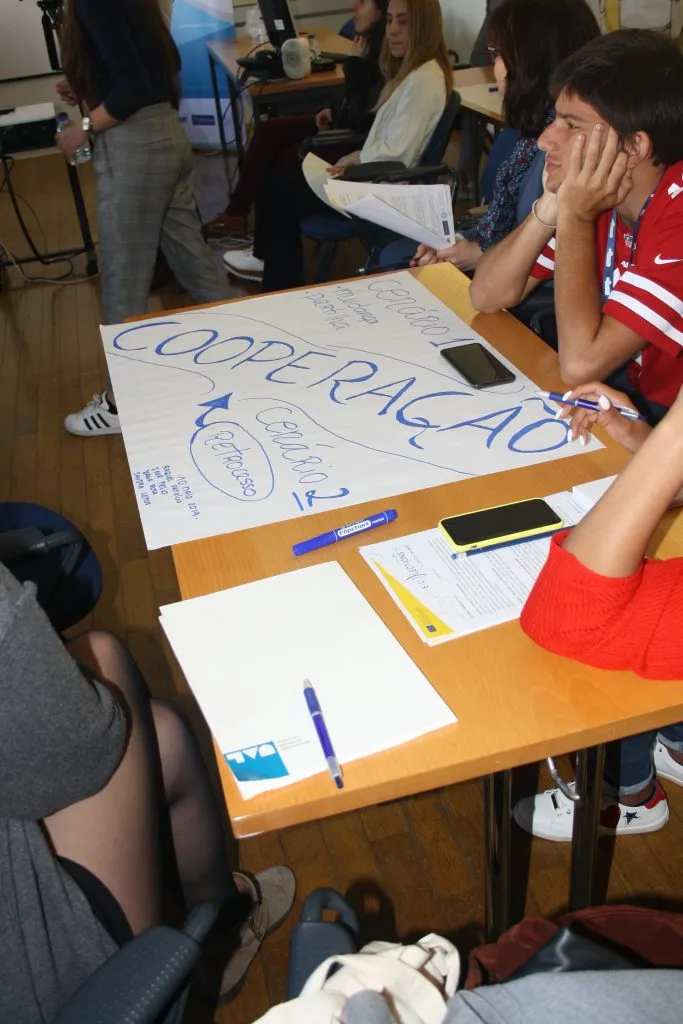
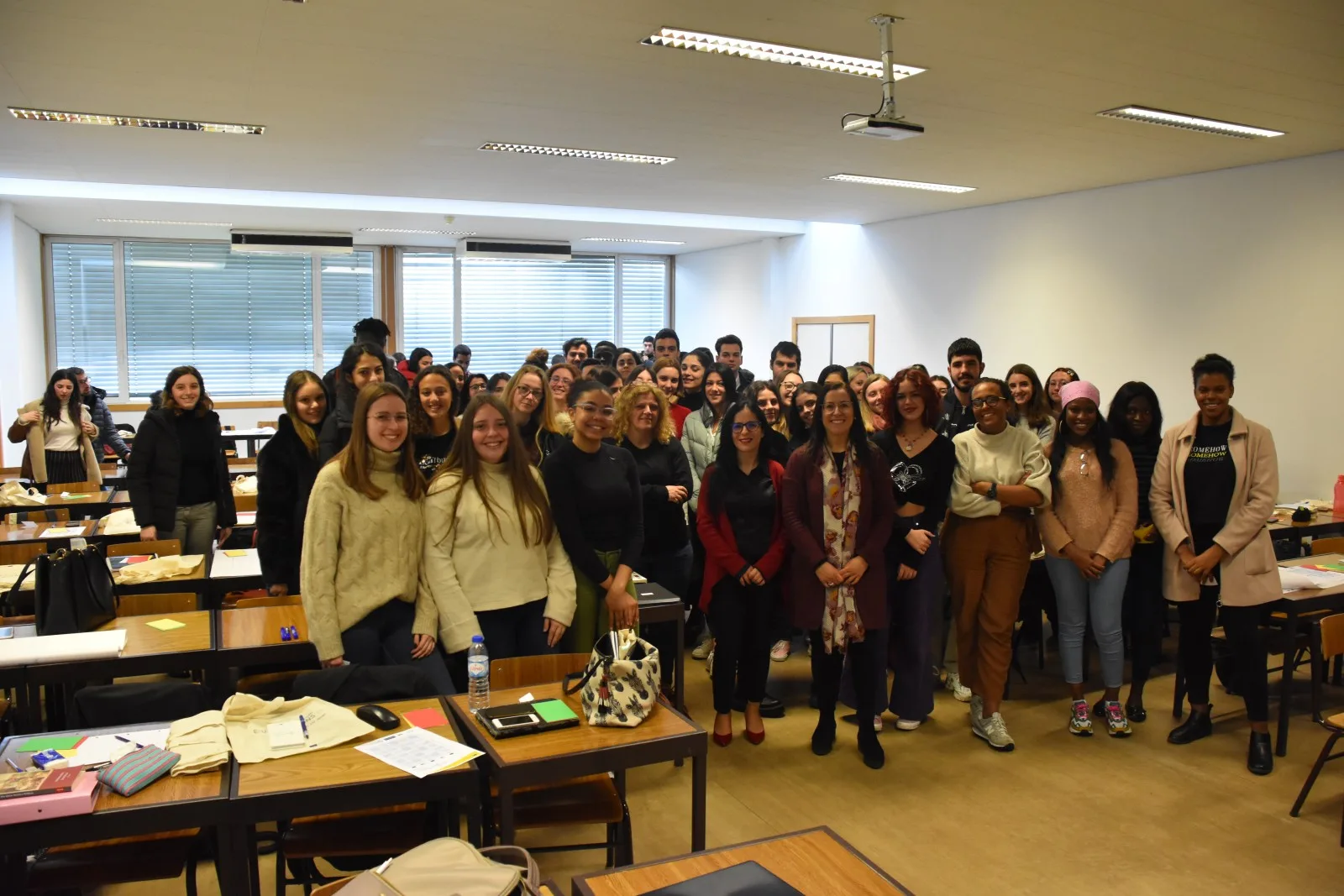
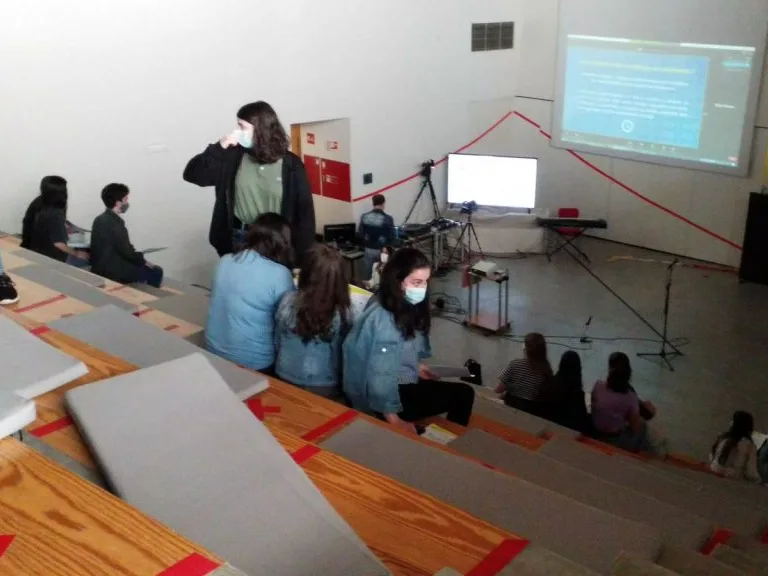
The first EULECTIONS’19 event in Portugal took place on May, 10, 2019, at Iscte- Instituto Universitário de Lisboa. This full event involved 92 citizens from the city of Lisbon, Portugal, mostly university students, for a full day dedicated to the European elections and the future of the EU.
This event aimed to bring awareness to the importance of youth participation at the 2019 elections for the European Parliament, question populist and extremist views and promote an informed and open debate about the current and future challenges of the European project and ways forward.
The event included various activities and methods (brainstorming, quizzes debates, workshops) and involved students, teachers, researchers, media, government officials and youth activists.
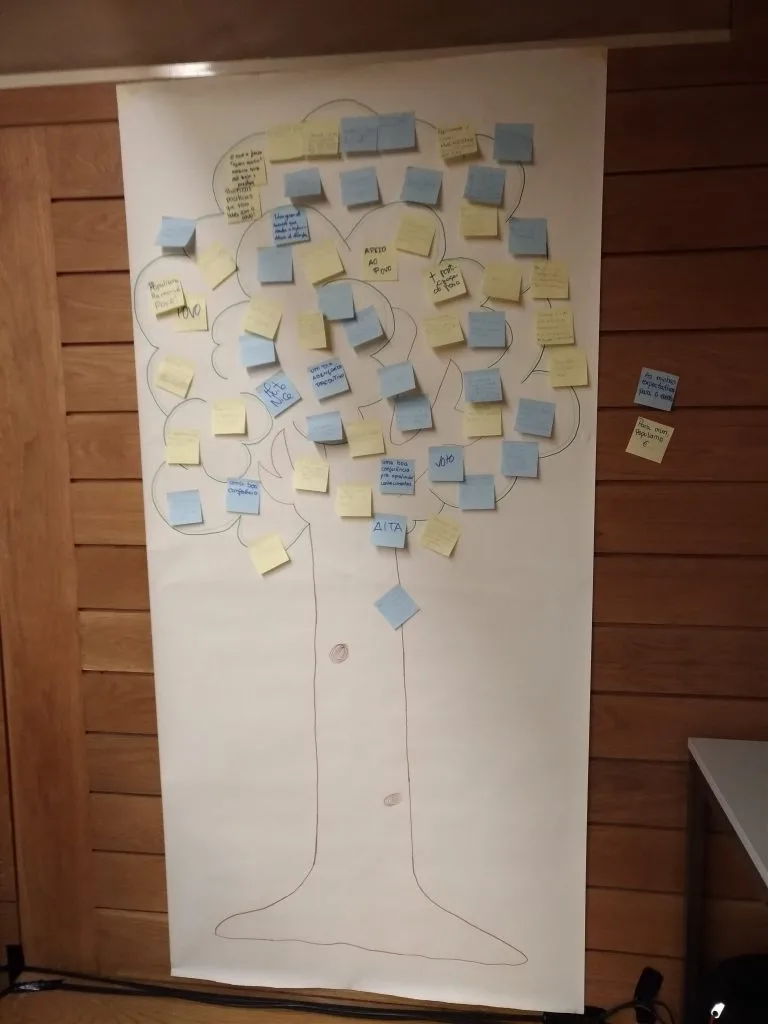
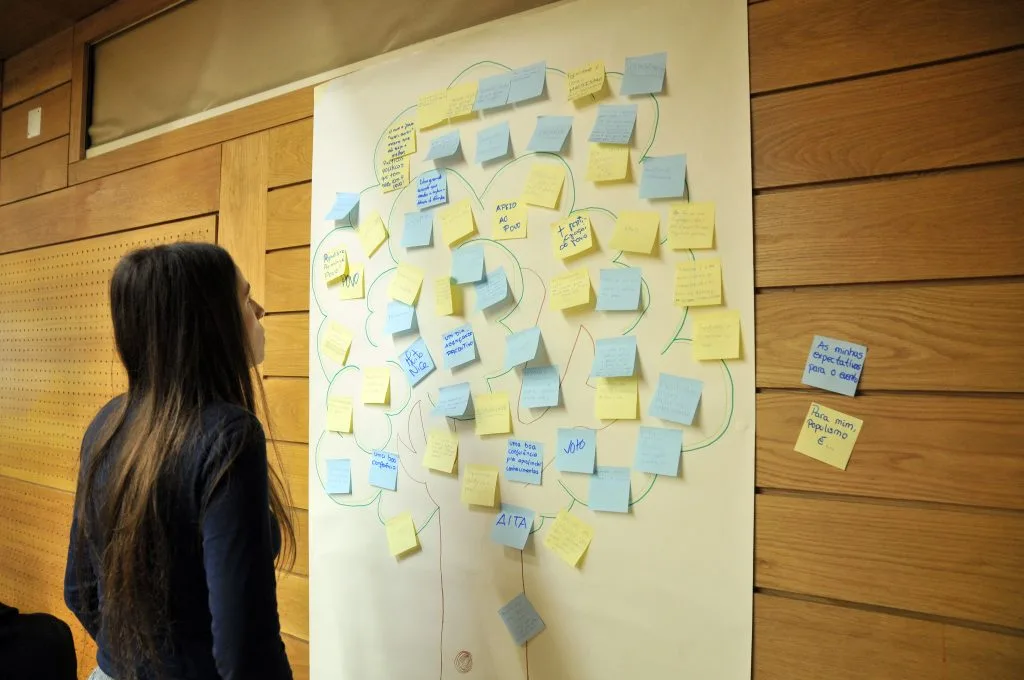
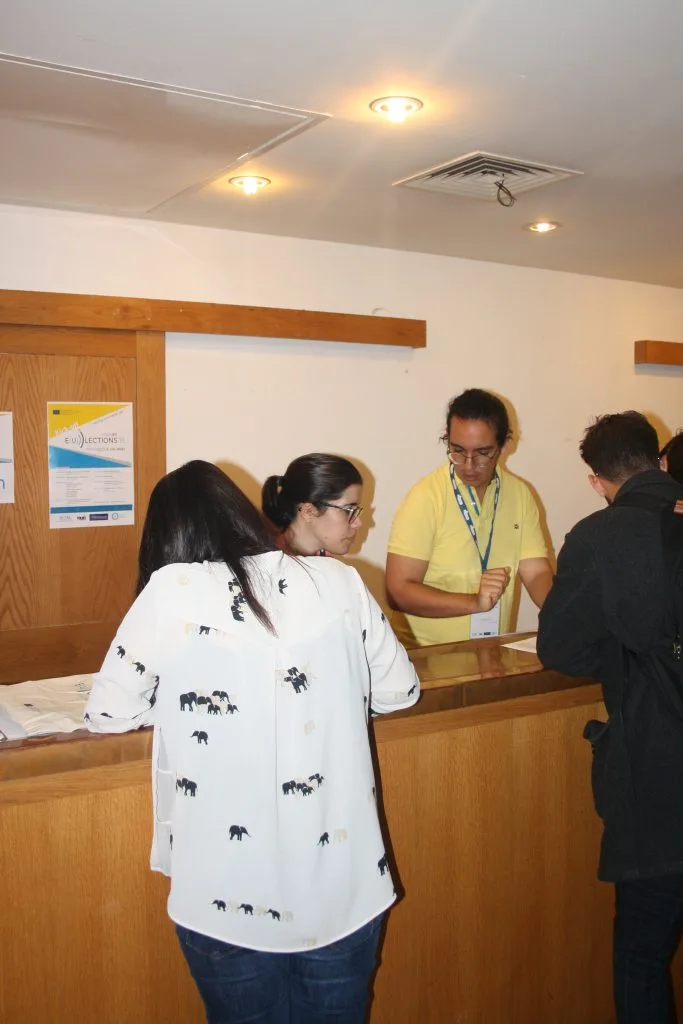
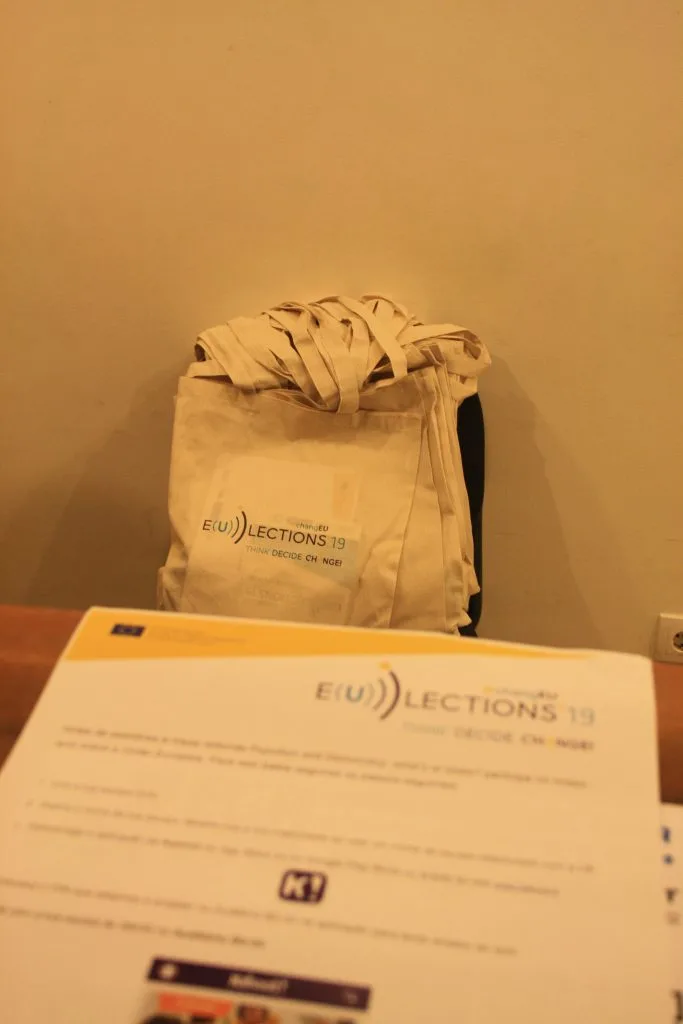
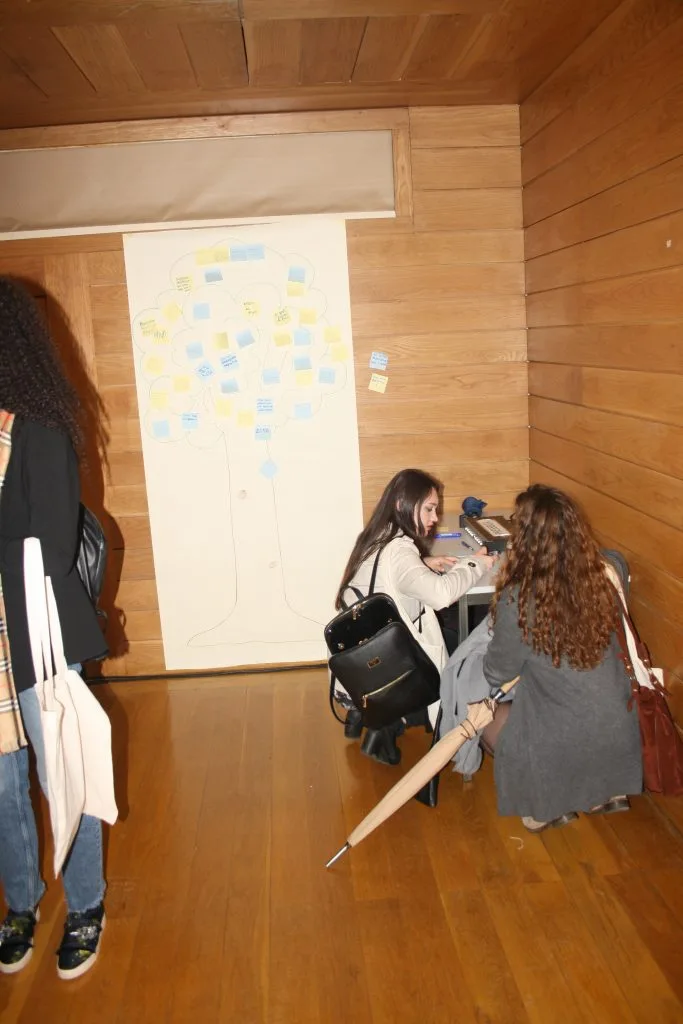
The day started with the participants’ welcome and registration at the event desk where everyone received a bag with promotional gifts, workshop materials and a brochure with information about the project. Then, in the first activity of the day, we invited participants to think and express their views about a very important topic for the 2019 European elections: the rise of populism. The “Tree of Europe” was built from the perspectives on the topic and showed youth’s perspectives about populist ideas and the elections.
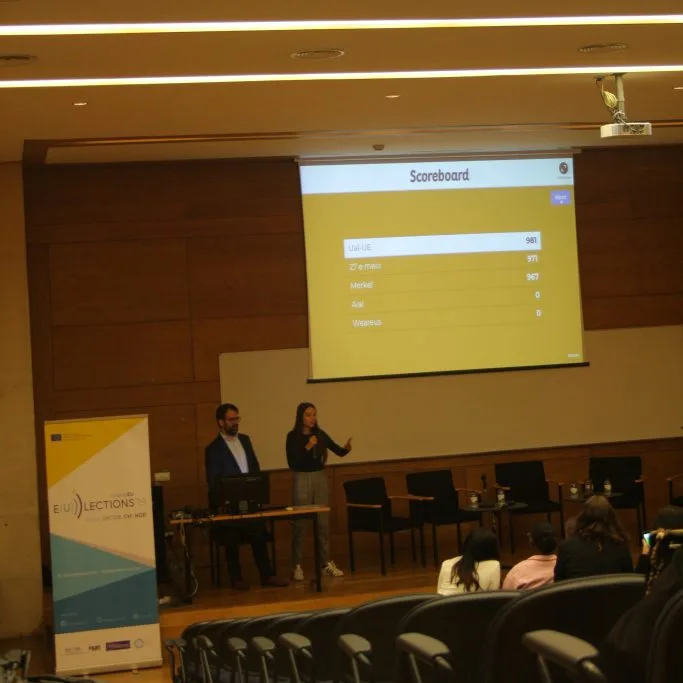
Considering the central role of information in questioning populist and extremist views, and also in promoting electoral participation, we invited participants to gather in groups and play the “Who wants to be an European Expert” quiz. This question and answer activity aimed to improve participants’ understanding of the importance and presence of the European Union in our daily lives and engage young people in the debate about Europe and the 2019 elections.
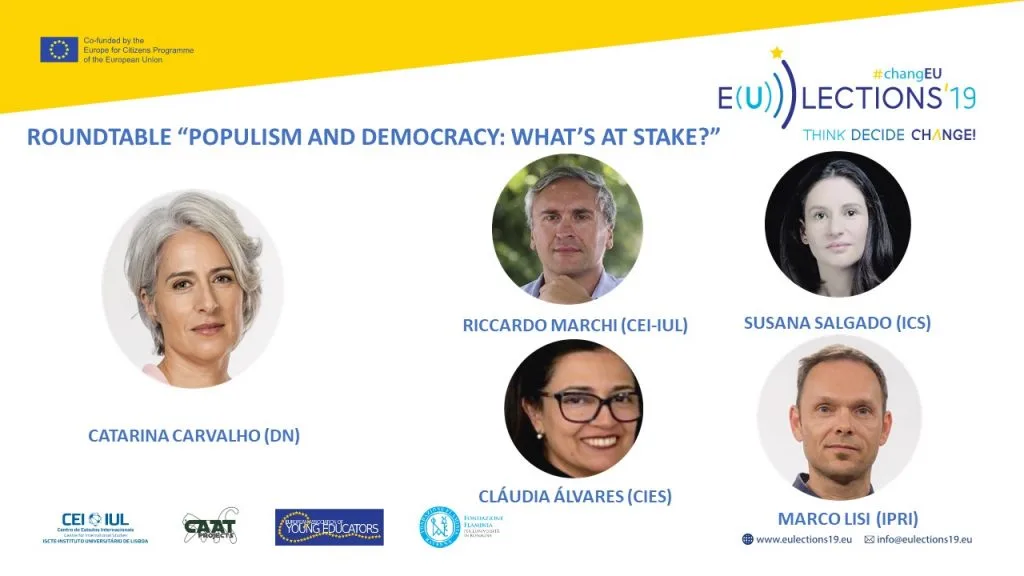
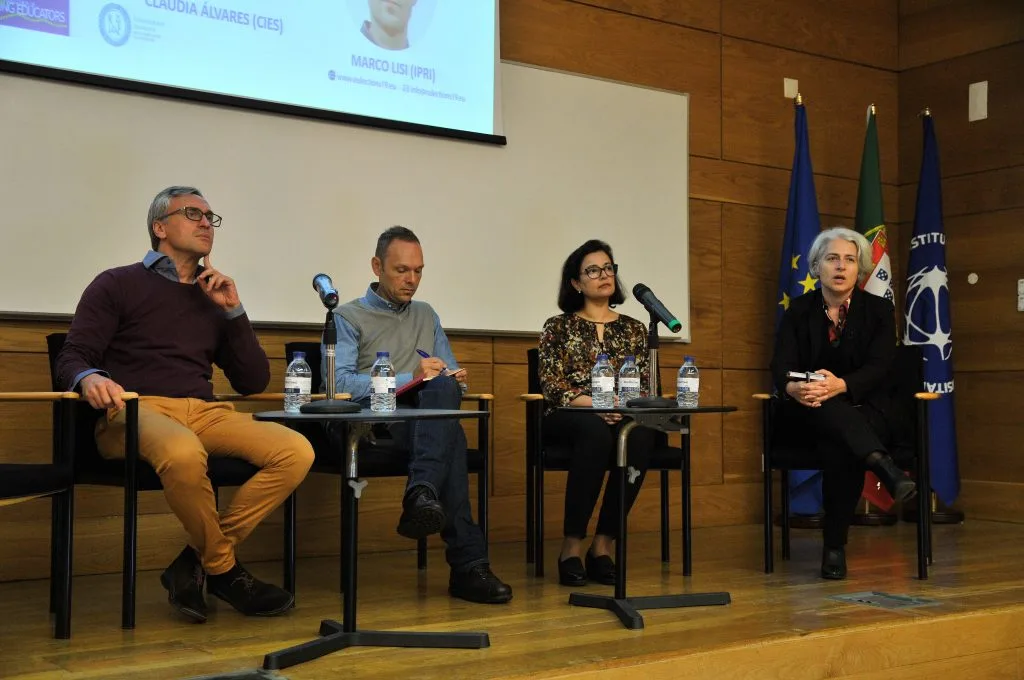
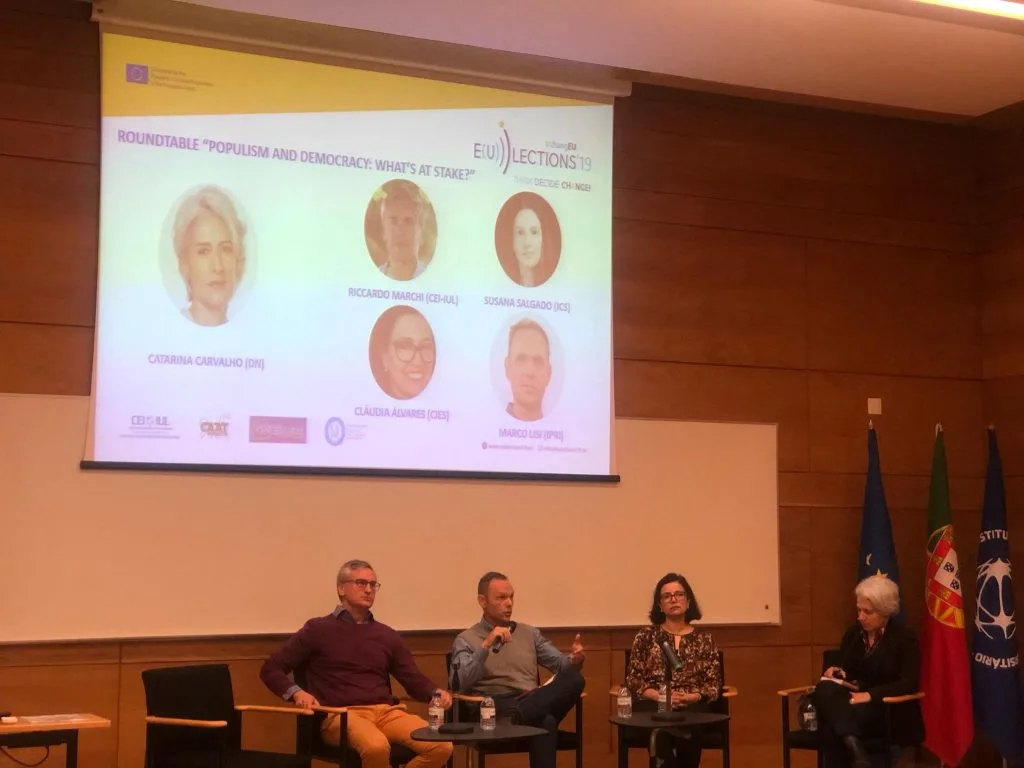
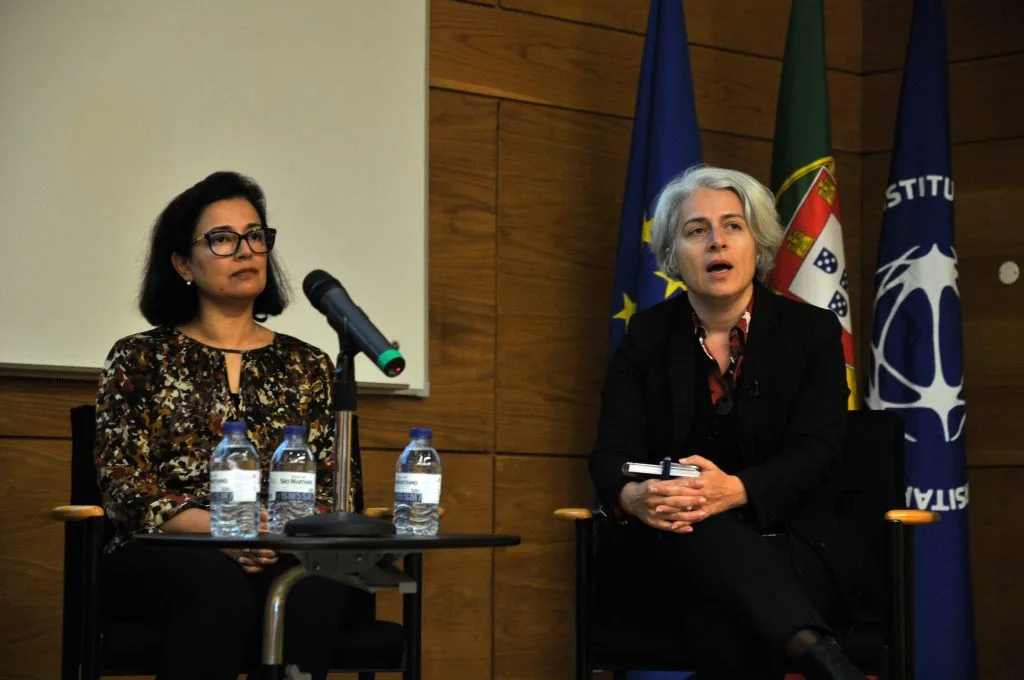
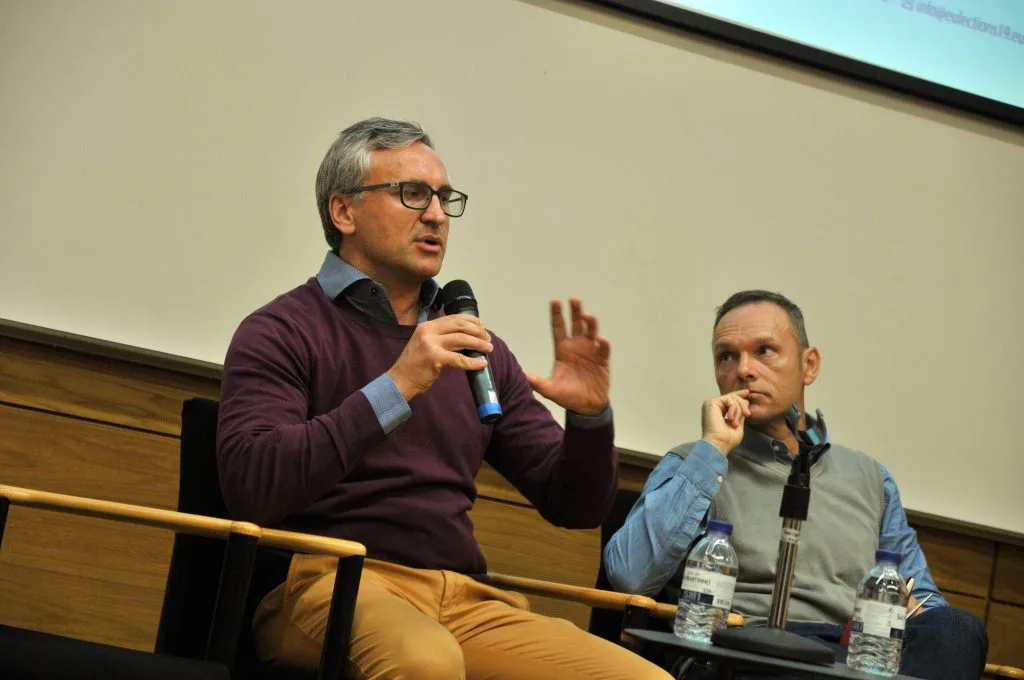
After the “warm up” activities, participants had the opportunity to discuss with academics, the rise of populism and its threats to the European Union, in a round-table entitled “Populism and democracy: what´s at stake?”. The debate aimed to give a broader view, based on research, of the challenges to the European democracies brought by populist and extremist movements and explore how citizens and governments at the national and European level can respond to these trends. The debate was moderated by the Executive Editor in Chief of the Portuguese newspaper “Diário de Notícias”, Catarina Carvalho.
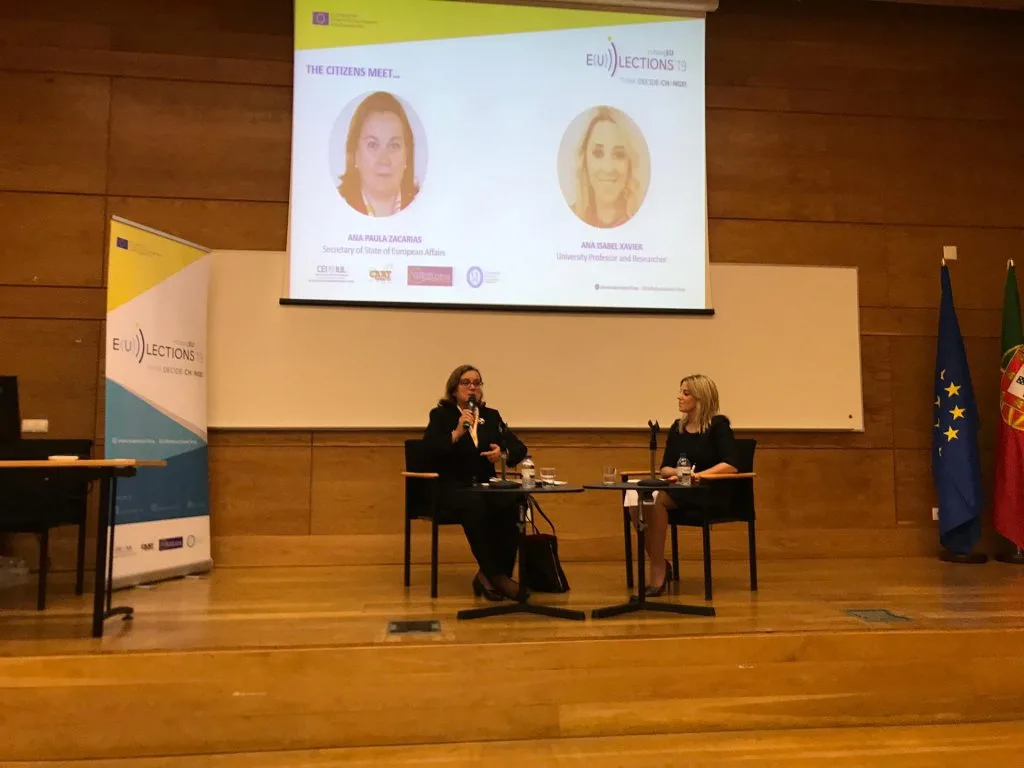
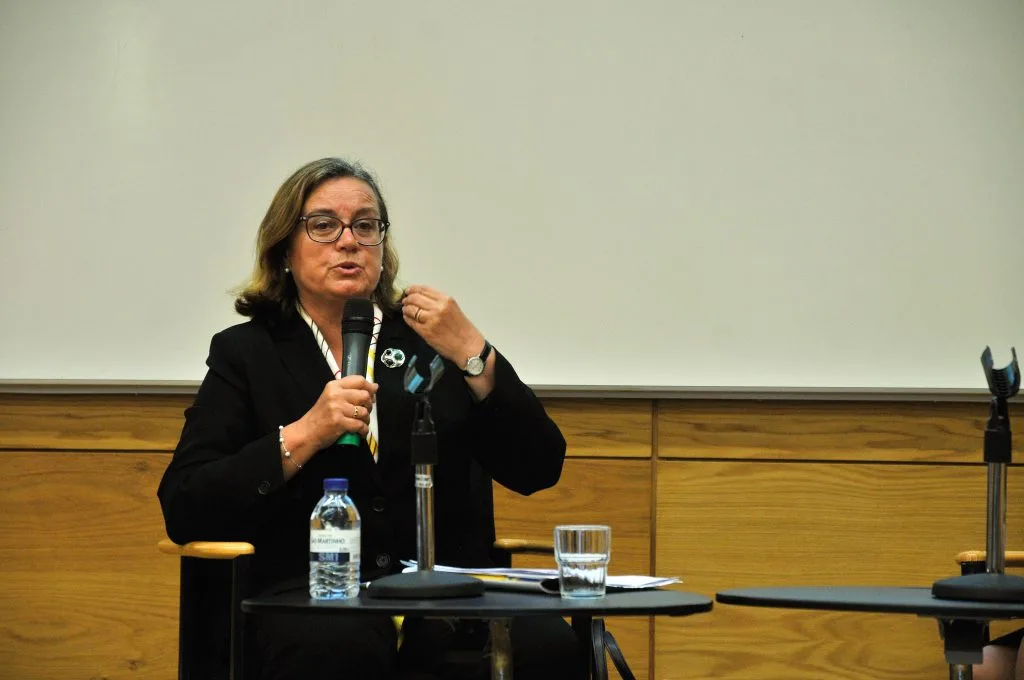
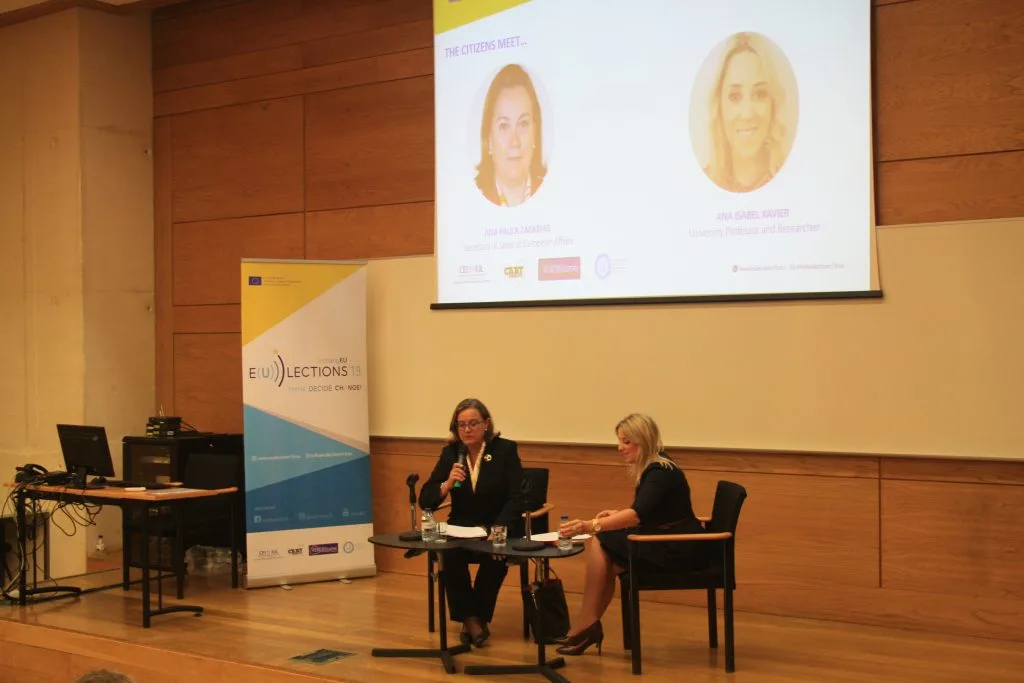
Following the debate with academics and the media, we welcomed the Portuguese Secretary of State of European Affairs, Ana Paula Zacarias. In this activity, entitled “The citizens meet… Ana Paula Zacarias”, participants had the opportunity to learn more about the work done within this State Secretariat and to present questions about the European neighbourhood policy and the future of the European Union. This conversation was hosted by the project coordinator, Ana Isabel Xavier.
This activity aimed to promote a closer interaction between young citizens and government representatives in charge of European affairs and contribute to a better understanding of how European institutions work, the EU current challenges and ways forward.
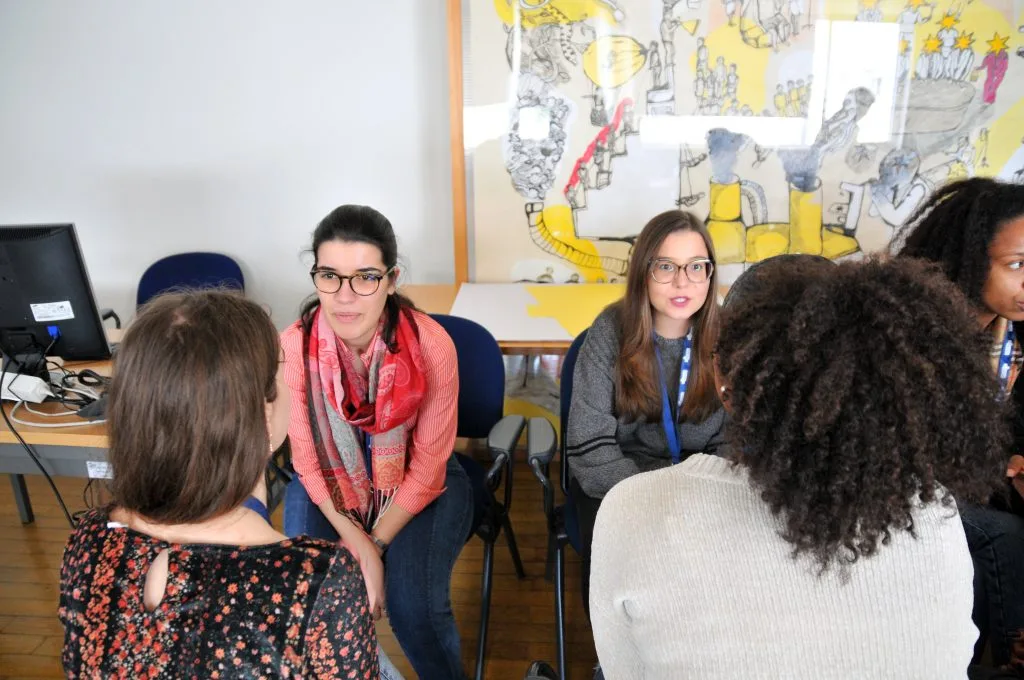
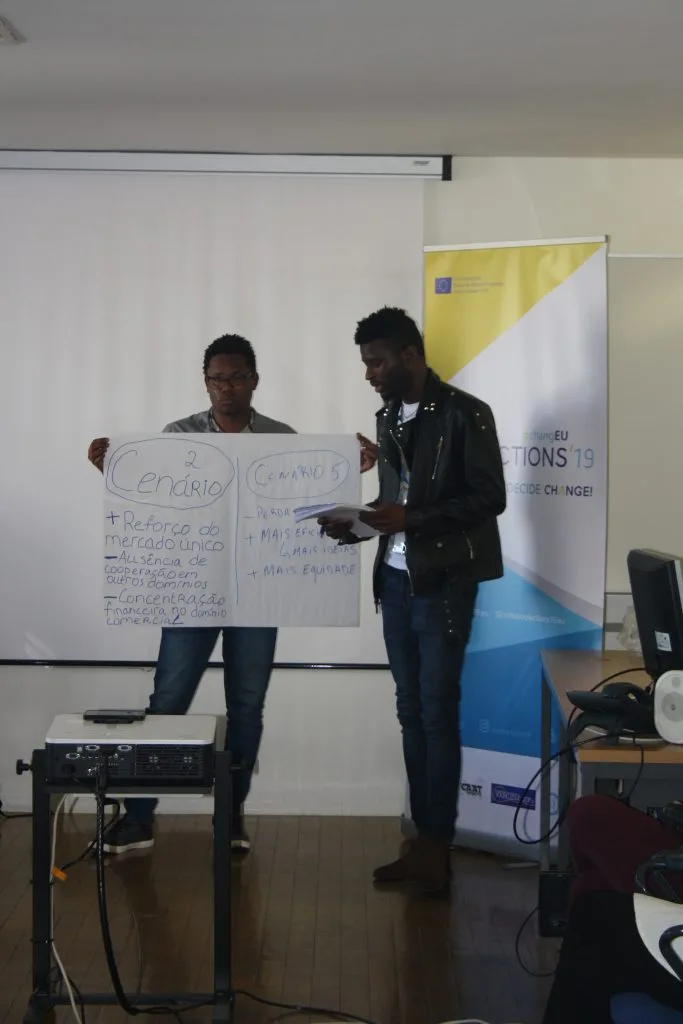
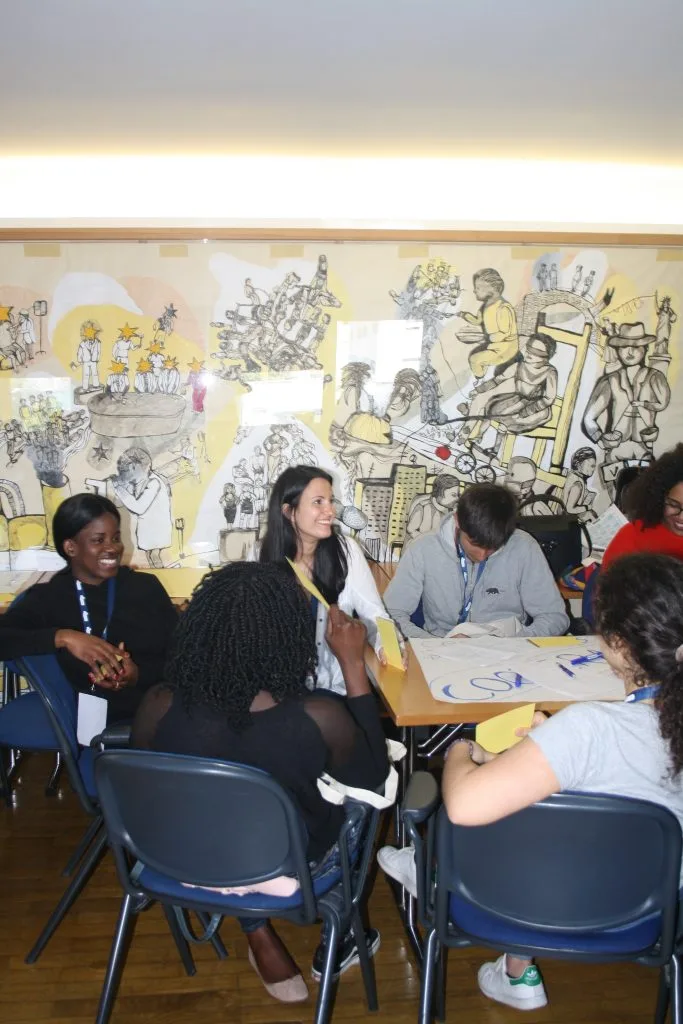
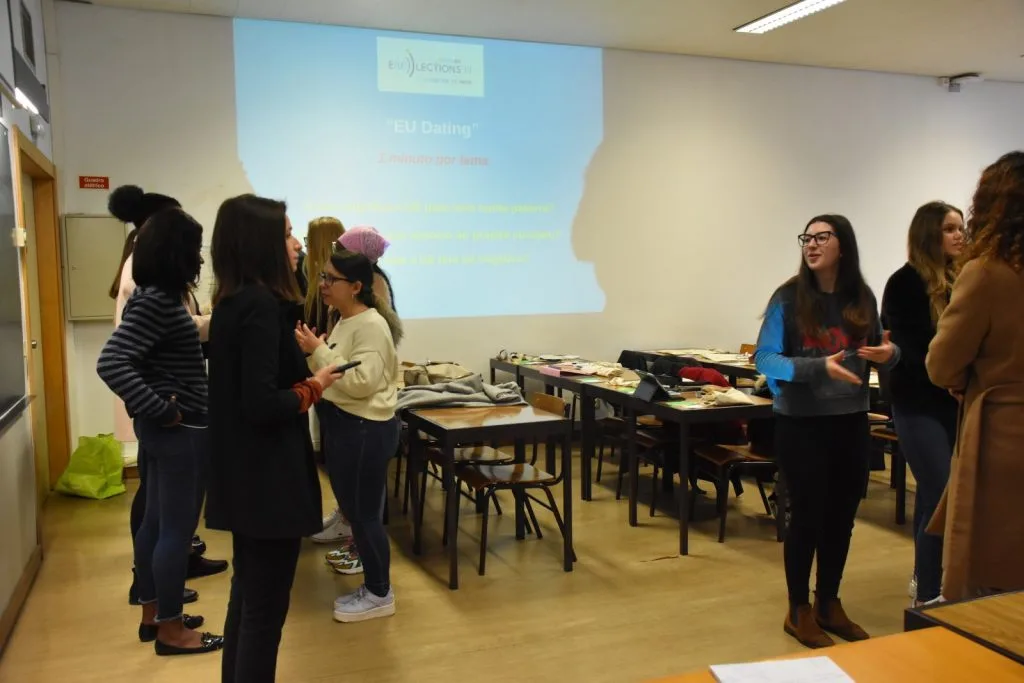
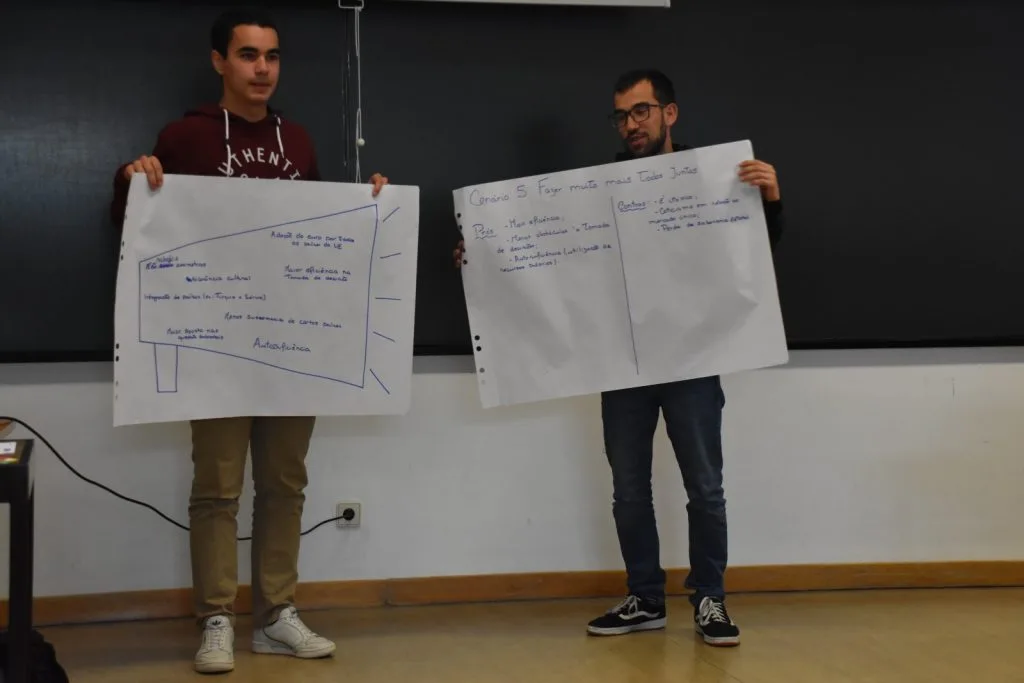
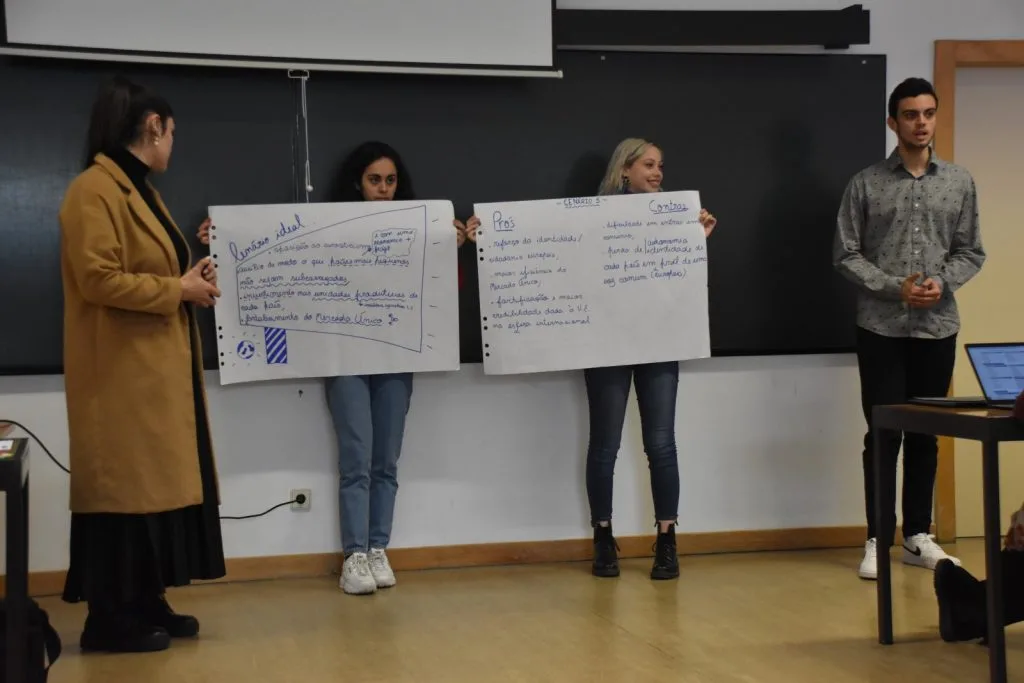
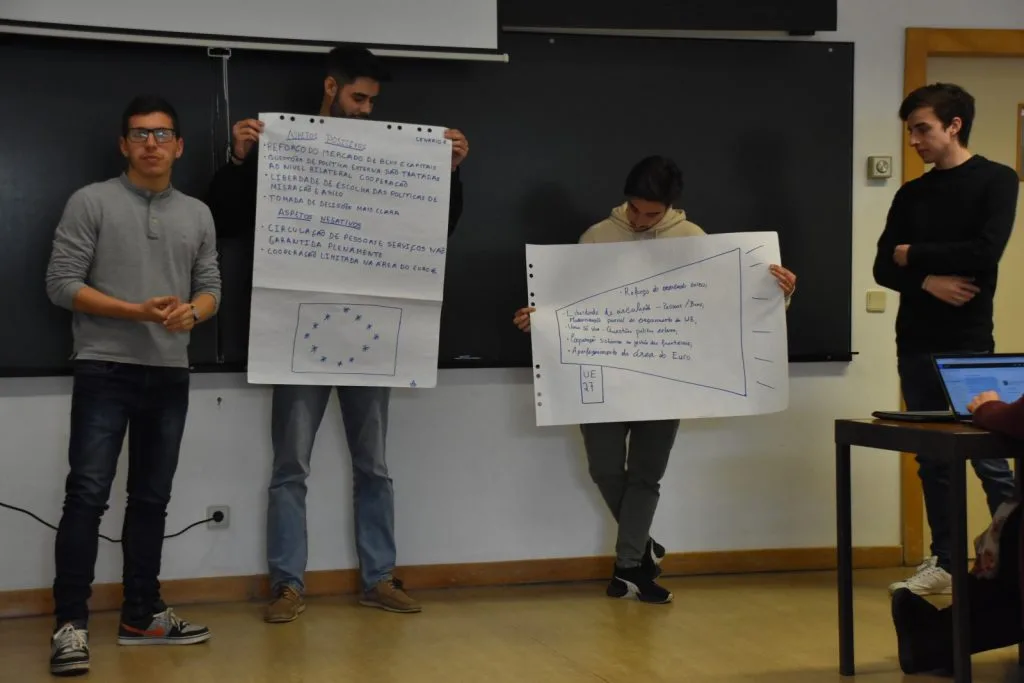
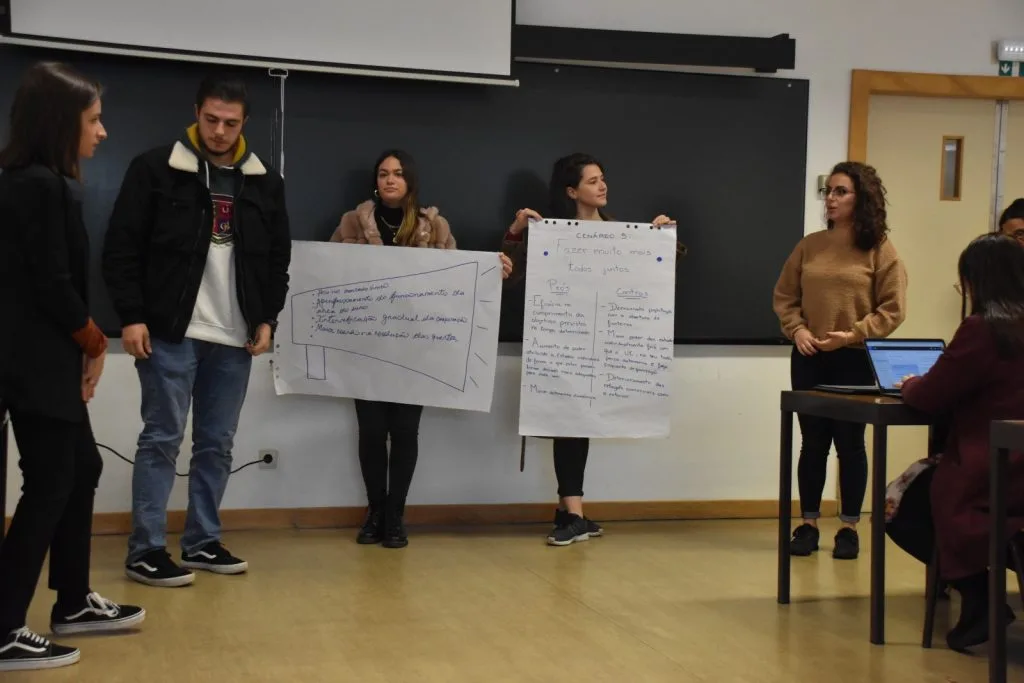
The last part of the event was the training session “May the vote be with EU: workshop on future scenarios”. It started with a “EU dating” in which participants had to share with each other their answers to questions like “What does it mean to be an European Union citizen” and “Why will I vote for the future European Parliament elections?”.
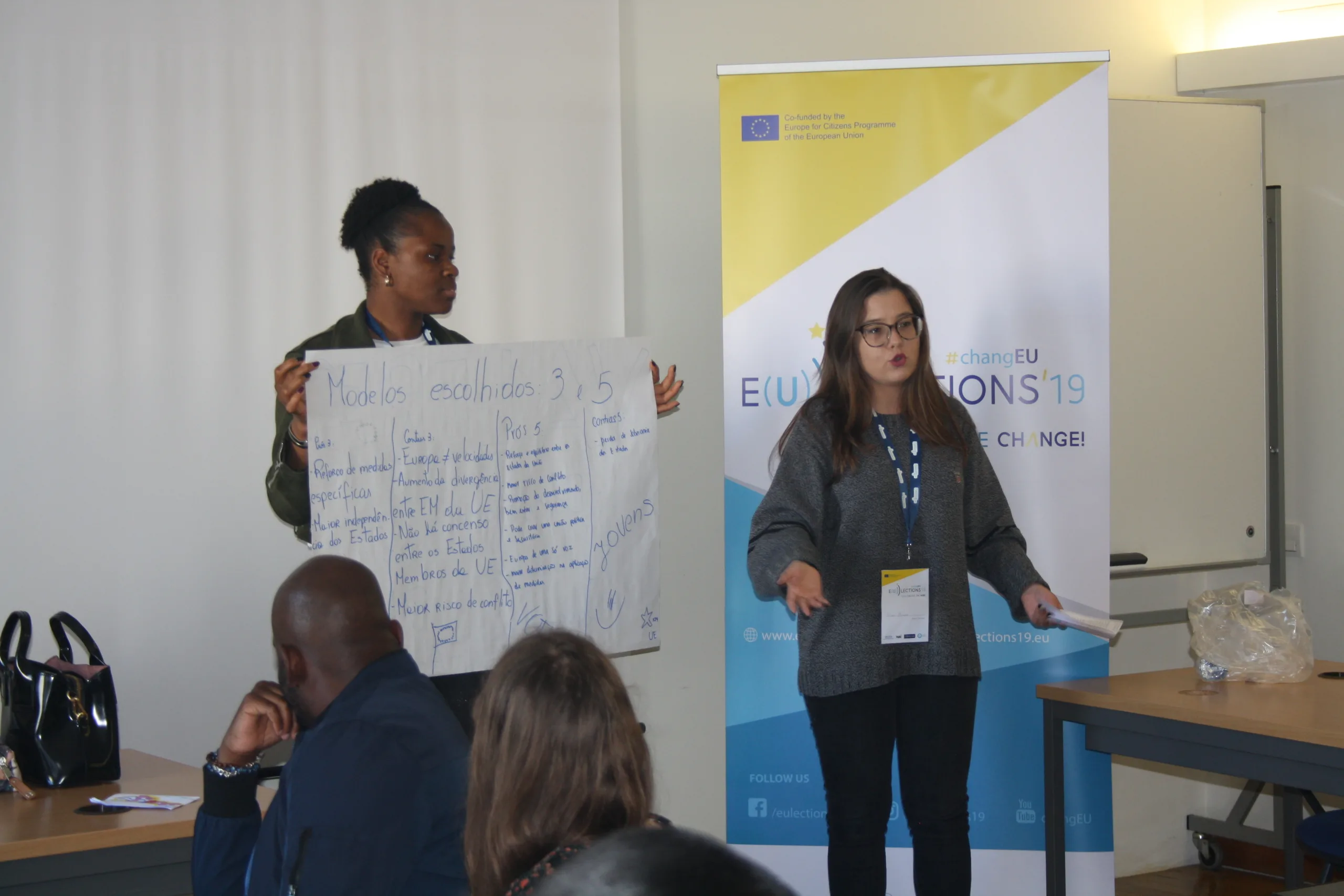
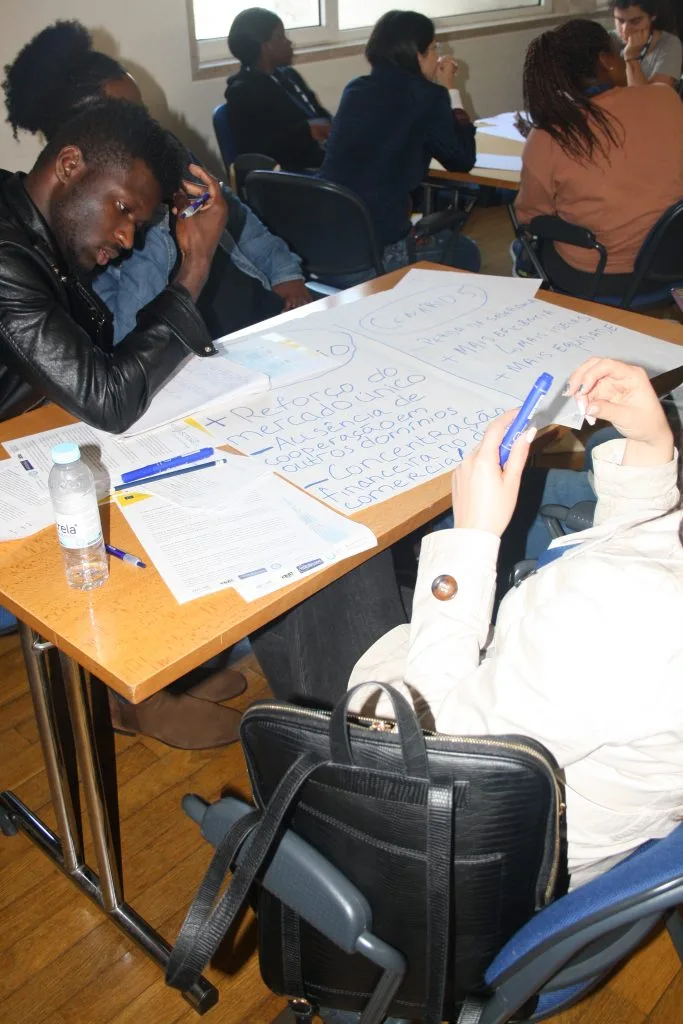
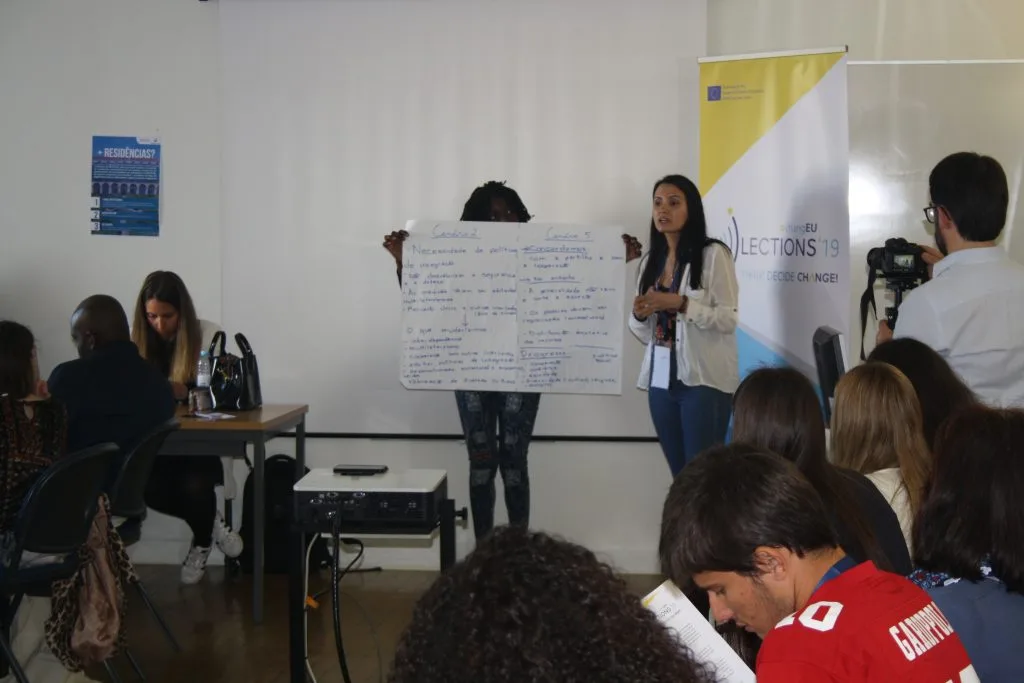
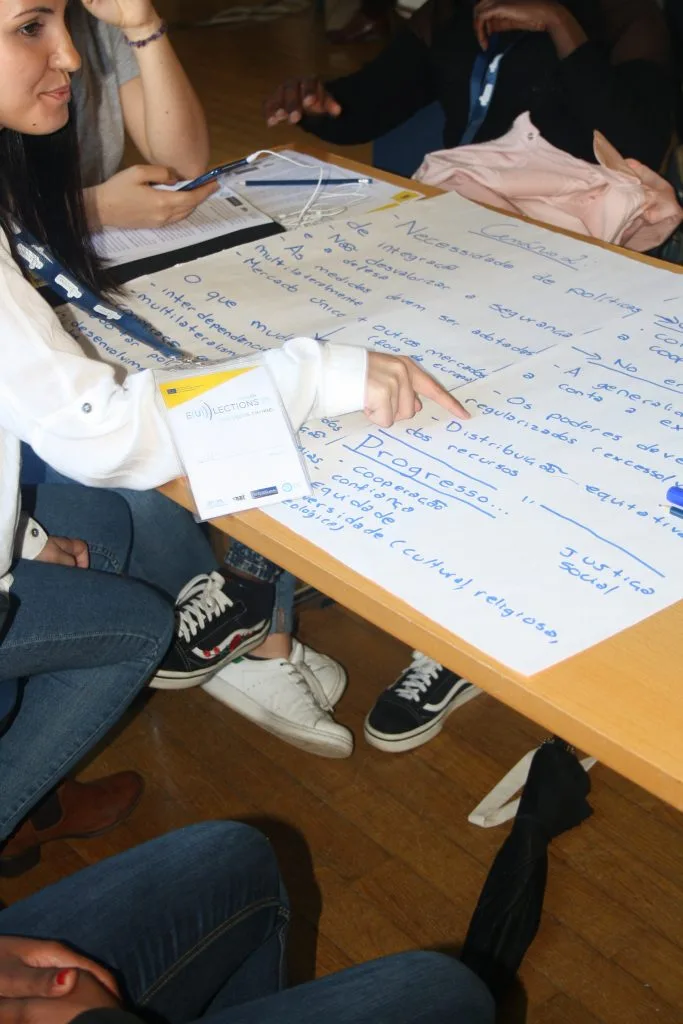
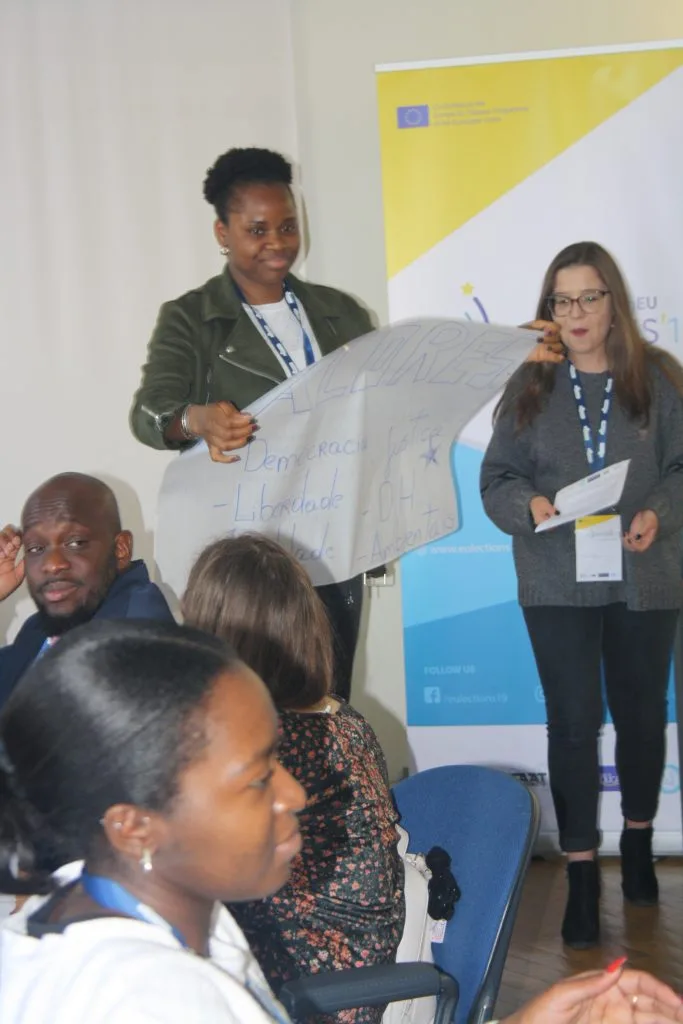
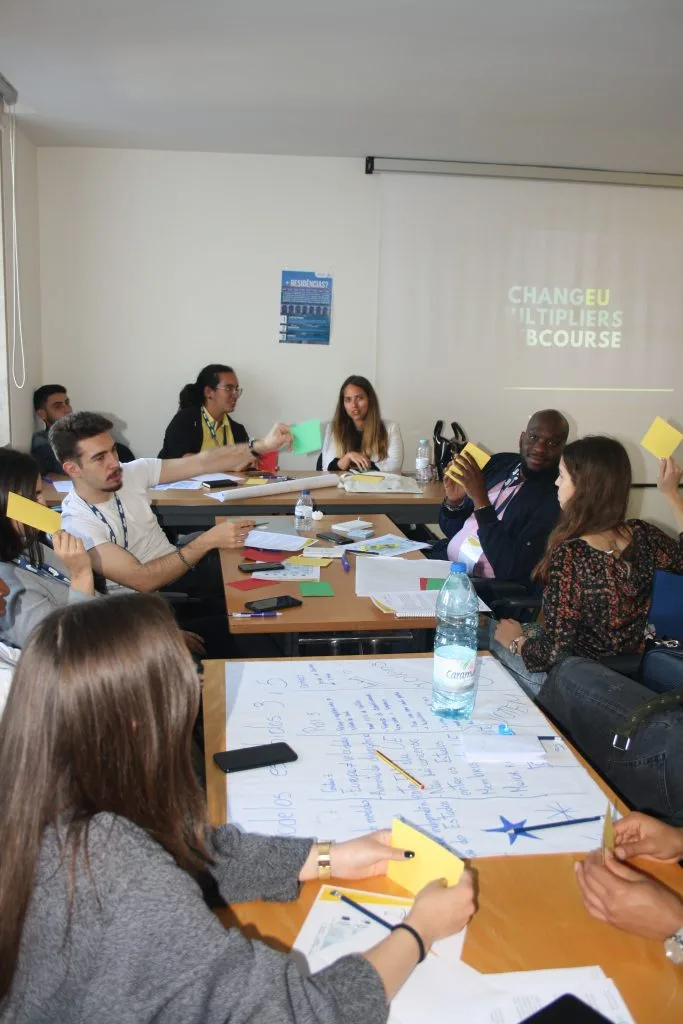
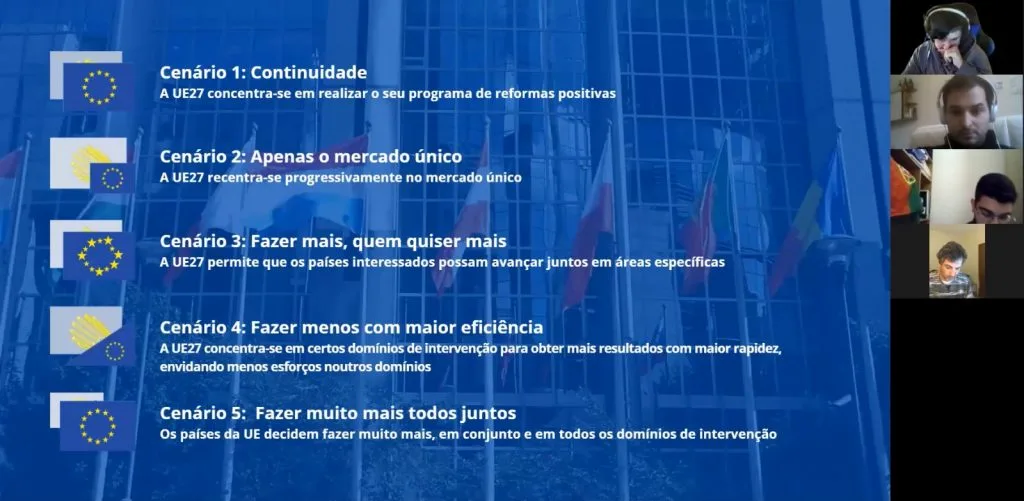
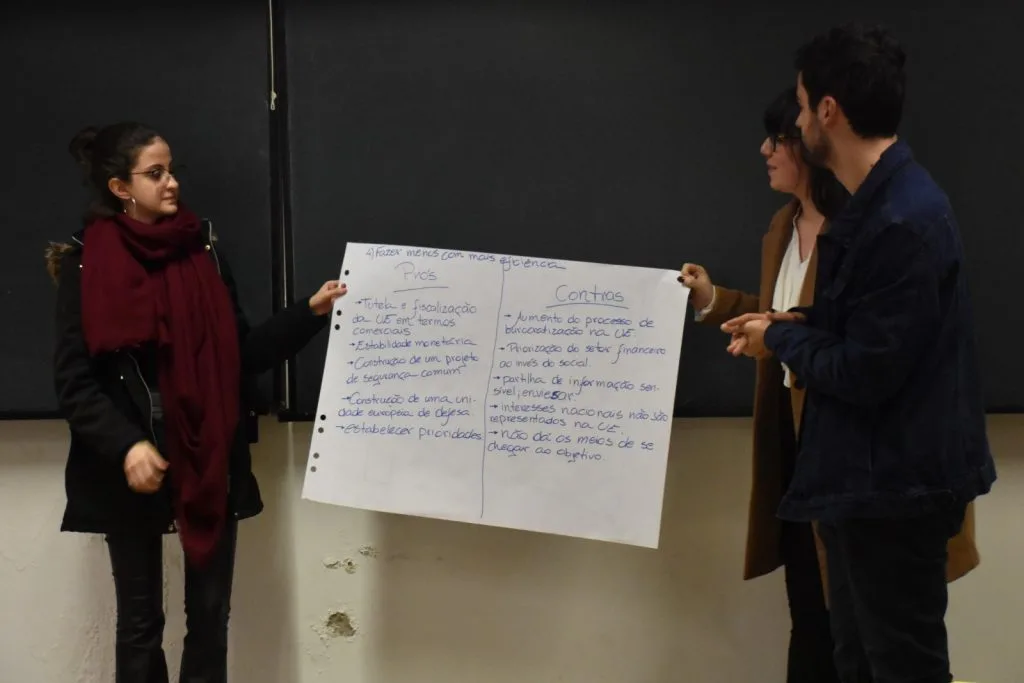
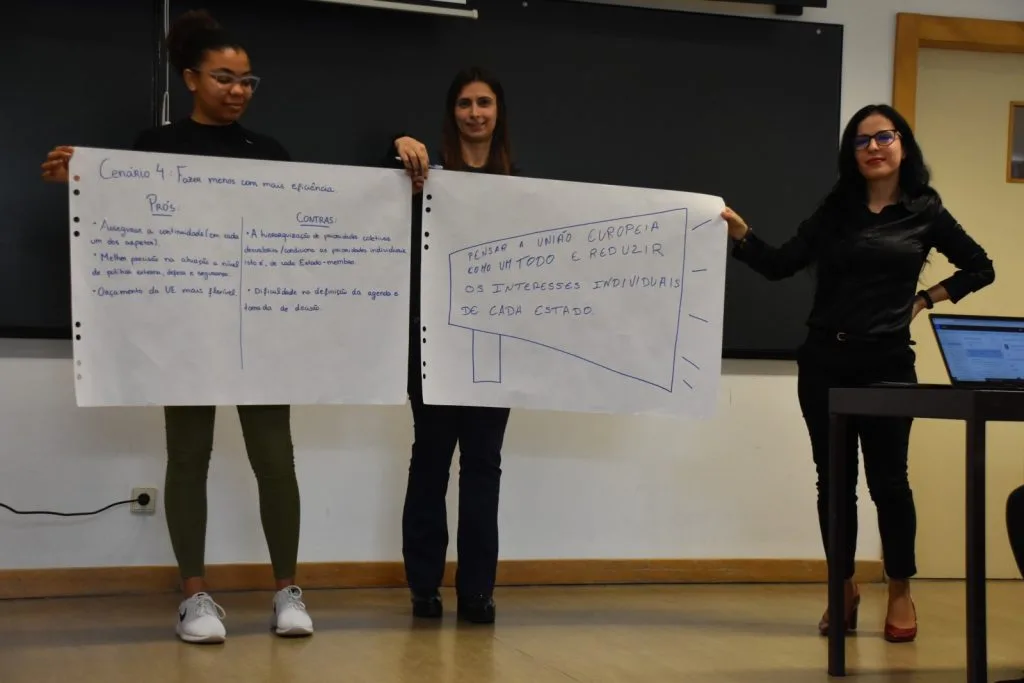
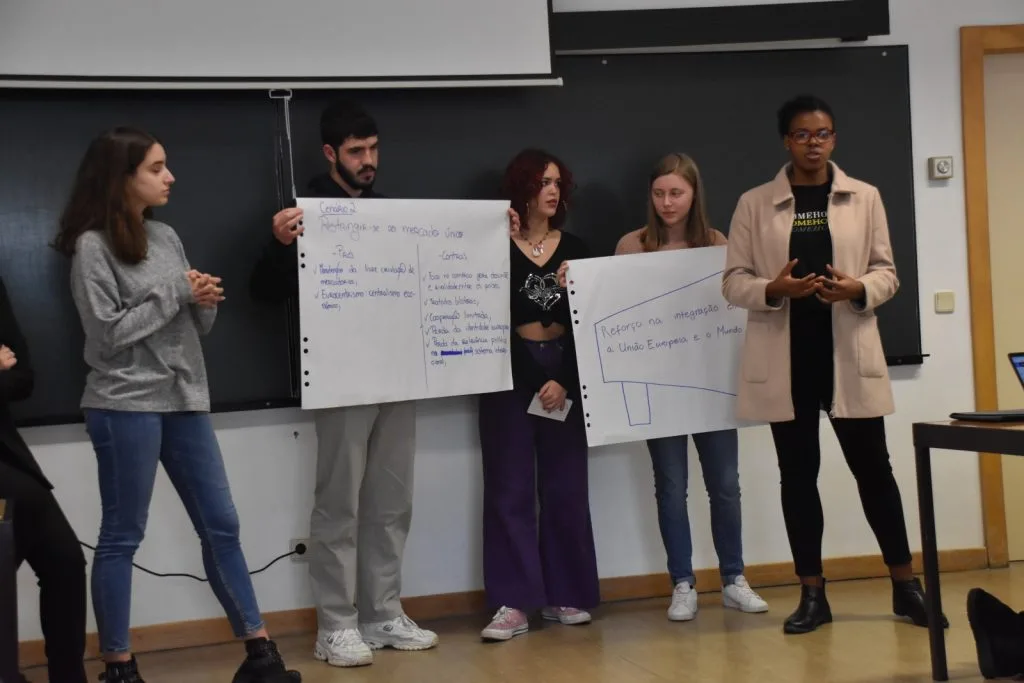
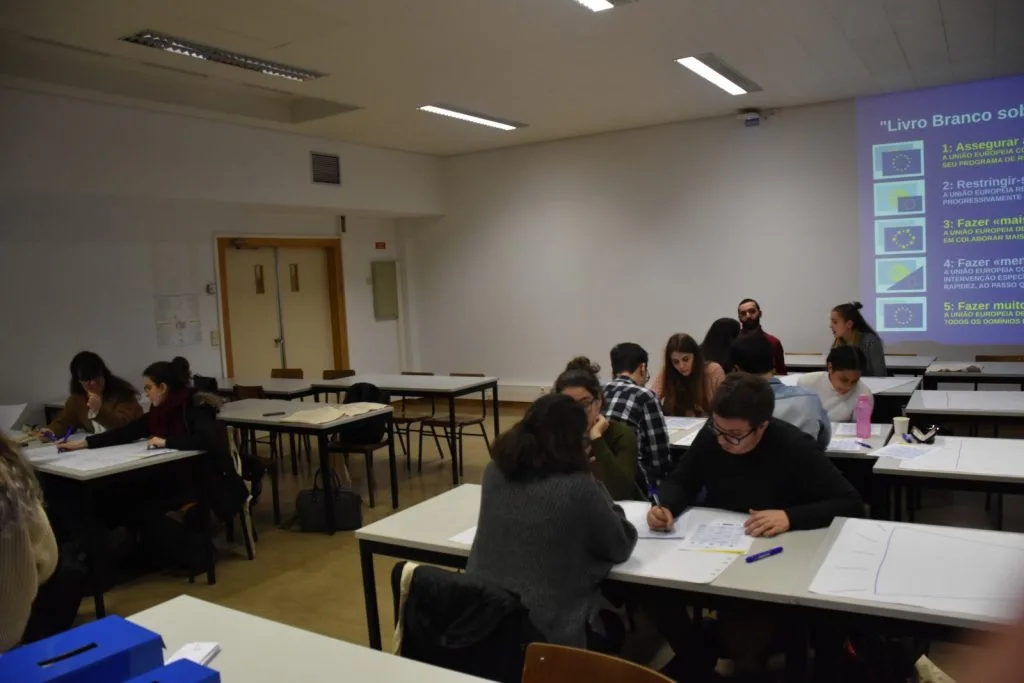
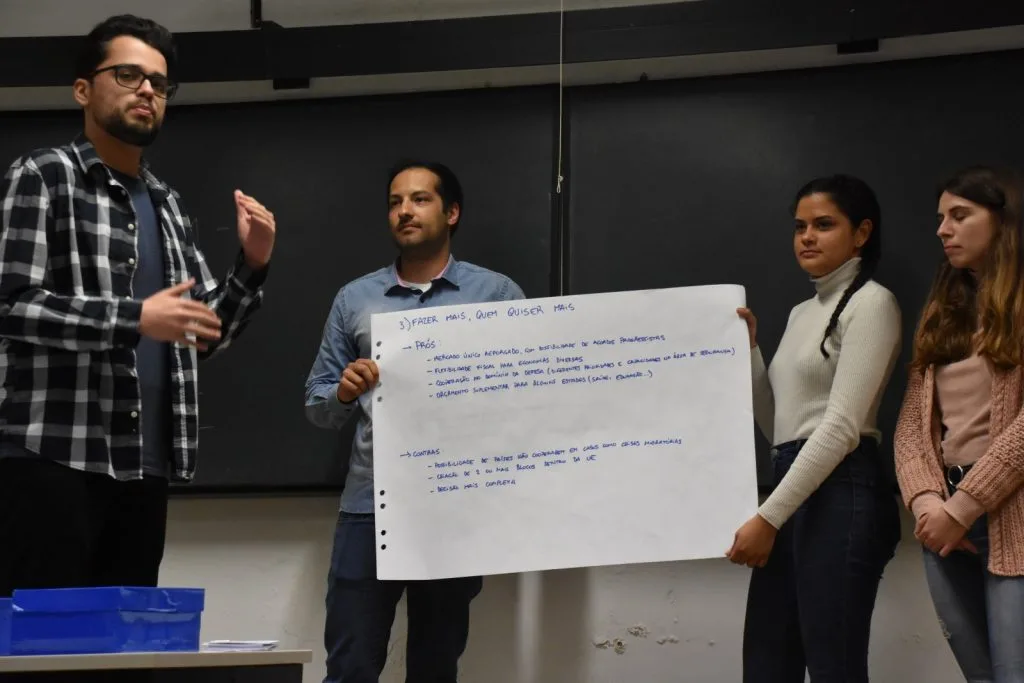
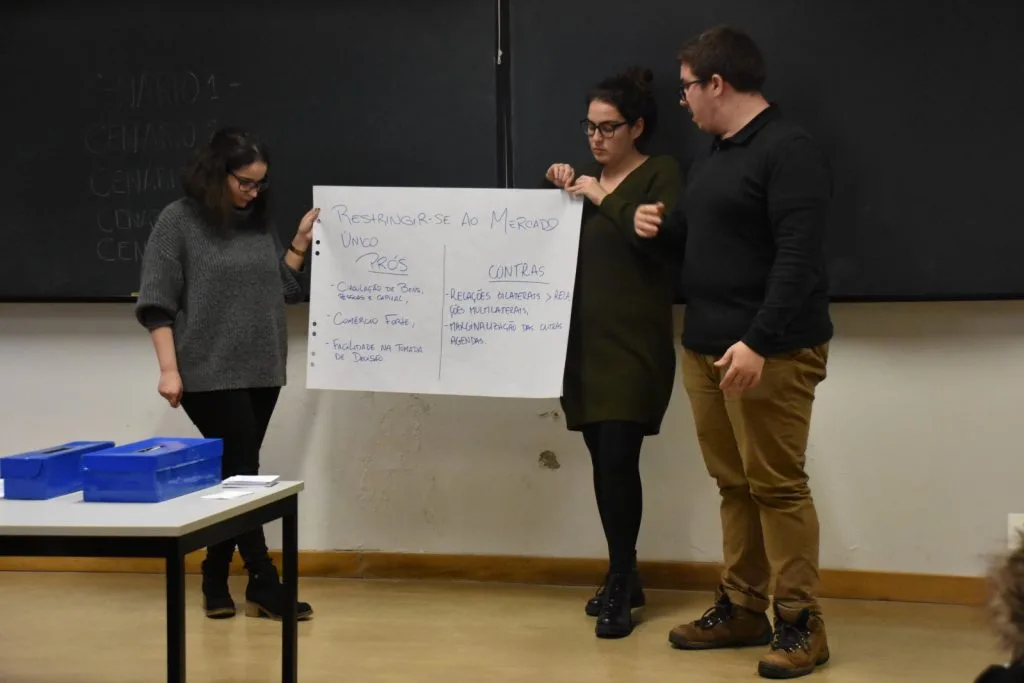
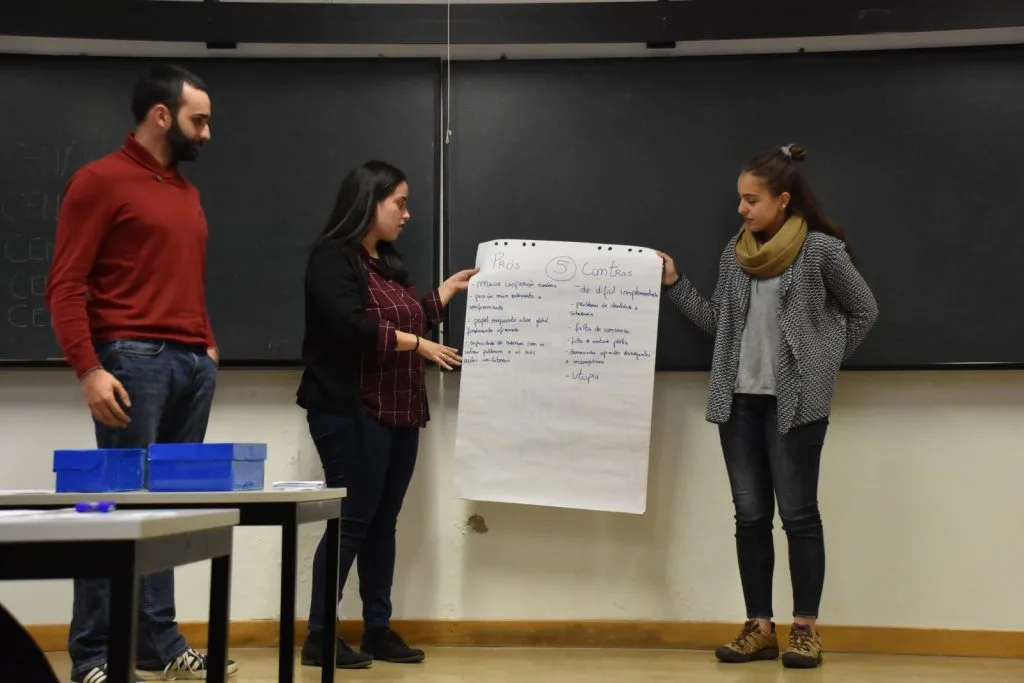
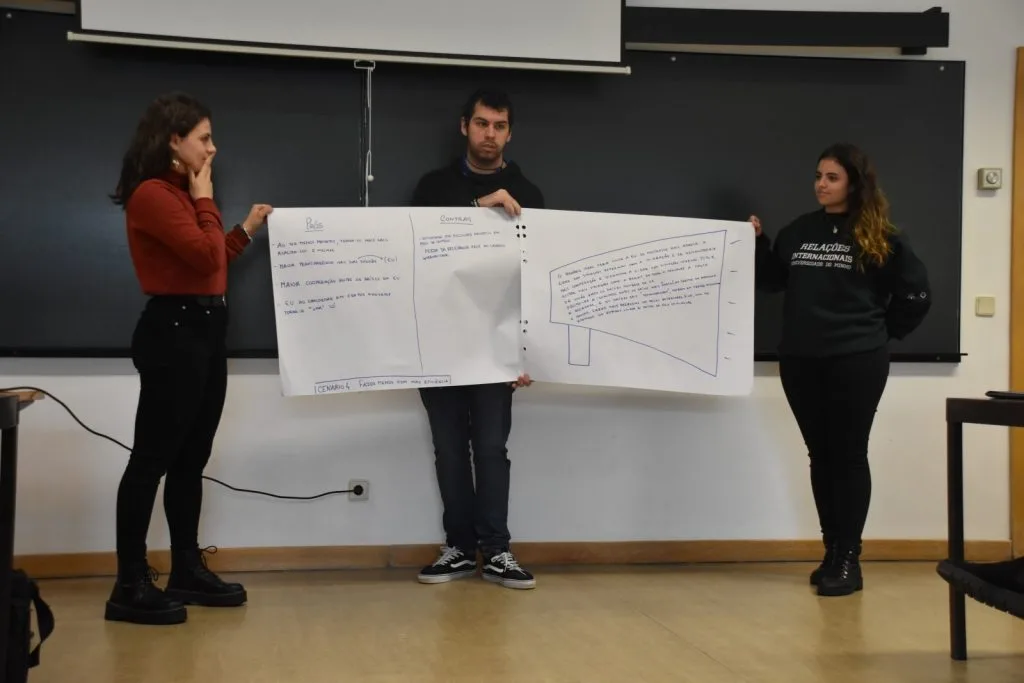
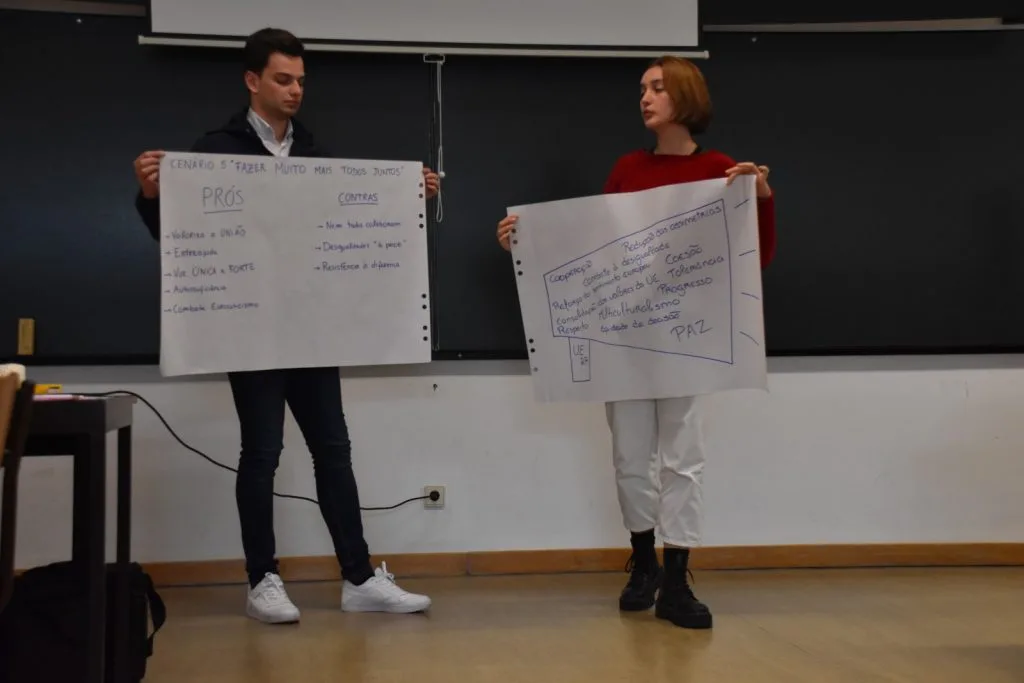
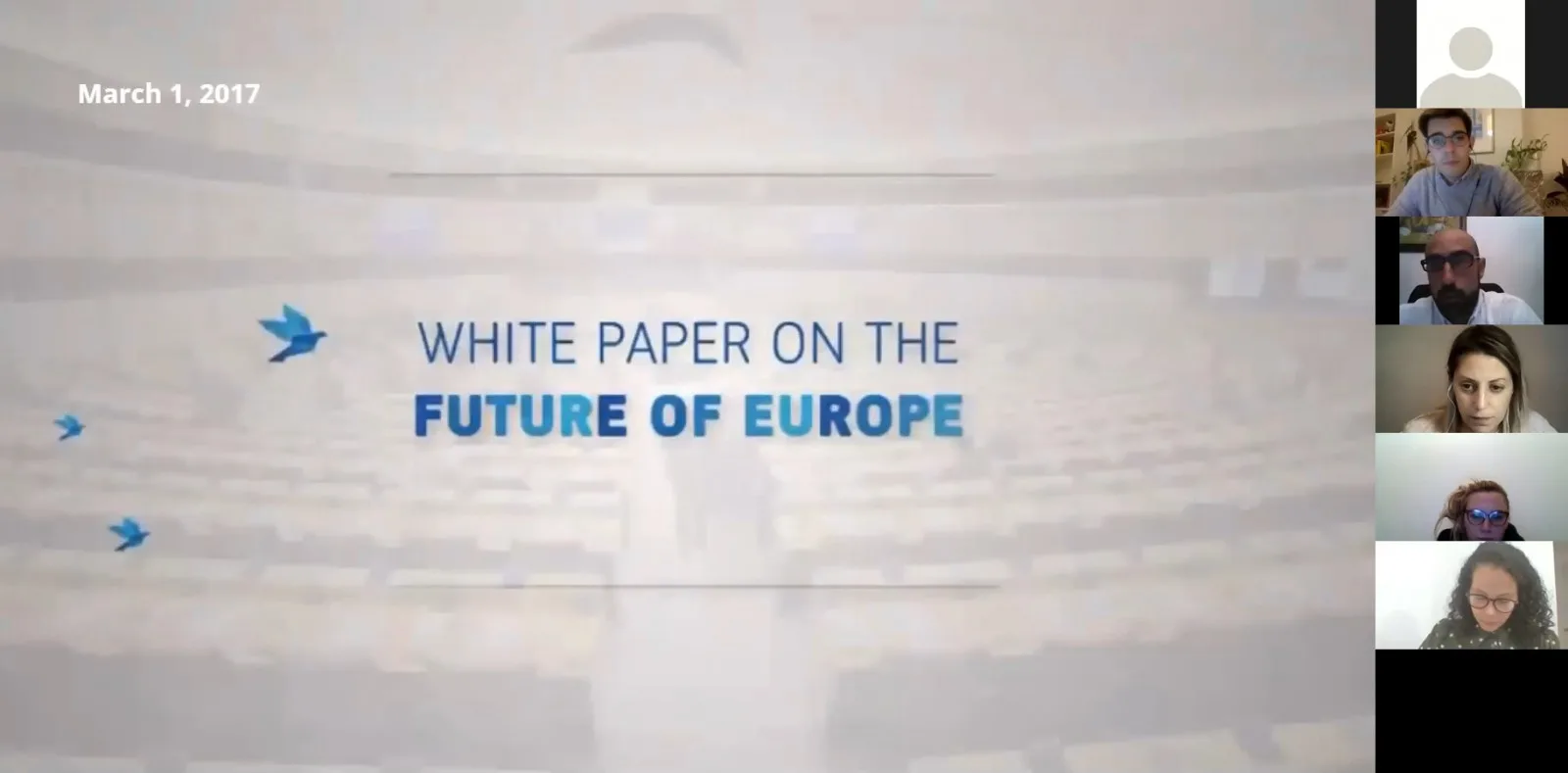
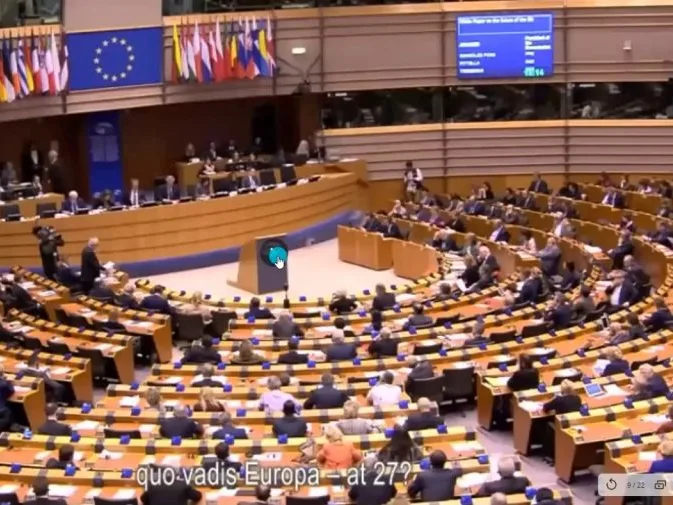
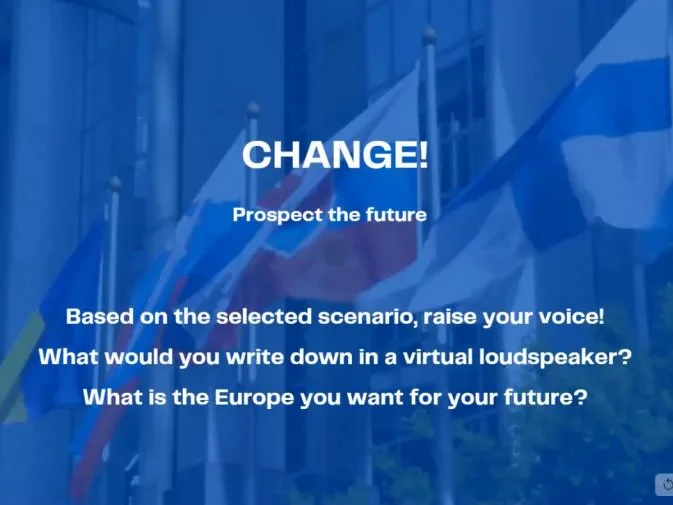
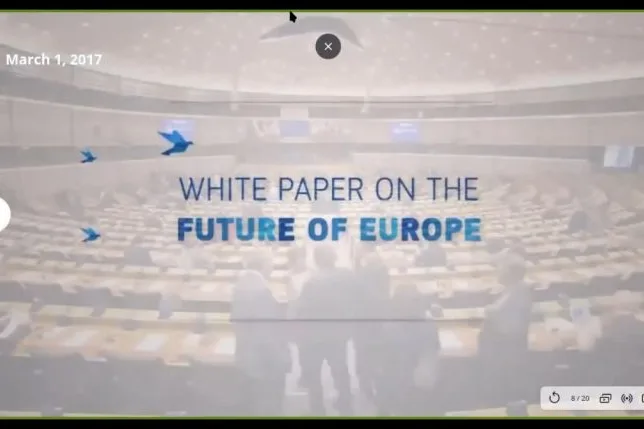
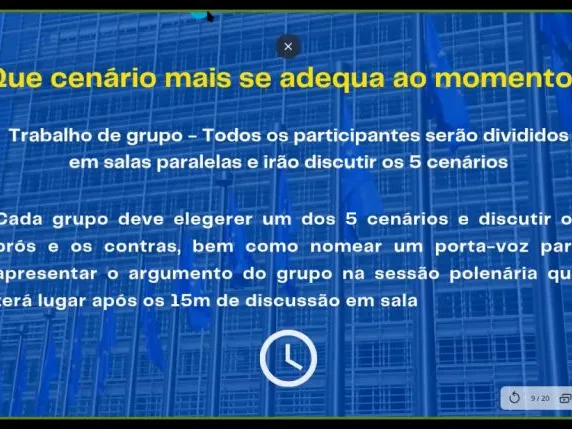
Afterwards, divided in small groups, each group had to discuss the pros and cons of each scenario reflected in the “White Paper on the Future of Europe: Reflections and scenarios for the EU27 by 2025” of the European Commission and present it to the whole group. In the end of this activity, each group created what they considered to be an “ideal scenario” for the future of European Union, with their recommendations and opinions.
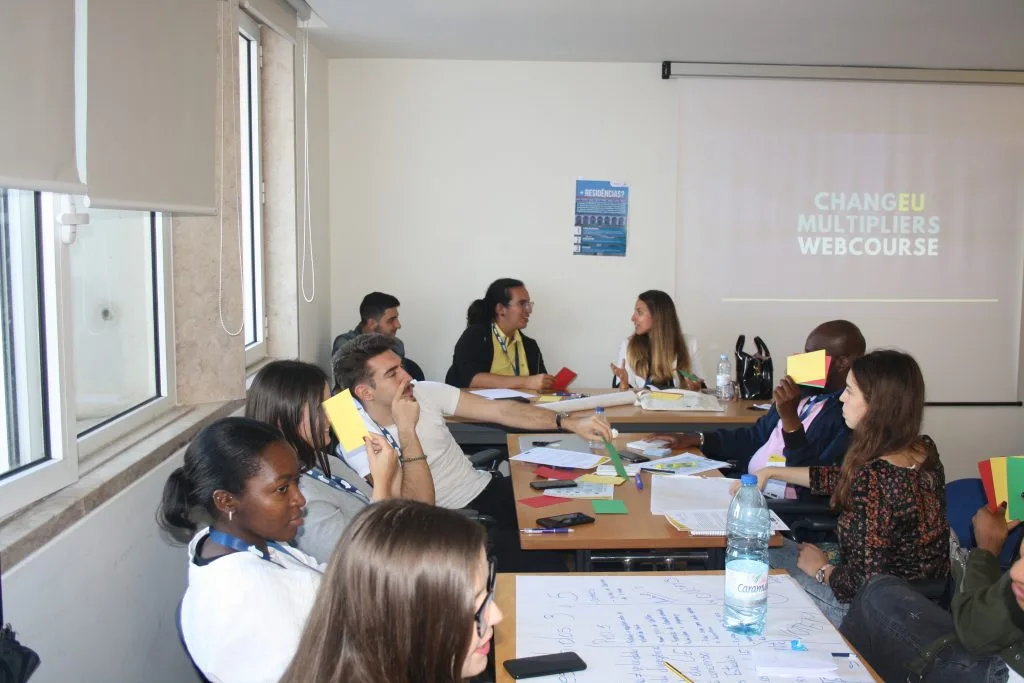
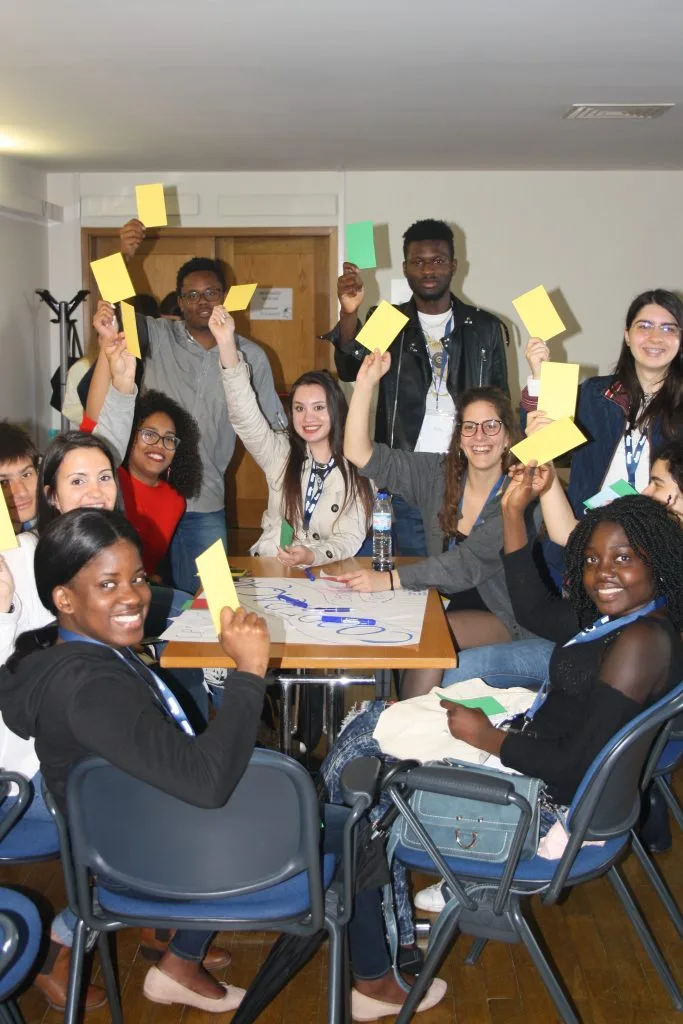
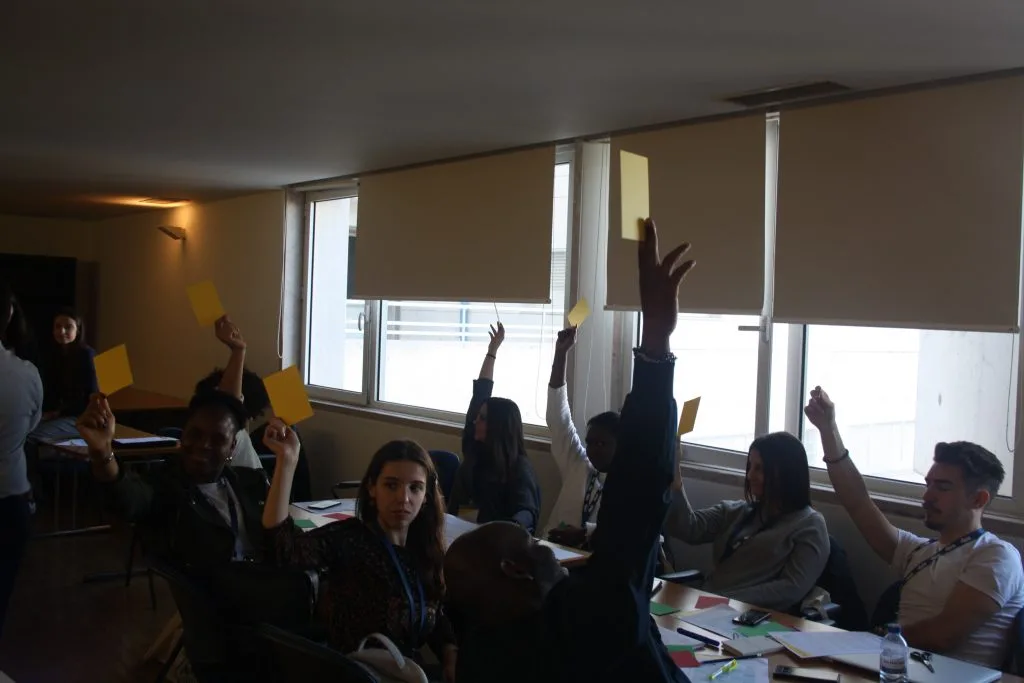
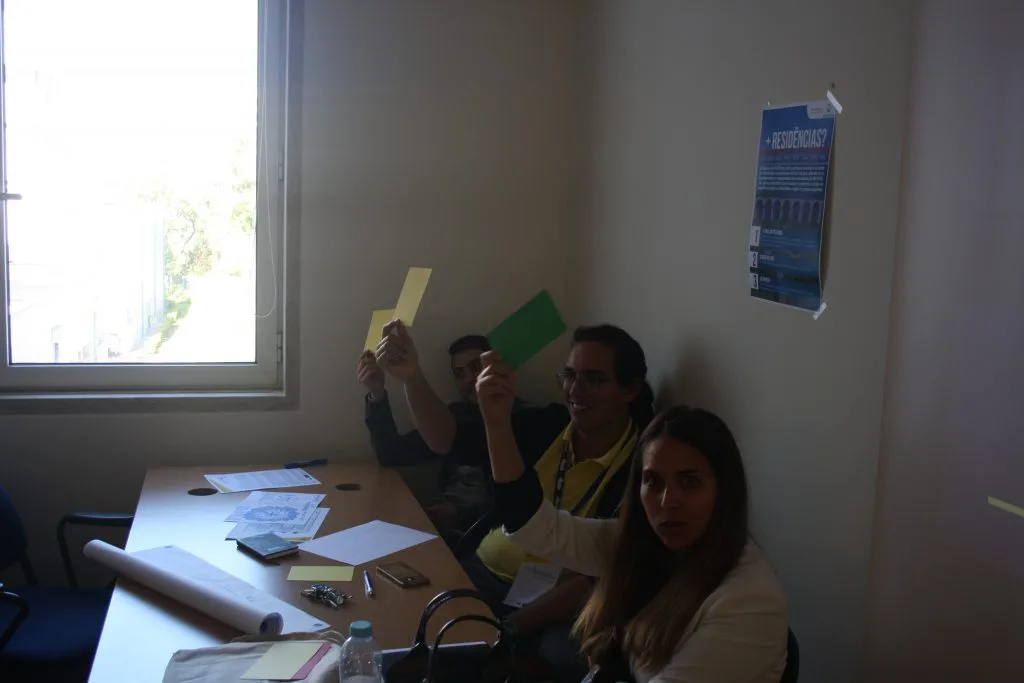
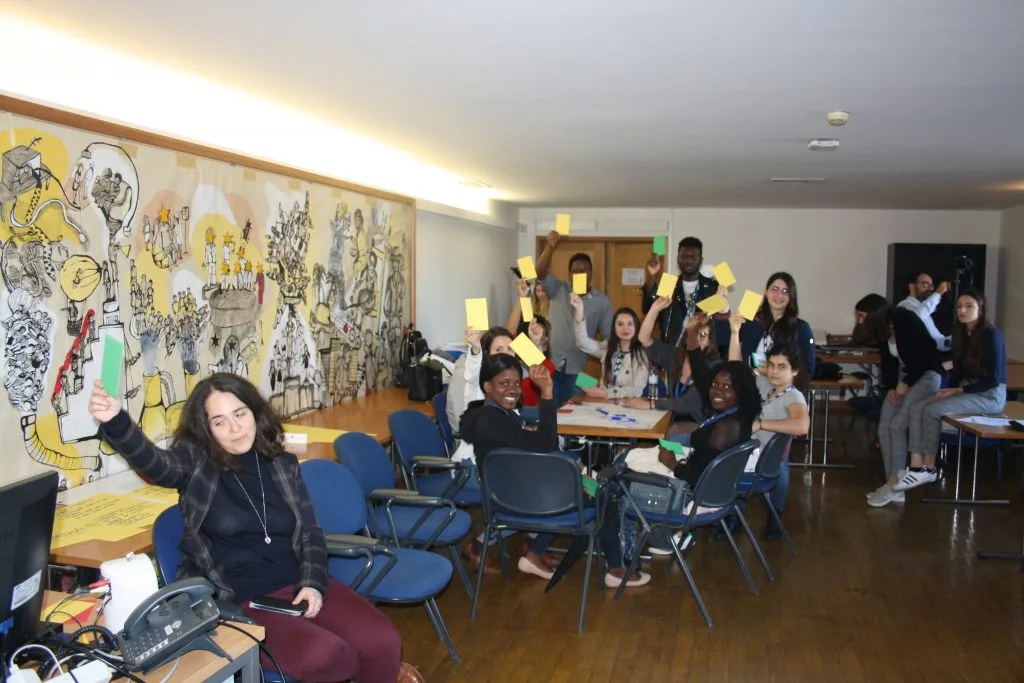
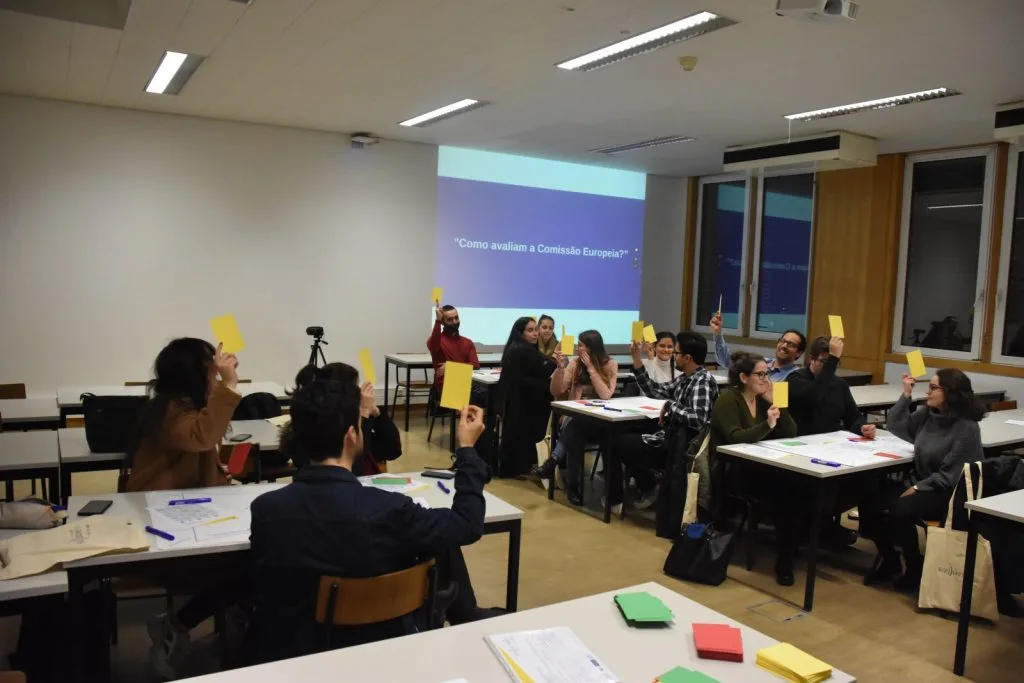
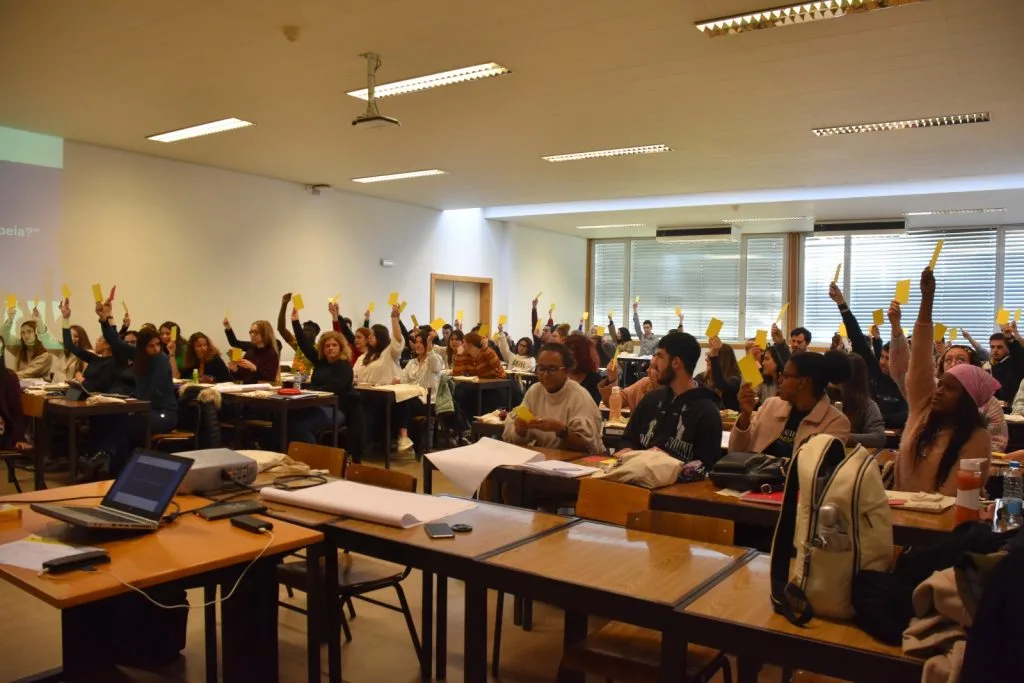
This event ended with the presentation of the web-course “ChangEU Multipliers” and with each participant showing a card to the actual European Commission, where Green meant that they feel European Commission aligns with their interests and opinions, Yellow meaning that they somehow feel connected with the European Commission work, but they feel some lack of representation and Red signalizing that they don´t feel represented at all by the work done by the European Commission.
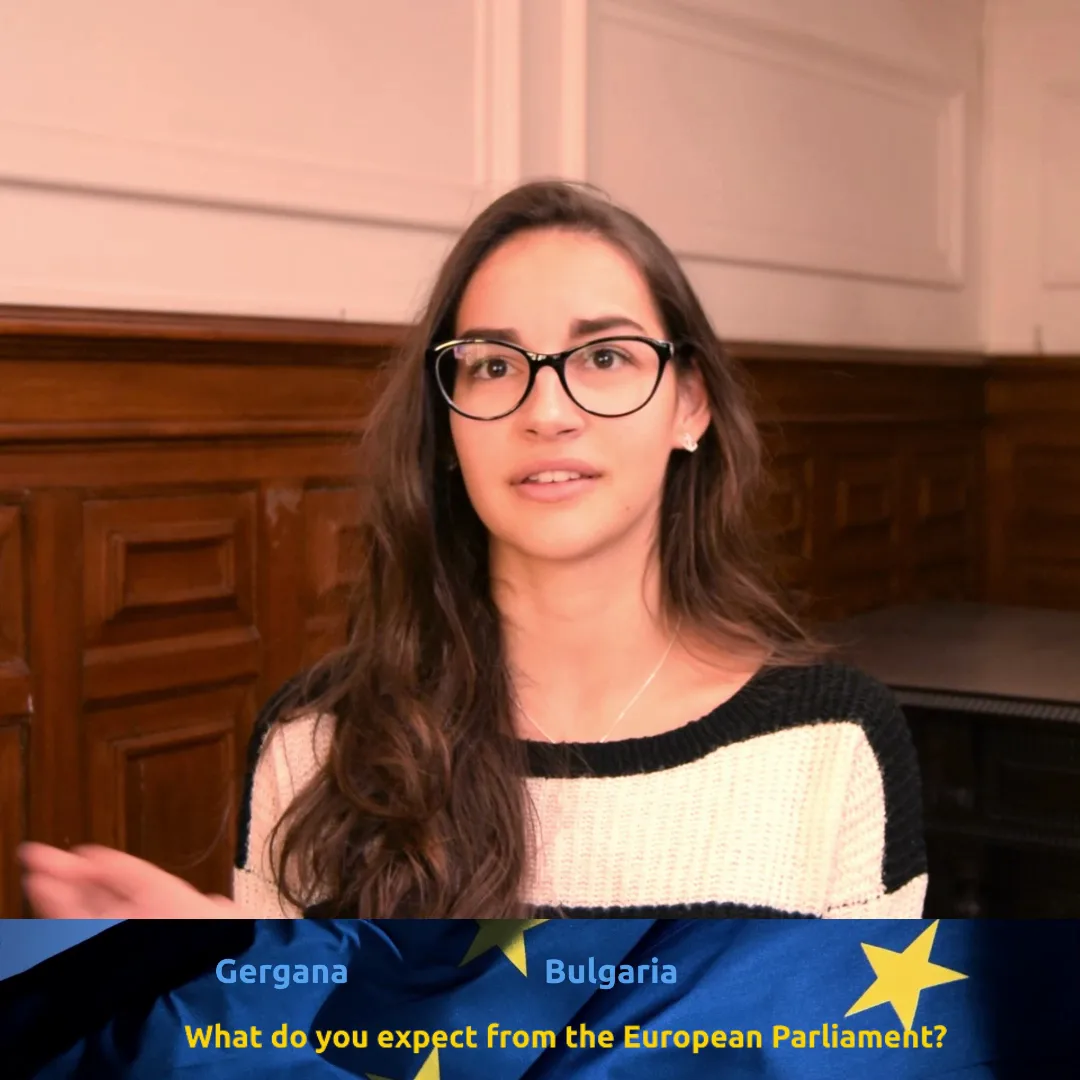
During this event, some of the young participants also shared with us their expectations regarding European Union and the European Parliament.
E(u)lections´19: Think, Decide, Change intends to hear what young people have to say about the European Union.
In this video series, you can watch what some of our participants have answered to the questions about what they expect from European Parliament and what Europe represents to them.
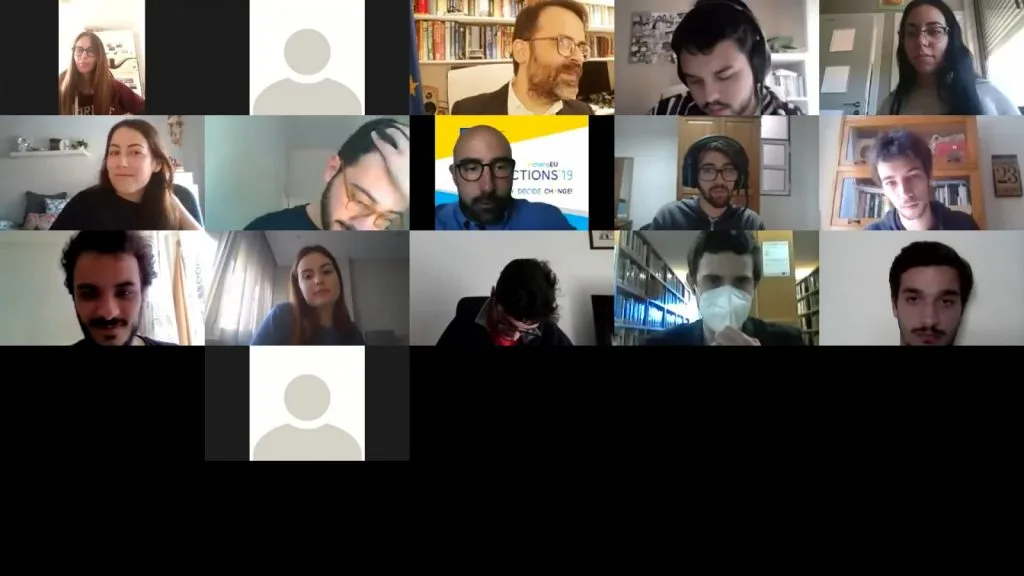
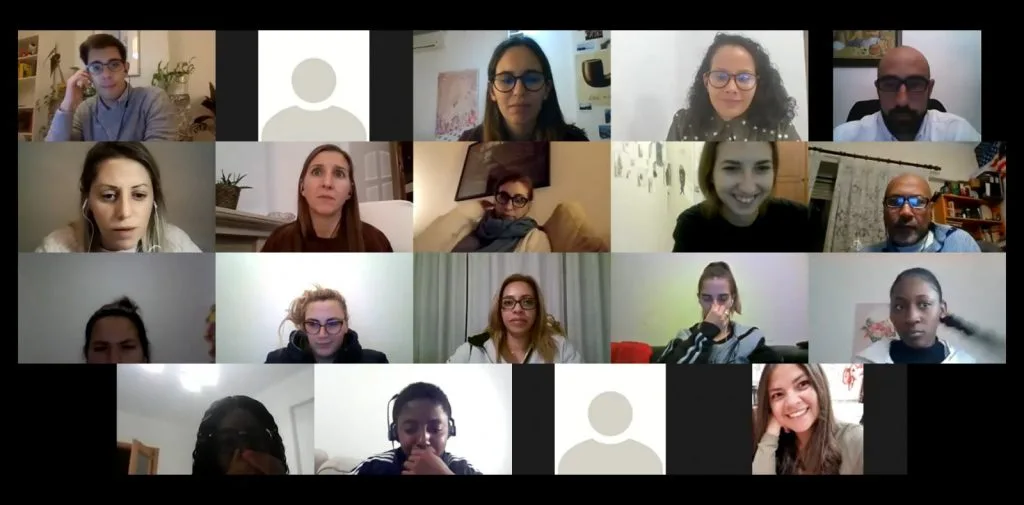
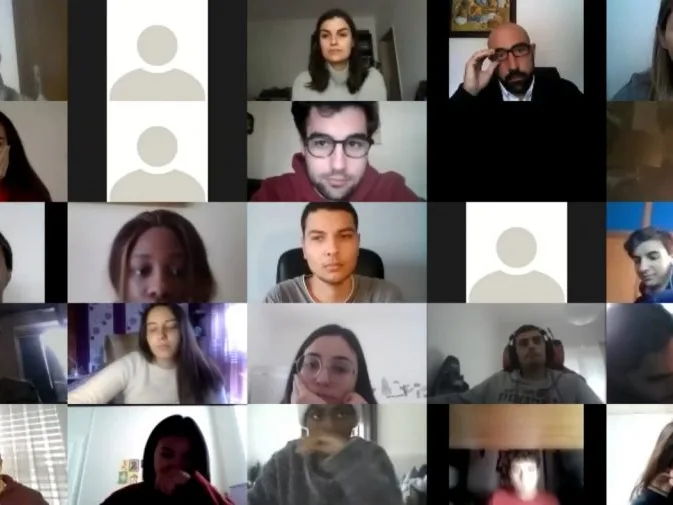
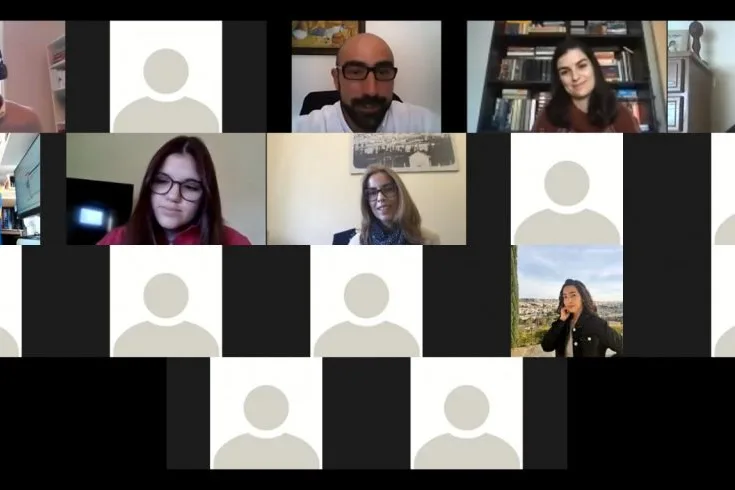
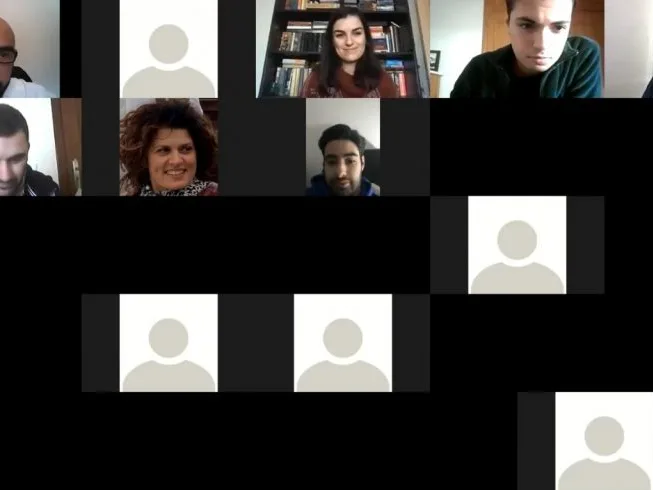
The EULECTIONS’19 roadshow continued online with Universidade dos Açores on December 11, 2020. The event gathered 46 citizens, including 41 participants from the city of Ponta Delgada, S. Miguel, Azores, 5 participants from the city of Lisbon, Portugal, to reflect and collect perspectives from the archipelago, one of the European Union (EU) outermost regions, about the future scenarios for the EU.
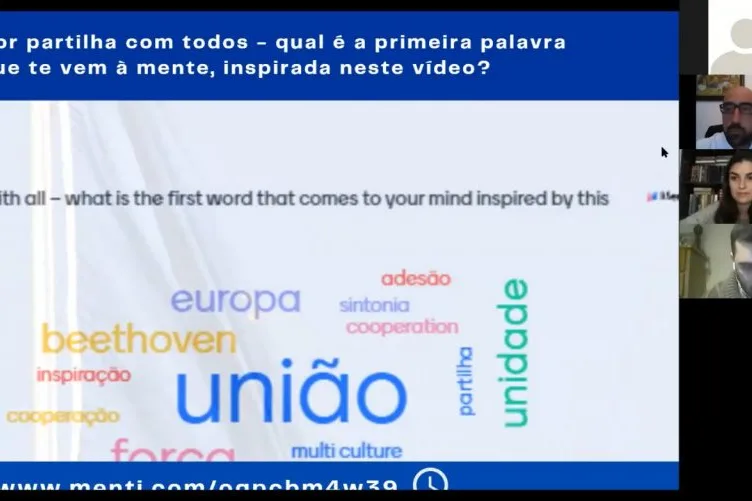
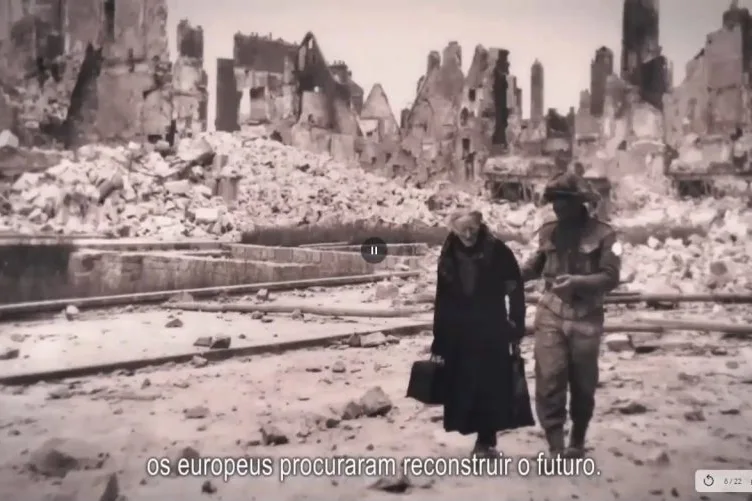
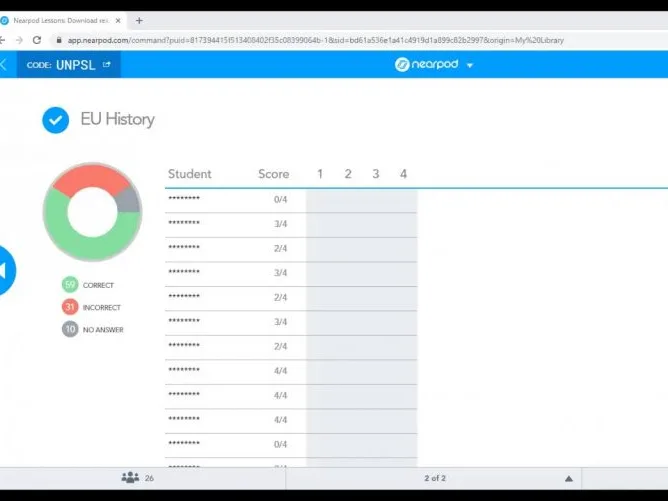
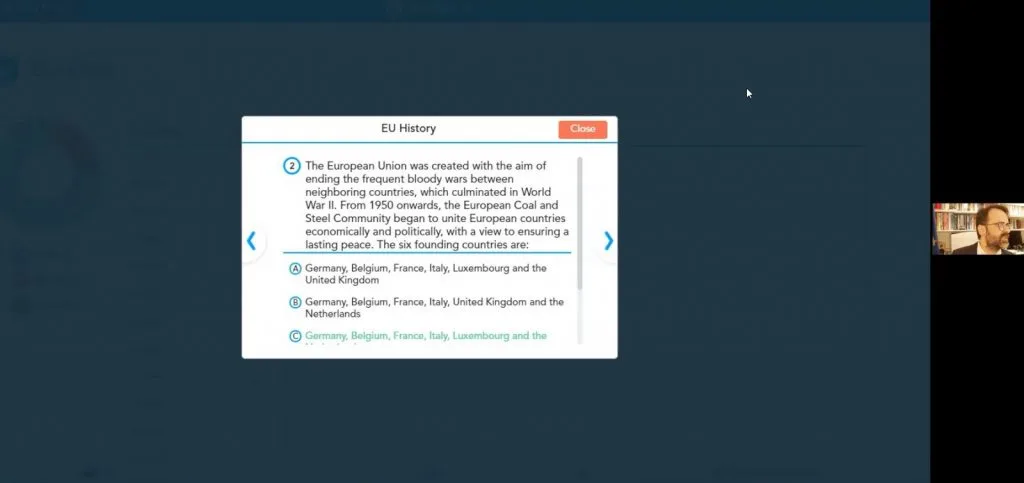
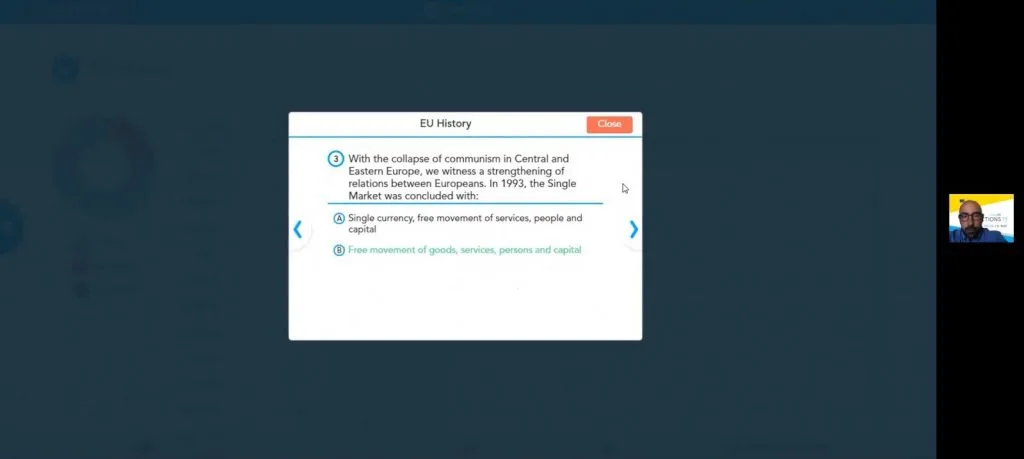
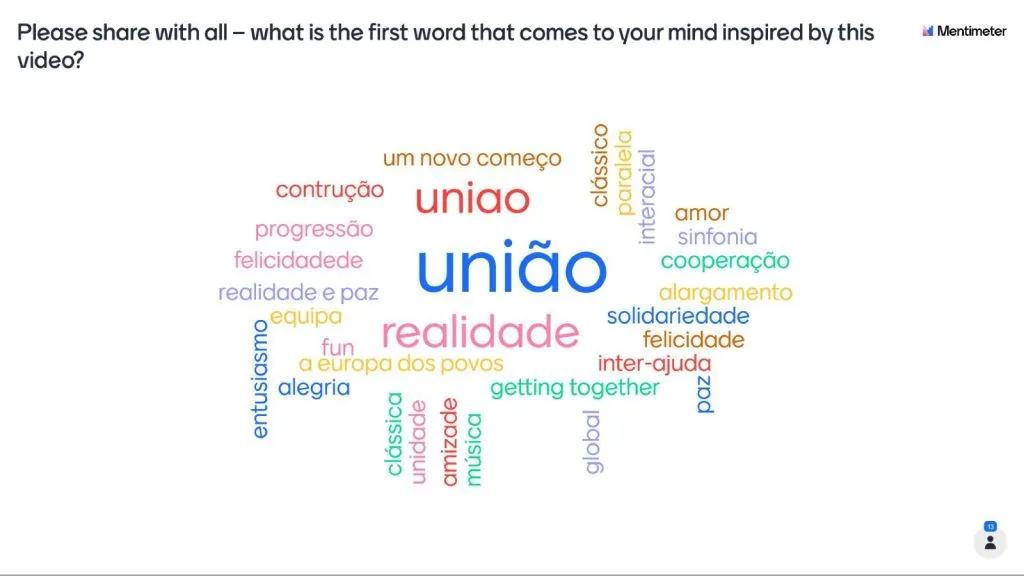
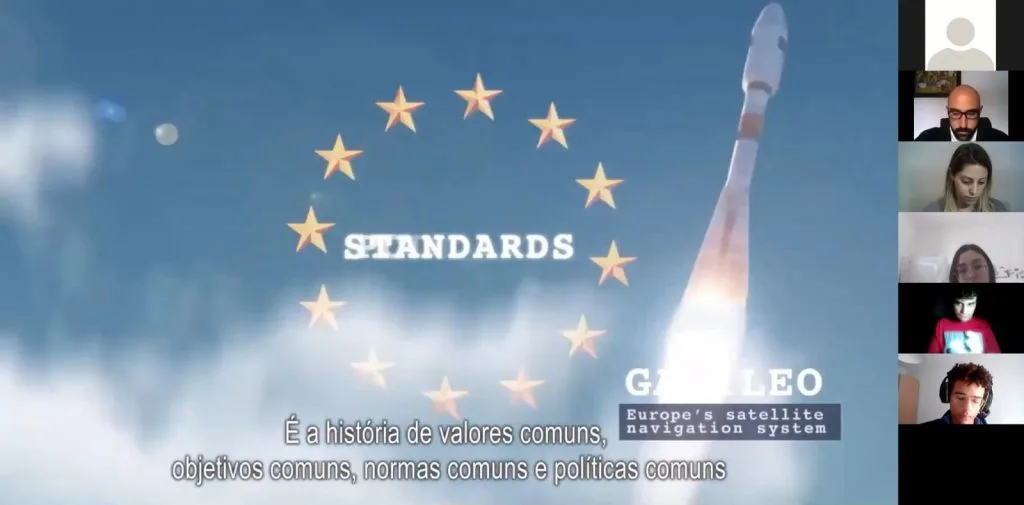
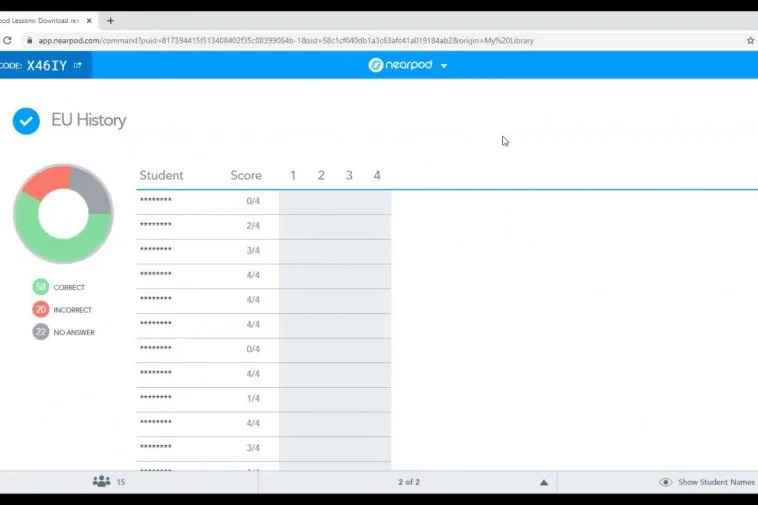
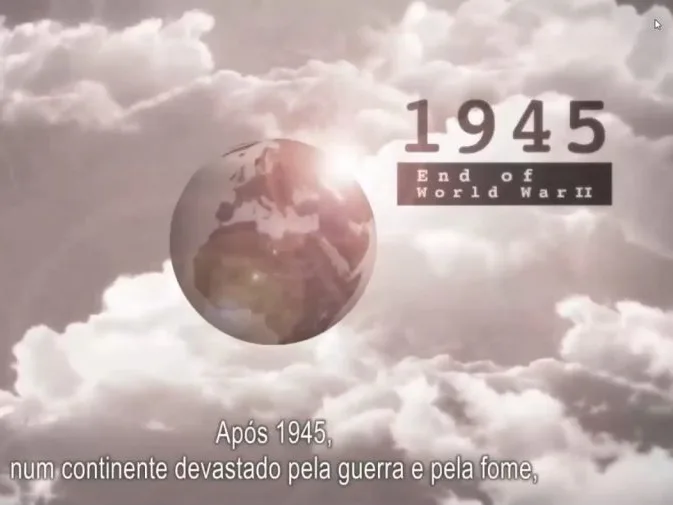
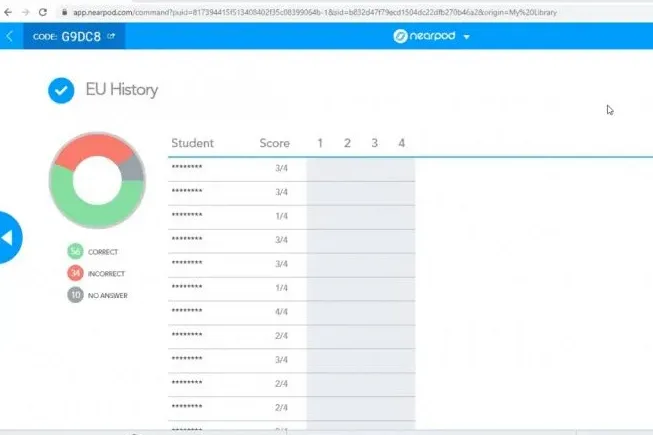
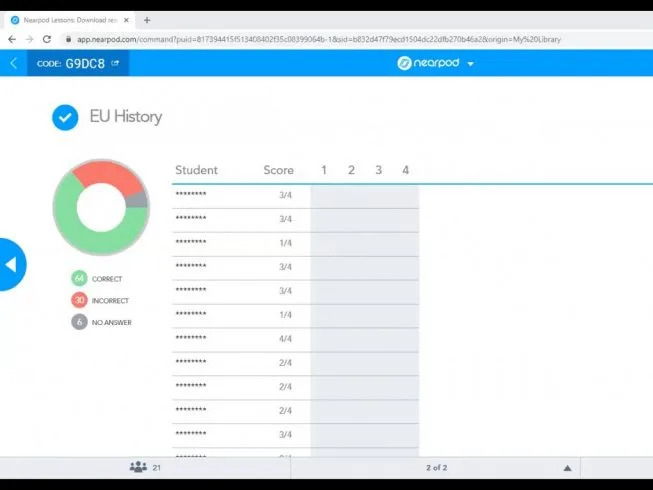
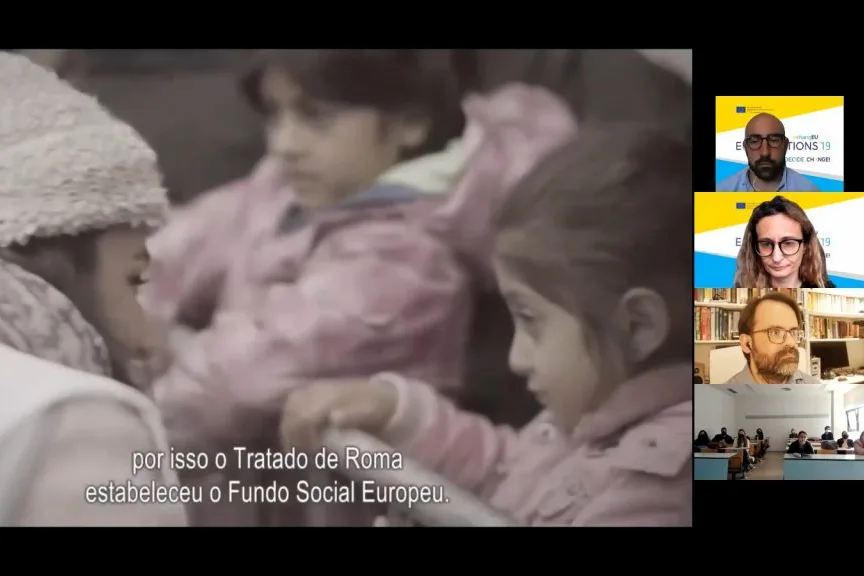
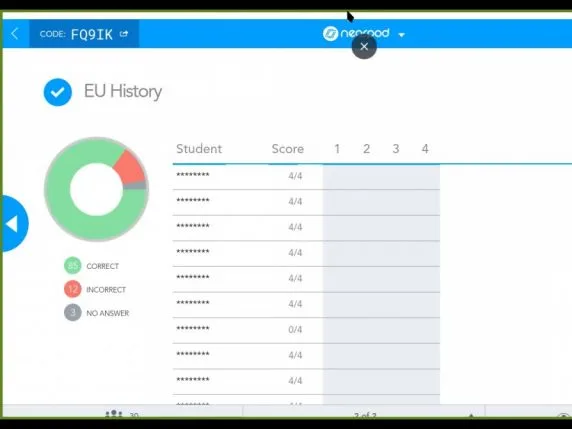
We’ve started the session with the project’s presentation and a short video about Europe’s day and asked participants to share the words they associate with the video and Europe. After a brief commentary about the group’s word cloud, we’ve presented a short video about the history of the EU, followed by a quiz on this topic. Participants were invited to test their knowledge about the European project after the Second World War, before the reflection about the present and future of the EU.
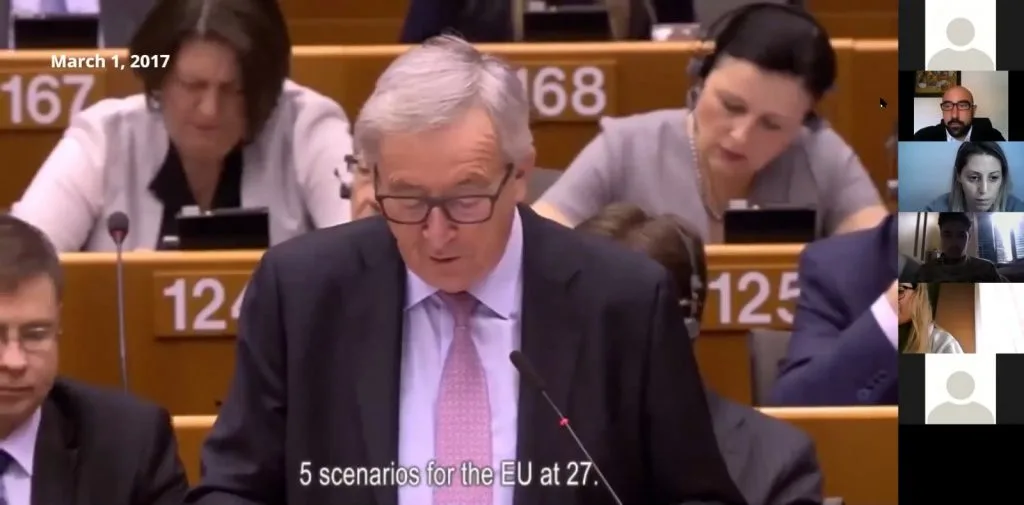
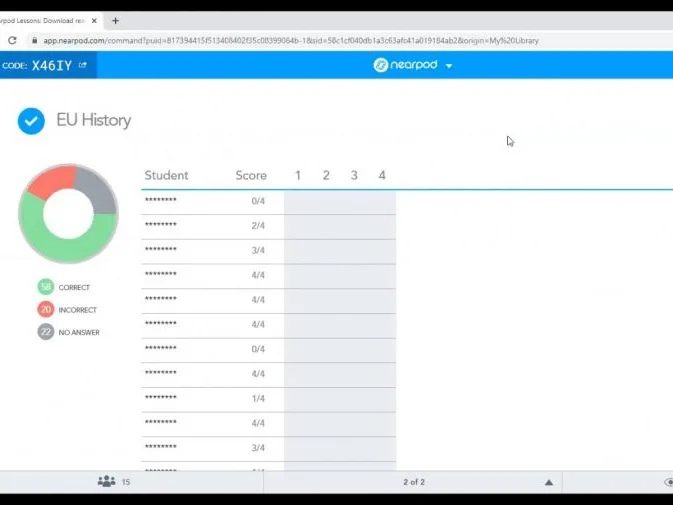
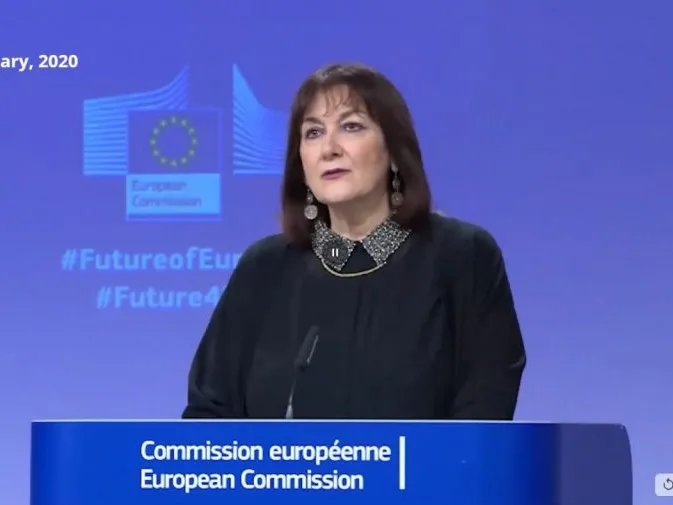
After sharing the quiz results and a brief discussion, the next activities of the workshop were focused on the current state of the EU and the possible ways forward. Having, as a starting point, a video and a presentation about the “White Paper on the Future of Europe”, the participants were then divided in small groups, in different Zoom rooms, with the task of choosing and reflecting about one of the five scenarios, its pros and cons. Each group was supported by a facilitator.
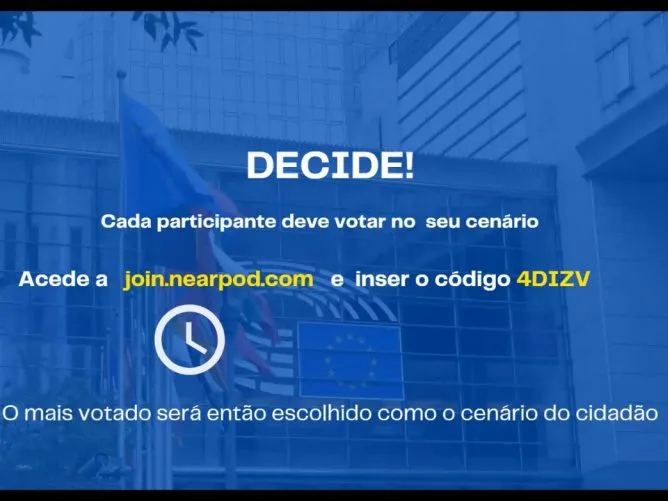
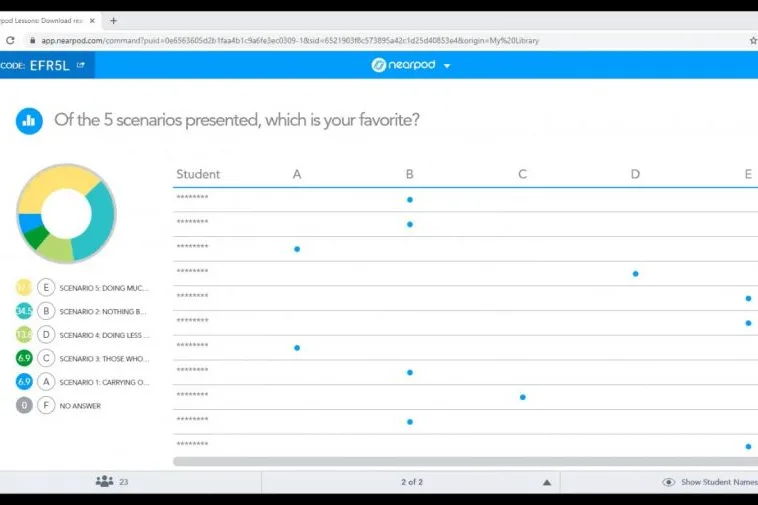
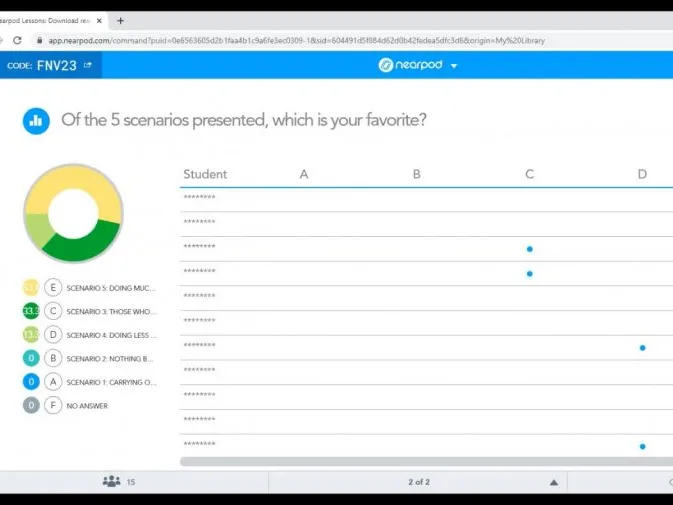
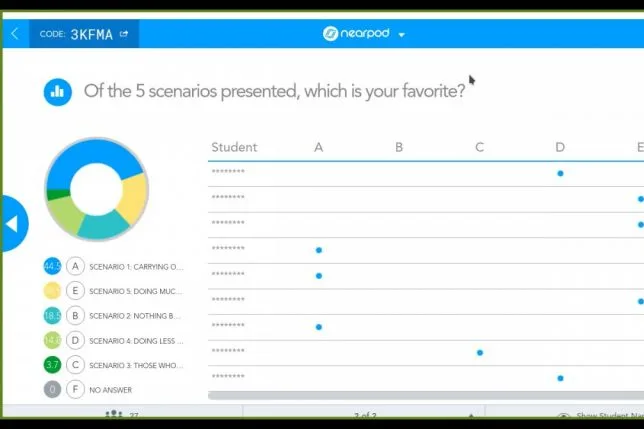
Following the reflection about the scenarios, each group’s main conclusions were presented and debated by the facilitators and the participants. After this collective reflection, each participant was invited to decide individually, which scenario they considered better for the future of the EU, the “citizen’s scenario”.
For some of the participants, the Union needs to consolidate its institutions and coordination processes to respond to challenges, as for others it needs to change to “do much more together”.
Recognizing Brexit and the initial COVID19 pandemic response as pivotal moments that underscore the need to make improvements to the European project, students also recognized the importance of the EU in promoting better living conditions in the poorer regions of the continent. They’ve also stated the importance of European values and the fight against extreme nationalist ideas to keep united in diversity.
As for citizens’ role in shaping the EU’s future, students emphasized the importance of improving the Union’s communication with citizens, especially from peripheral regions, and find ways to engage Europeans in the debate.
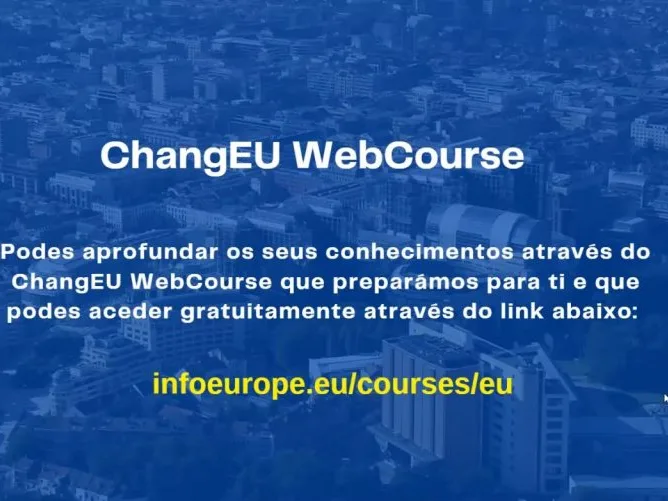
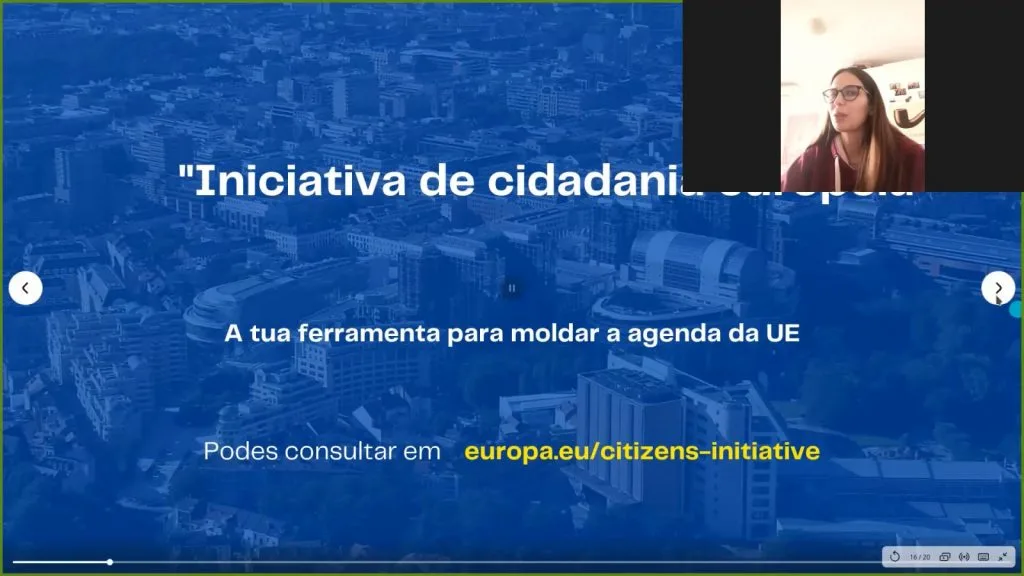
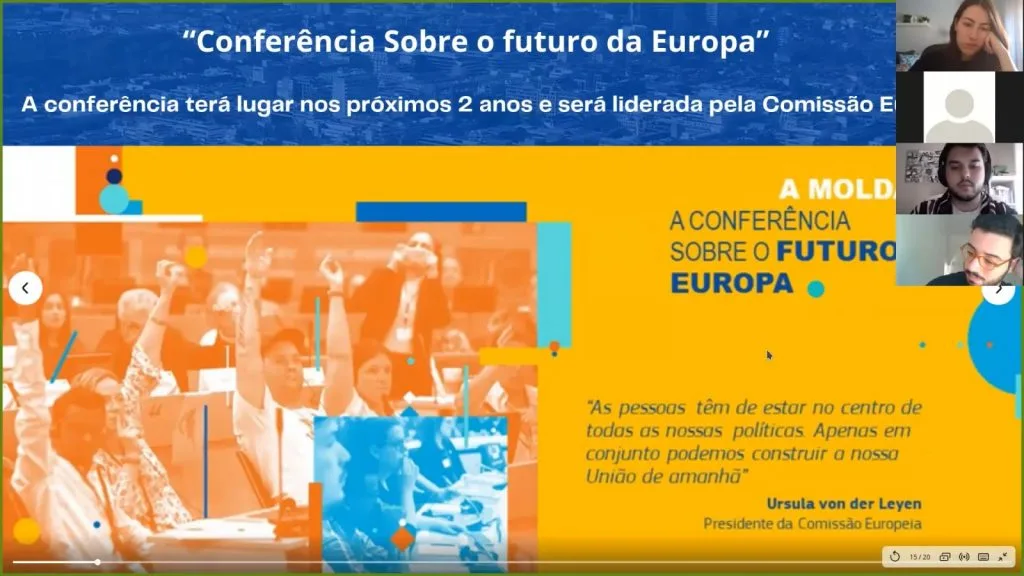
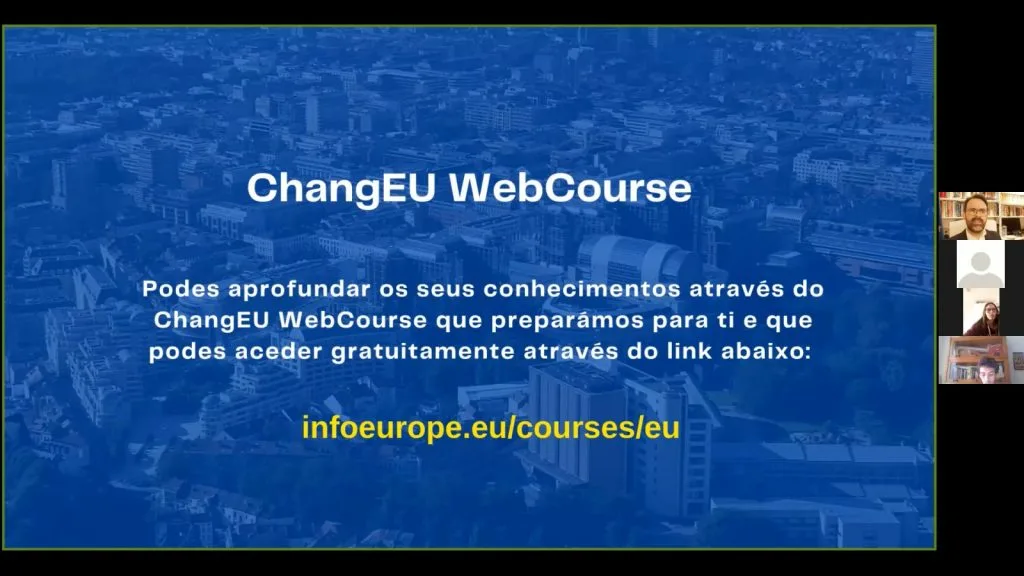
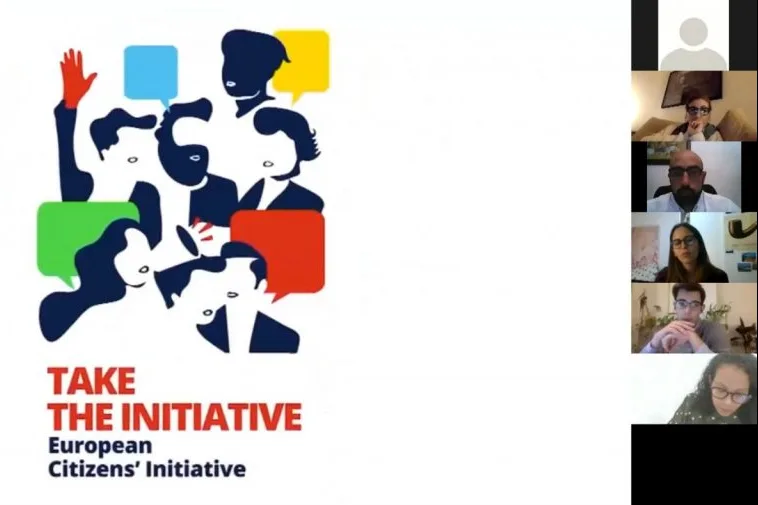
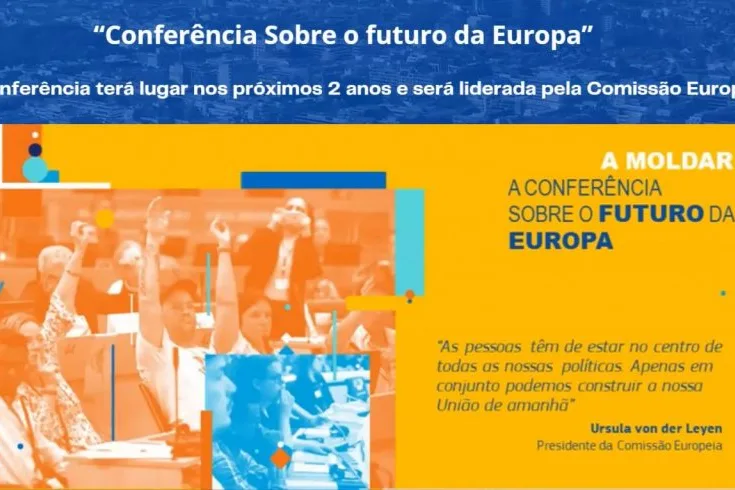
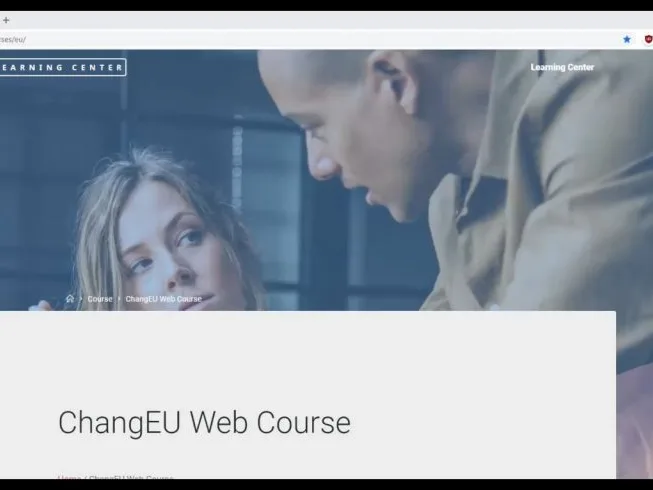
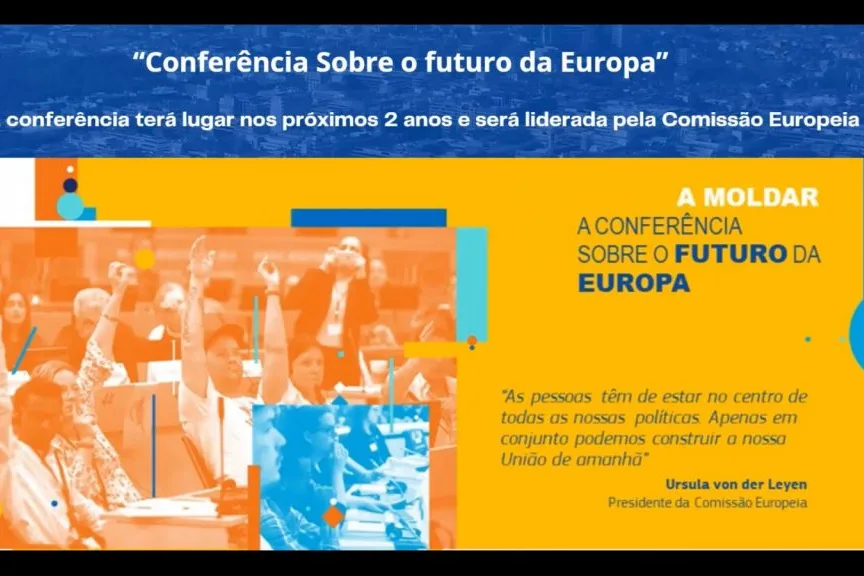
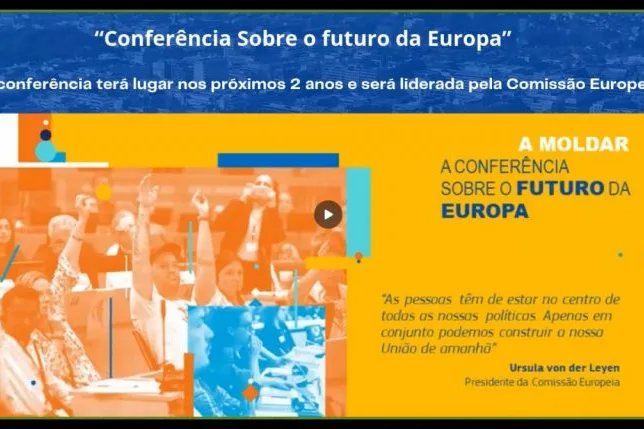
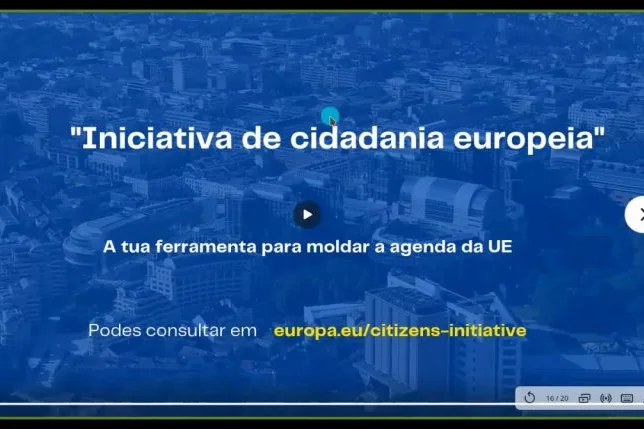
With the aim of promoting the participants interest in the future of the EU, we’ve share information about the Conference on the Future of Europe and the European Citizens’ Initiative, key instruments to allow citizens to engage with the European project and shape its policies. Also, highlighting the importance of an informed and active European citizenship, we’ve shared with participants the ChangEU Webcourse, developed in the framework of the project, where they can access information about the European Union’s history, role and challenges.
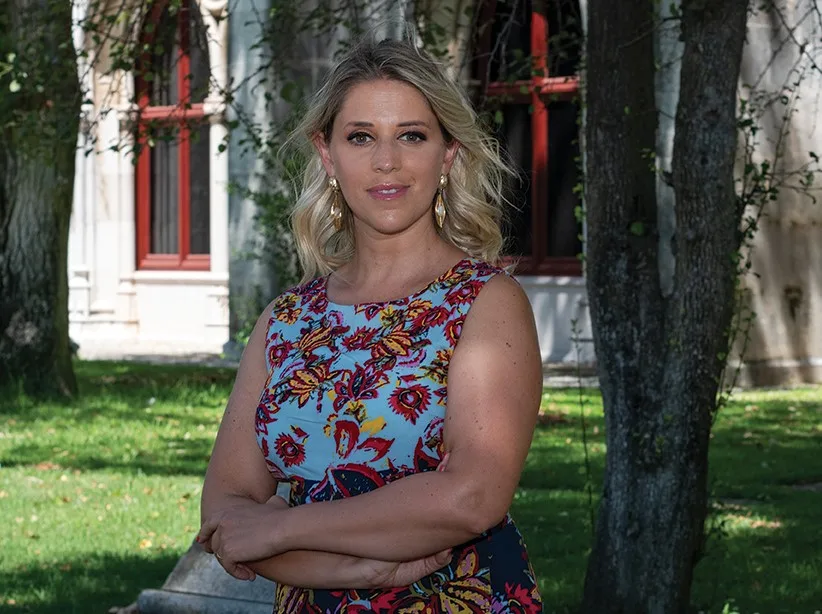
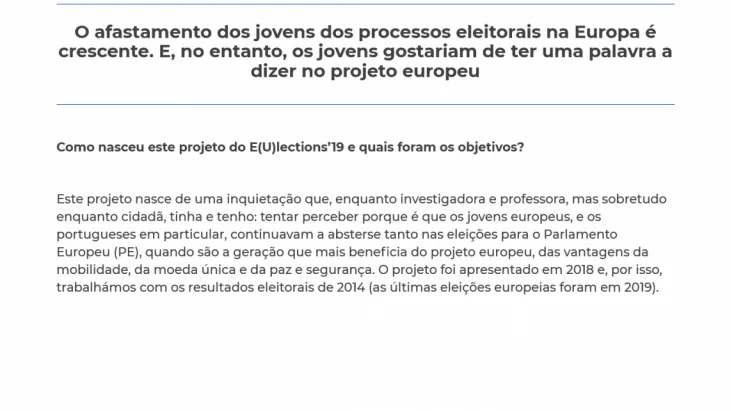
Ana Isabel Xavier, CEI-Iscte’s researcher and EULECTIONS’19 coordinator was interviewed for the last number of ENTRECAMPOS, Iscte’s magazine. The talk was focused on youth participation in European affairs, including in the electoral processes, ways to promote a citizens’ engagement with the EU and how the project has been promoting a dialogue with youth from various countries about the future of the European project.
Looking at the feedback the project has had from the participants, Ana Isabel Xavier highlighted young people’s ambitious visions for the future of the EU. When questioned about the 5 scenarios put forward by the Juncker Commission, they tend to choose those where the Union has a greater role and emphasize the need for more solidarity and action in areas like the environment and jobs. But they also recognize EU difficulties and challenges in responding to important events like the financial crisis and to the COVID19 pandemic.
Recognizing the importance of improving participation and communication channels between the EU and European citizens, Xavier believes that progress has been made but also considers that the links between citizens’ perspectives and policy making must be enhanced.
On May, 4, 2021, the EULECTIONS’19 roadshow returned to Iscte, to promote an online workshop with Political Science students. The event involved 29 citizens, including 28 participants from the city of Lisbon, Portugal, 1 participant from the city of Madrid, Spain
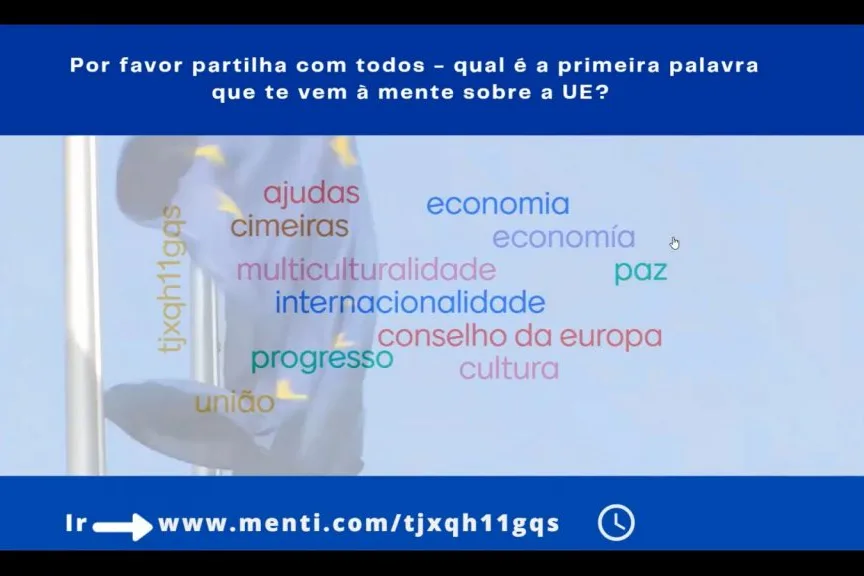
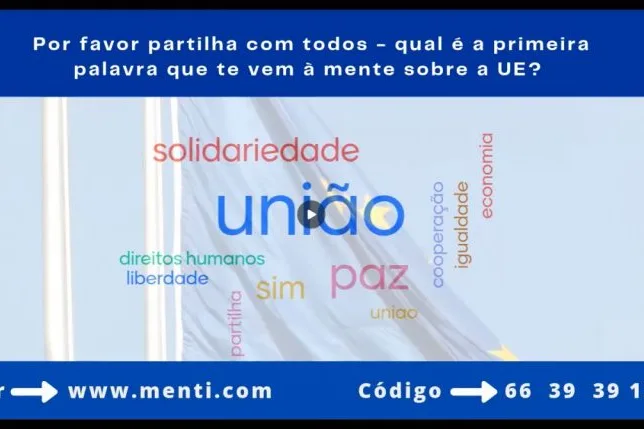
The workshop started with a project presentation by the coordinator and the partners, followed by an introductory activity in which students where invited to share the first word they associate with the EU.
After the introduction, we’ve invited students to watch a short movie about the history of the EU and test their knowledge about the building of European community through a quiz. The first activities of the workshop aimed to set the floor to the discussion about the present and future of the European Union.
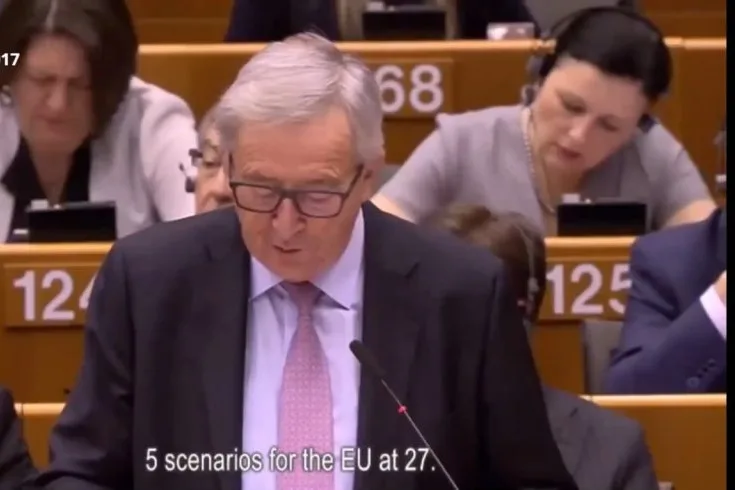
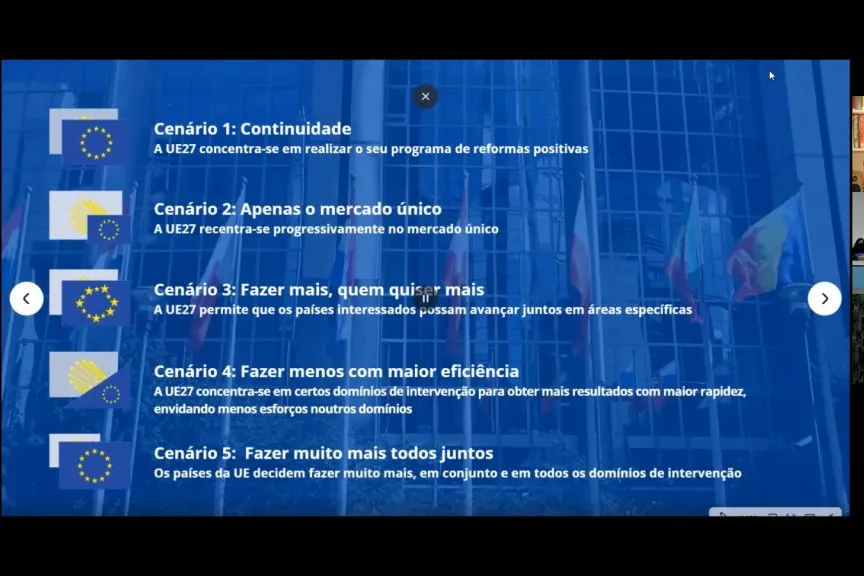
Following the quiz about Europe’s past and a brief commentary by the facilitators, we’ve presented a short video and additional background information about the White Paper on the Future of Europe and – Five scenarios. This was the starting point for the next activity, a group reflection about the pros and cons of the various scenarios. Participants were then divided in small groups to chose one of the five scenarios and reflect about it.
Each group’s main conclusions were presented and debated. For some of the participants, it’s important to set more ambitious goals for the future of the EU by developing the political union and improving its representativeness, although recognizing the risks of alienating those groups of citizens who oppose increasing the EU’s political role. For others, the more ambitious scenarios for the future of the EU are also difficult to achieve or even unrealistic in the short term, due to the very diverse socioeconomic conditions in the member states.
Another group of students considers important to improve and consolidate the current European model and its institutions and only then, advance to more ambitious goals. This strategy would contribute to improve EU’s relations with European citizens and reduce Eurocepticism although key important challenges remain, namely the international role of the EU and its ability to respond to international events and the development of common tax policies. The debate was wrapped up with the individual vote on the preferred scenario for the future of the EU.
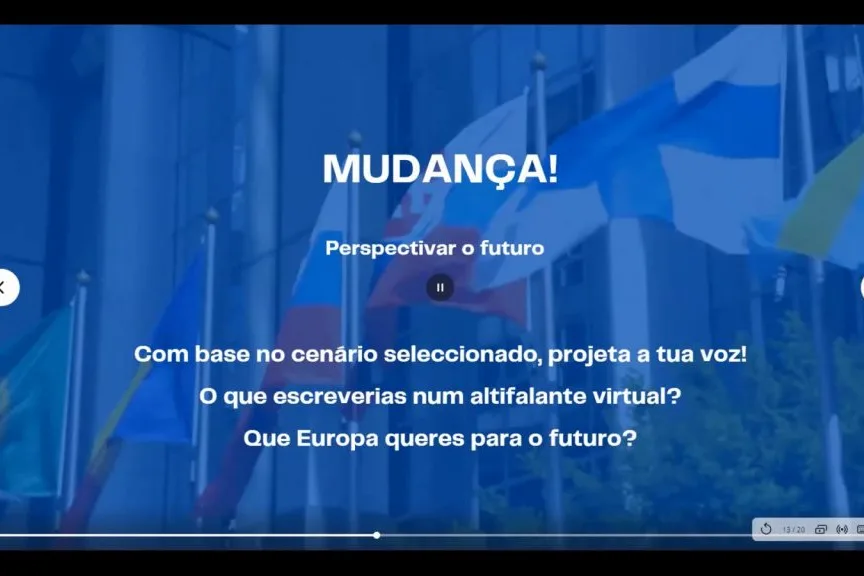
We then proceeded with the next activity in which we invited participants to present their suggestions regarding priority areas to be addressed by the EU to respond to its citizens’ needs and ways to improve the relationship between the European institutions and European citizens.
Regarding the priority areas for EU’s intervention, participants mentioned climate change and sustainability, the socioeconomic inequalities between countries and the refugees crisis. In order to improve its relationship with European citizens, EU institutions should be more transparent, promote participatory decision making, take into account each countries’ specificities and reduce bureaucracy. Citizens should also be more involved in European issues.
Following the collection of the students’ perspectives suggestions about European citizenship, we’ve shared two important initiatives regarding the future of Europe and citizens’ participation, the Conference on the Future of Europe and the European Citizens’ Initiative.
Finally, we’ve invited participants to continue to learn and share information about Europe through the online resource created by EULECTIONS’19, the ChangEU Webcourse.
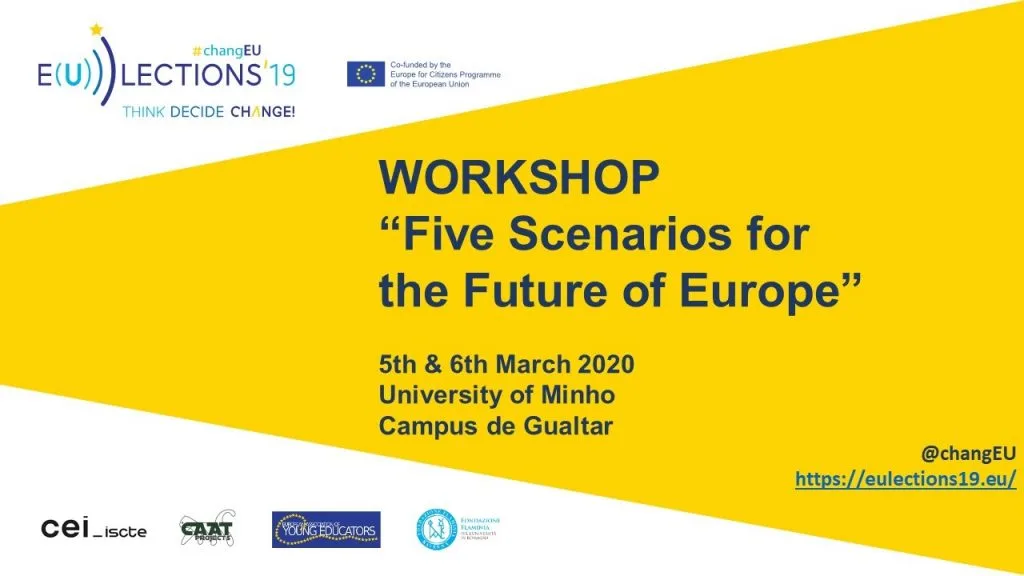
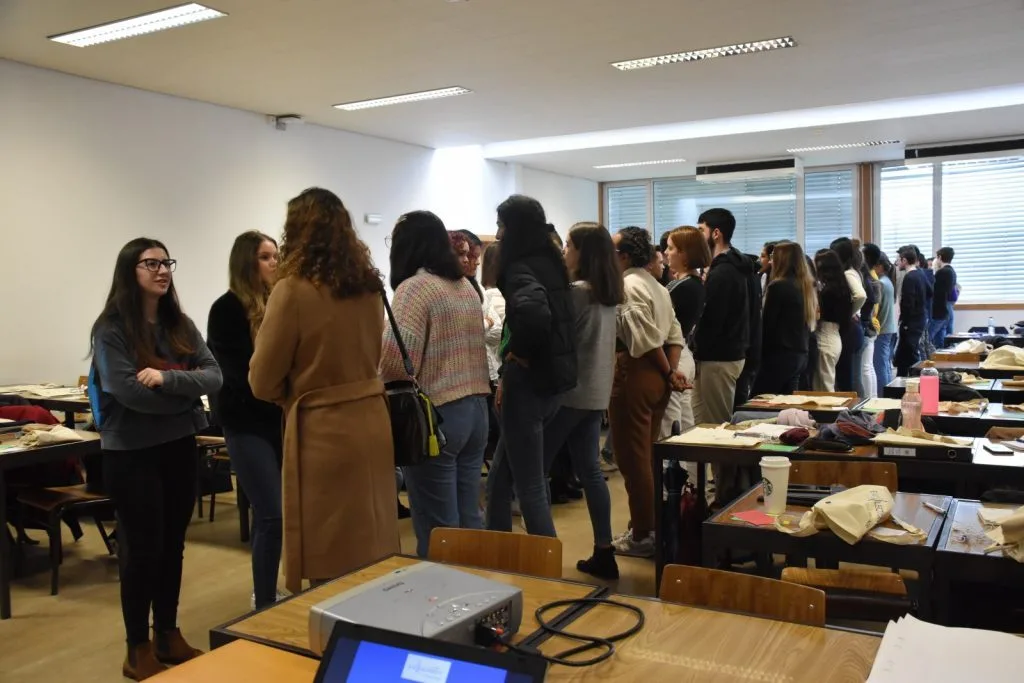
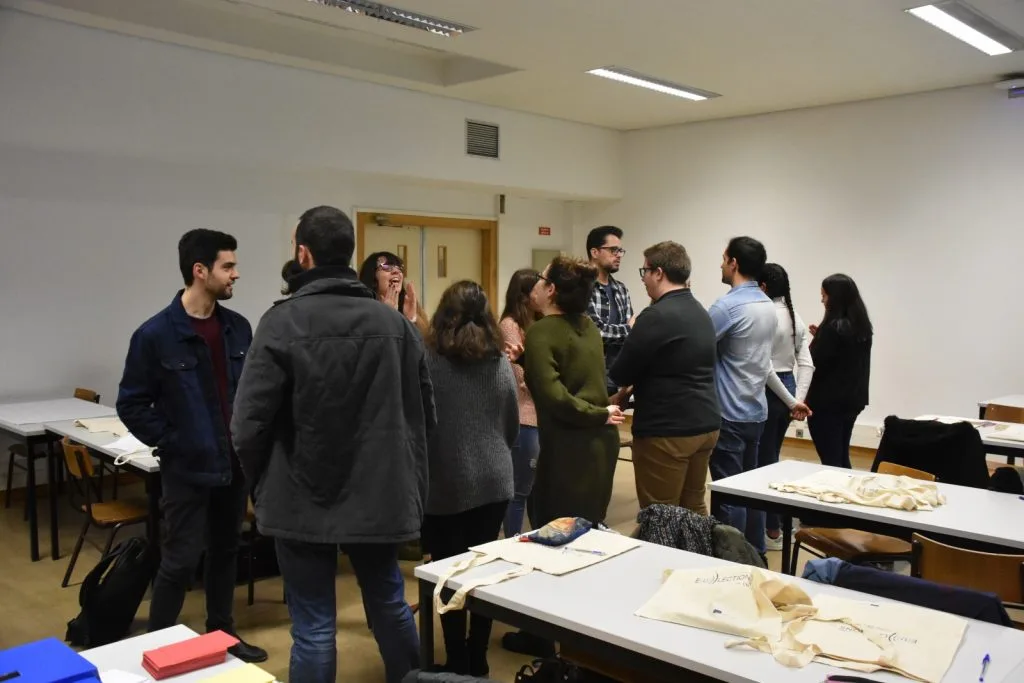
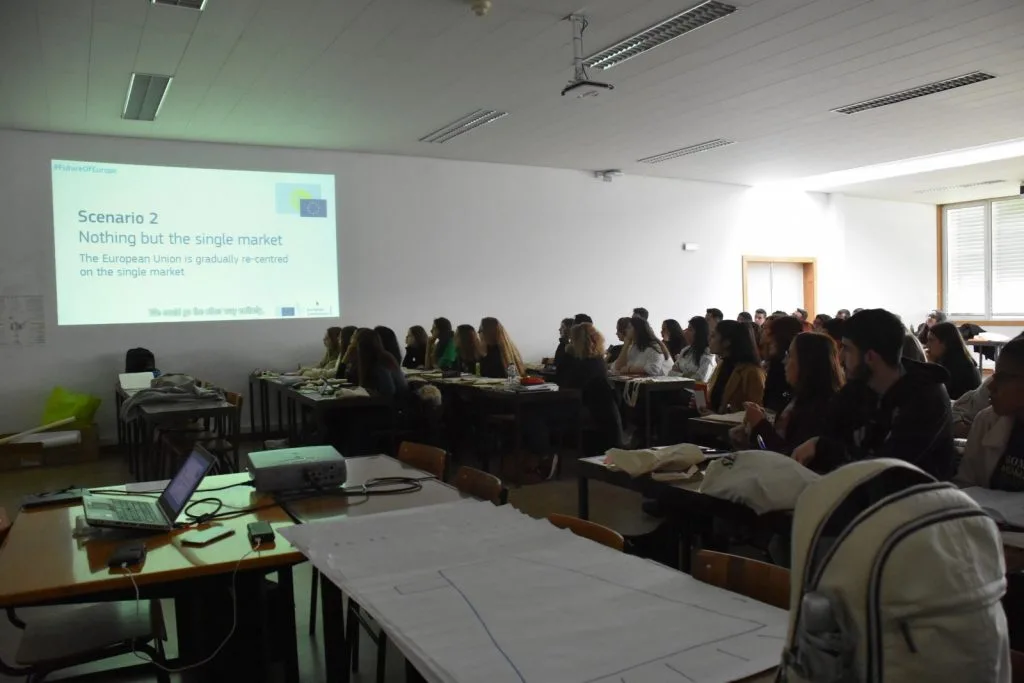
On March, 5 and 6, 2020, the Centre for International Studies (CEI-Iscte) and the European Association of Young Educators (EAYE) took the debate about the Future of the EU to Braga, in collaboration with the University of Minho, on the north of Portugal. The event involved 77 citizens, including 68 participants from the city of Braga, 7 from the city of Lisbon, Portugal, 1 from the city of Paris, France and 1 from the city of Rome, Italy.
During the workshops, students from the master’s and graduation classes on International Relations shared their perspectives and ideas about the 5 scenarios for the future of Europe. The event included 2 workshop sessions with the two groups. The sessions started with a brief presentation of the project by the partners, followed by the “EU dating” an activity in which participants had to share with each other their answers to the questions “What does it mean to be an European Union citizen”.
After the initial presentations and ice-breakers, we invited the participants to watch a video and a presentation about the 5 Scenarios for the Future of Europe. This introductory video and the additional information provided were the starting point for the group-work in which students chose one of the scenarios, reflected about its pros and cons and shared with the rest of the group. Each group also created a message for the European institutions.
Following the groups’ presentation about the scenarios they worked on, its pros and cons, and their messages for the EU, we asked students to share their perspectives on the current state of the European Union and the European Commission using green, yellow and red cards. The Green meant that they feel European Commission aligns with their interests and opinions, Yellow meaning that they somehow feel connected with the European Commission work, but they feel some lack of representation and Red signalizing that they don´t feel represented at all by the work done by the European Commission.
The Eulections’19 – Think, Decide, Change project took its roadshow to the Internet, adapting the debates and workshops to the virtual space. On December 4, 2020, the debate about the future of Europe continued with students from Universidade Autónoma de Lisboa who shared their perspectives about EU’s current and future challenges.
The event took place via Zoom and included two sessions with two groups of students and involved 64 citizens, including 63 participants from the city of Lisbon, Portugal, 1 from the city of Brussels, Belgium.
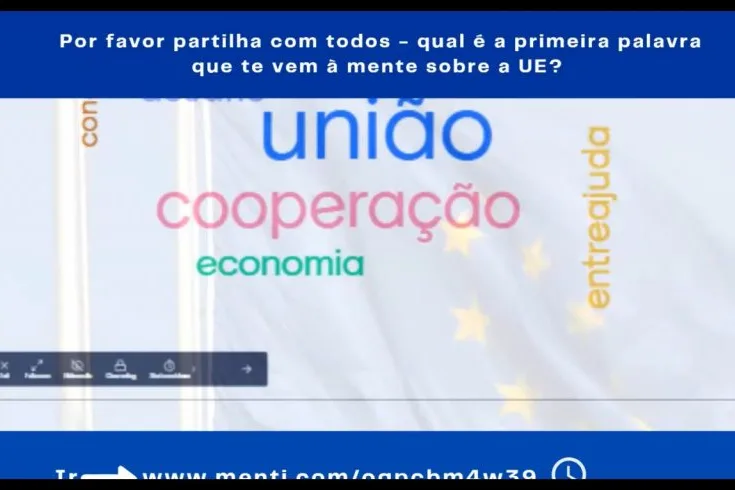
We’ve started the sessions by presenting the project to students and after that, a small video about Europe’s day. Using Menti, students shared the first word that came to their mind inspired by Europe and the introductory video.
After a debate about the students’ word cloud the groups watched a video about the EU’s political project and answered a quiz about the history of Europe and the European Union. Those two introductory activities aimed to set the floor for the discussion about the main topic of the event, the Five Scenarios for Future of Europe.
We started by looking at the Five Scenarios for Future of Europe with a video and a presentation. After that, the two groups were organized in smaller groups in separate Zoom rooms to choose and reflect about one of the scenarios, its pros and cons. Each group chose a representative who presented the groups’ main conclusions.
Following the groups’ debate about the five scenarios, we’ve invited students from the workshop groups to individually choose the scenario they believed to be the best for the future of the European Union.
During this collective reflection, the students emphasized the importance of European solidarity, namely in response to the pandemic, and its role in reducing socioeconomic asymmetries between member states, but also recognized the need to improve coordination and solidify the European project.
Students stated the importance of bringing the EU closer to European citizens by improving its communication and information initiatives, an effort that must be also undertaken by national governments and civil society, as citizens participation in European affairs is fundamental to improve the EU.
To promote the students’ engagement with the debate about the future of the European project, we’ve shared information about initiatives and instruments that aim to create spaces for European citizens participation, the Conference on the Future of Europe and the European Citizens’ Initiative.
Considering the importance of information in the promotion of active citizenship, The ChangEU WebCourse was presented to participants as an easily accessible resource to understand key facts about Europe’s history, its role and institutions and some initiatives where citizens can participate and contribute to shape its future.
Students from Universidade de Coimbra joined the EULECTIONS’19 online roadshow to debate the future of Europe on December 15, 2020. This event included two workshops with two groups of participants from the European Affairs course with a total of 28 citizens, including 23 participants from the city of Coimbra, 5 participants from the city of Lisbon.
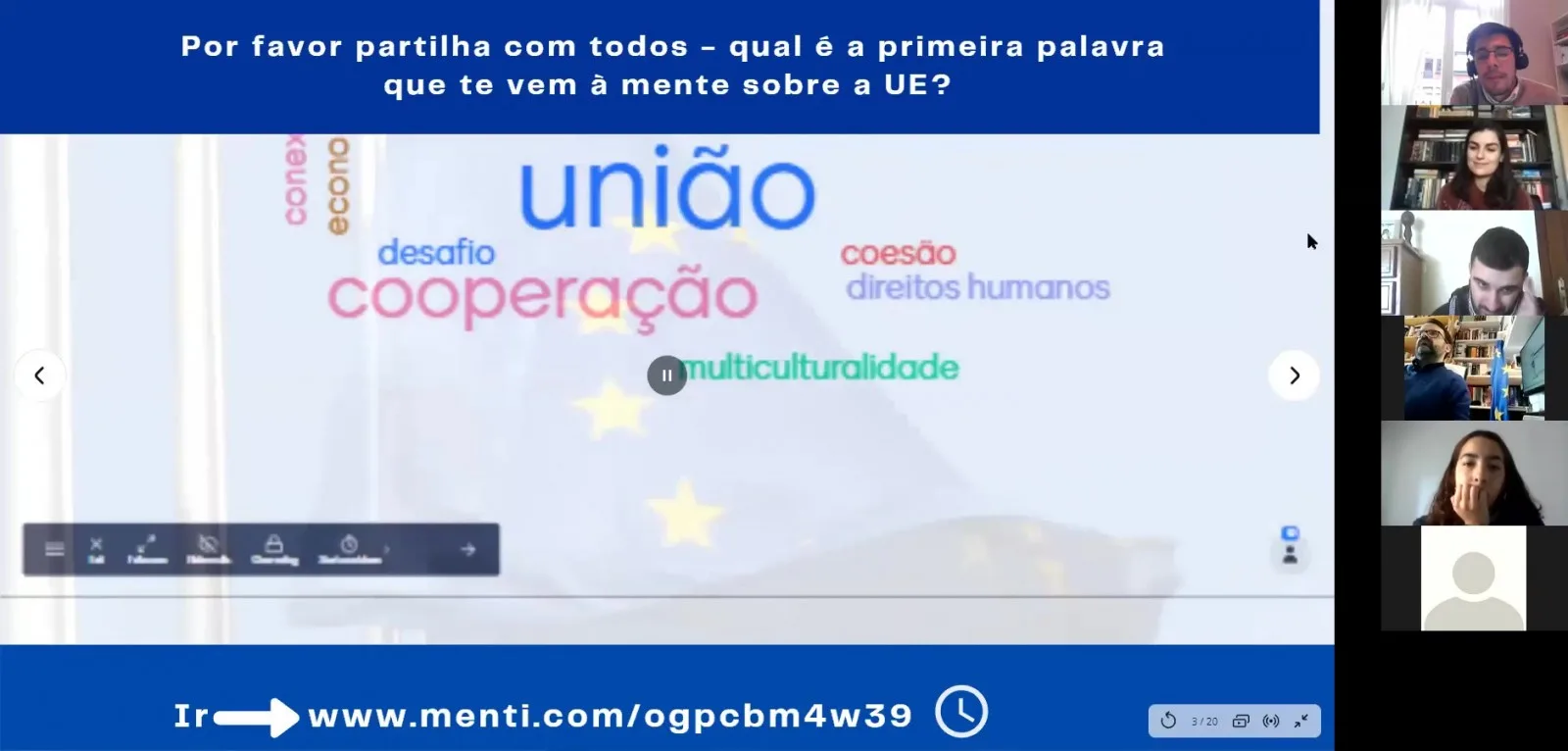
The workshop started with a brief presentation of the EULECTIONS’19 project by the partners and an overview of the goals and objectives of the session. Following the introduction, we’ve asked the participants to share the first word they associate with the European Union.
The word cloud was formed by words like “union”, “cooperation”, “economy”, “mutual aid”, “multicultural”, “human rights”, “development”, “challenge”, “connection”, reflecting mainly favorable perspectives about the EU. Following this initial brainstorm, we’ve challenged the students to test their knowledge about the history of the European project through a quiz. These first activities aimed to set the floor for the debate about the current state of the EU and its future.
After the quiz results were shared with the participants and commented by students and facilitators, we’ve started the collective reflection about the future of Europe with a short video and a presentation about the “White Paper on the Future of Europe”. In the two workshop sessions, the participants were divided in smaller groups with the task of choosing and debating one of the scenarios and sharing their perspectives. Each group had a facilitator to mediate the discussion.
The conclusions of the group work were presented by the group’s representatives and a debated followed with some comments from the facilitators. The students debated the 5 scenarios, with different perspectives emerging about how to overcome the challenges facing the European project.
For some students it’s important to focus on key areas to improve EU’s performance and therefore “do less more efficiently”, as for others the Union must strengthen its policies and institutions to deliver its current agenda. A third group of opinions was focused on a more ambitious EU that is able to do “much more together” namely, face climate change and health. This discussion was wrapped up with participants choosing, individually, the scenario they would prefer for the future of the European Union, a “citizens’ scenario“.
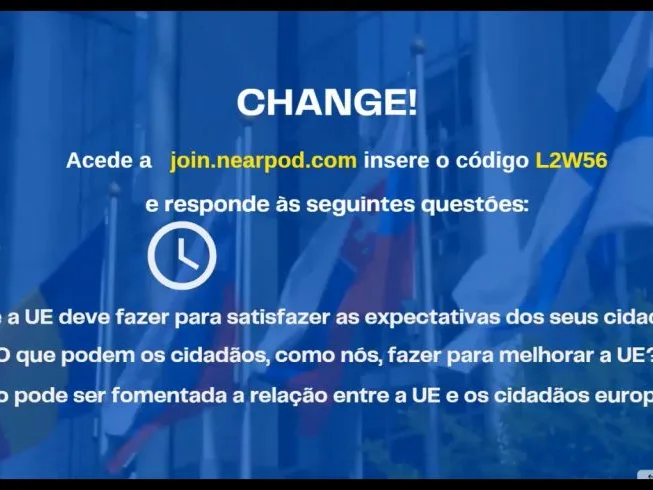
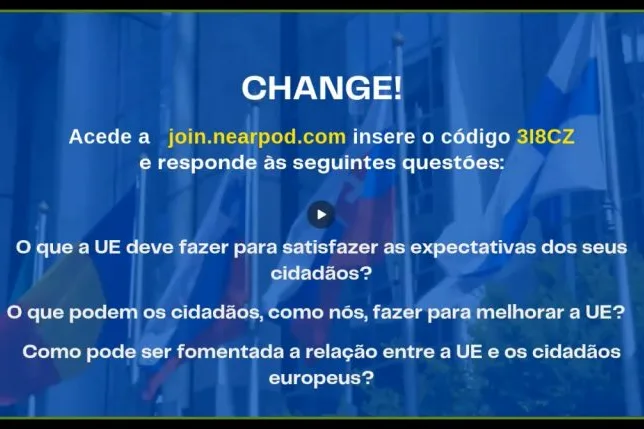
The group reflection was then oriented towards the relations between European institutions and European citizens namely, what should the EU do to respond to citizens’ needs? what can citizens do to improve the EU? how can the relationship between the EU and its citizens improve?
The students recommended the creation of better communication and participation instruments as well as more debate opportunities about European issues, underscoring the role of citizens in engaging with the institutions through the channels already available. They emphasized the need to continue to involve schools and universities in the discussions and promote a real understanding of what the EU really means.
In order to promote an informed and active citizenship, we’ve challenged participants to take part in the ChangEU Webcourse and share this easily accessible resource with others. We’ve also shared the current initiatives that allow citizens to shape the EU’s policies and the debate about its future namely the European Citizens’ Initiate and the Conference on the Future of Europe.
EULECTIONS’19 has developed an online course about EU’s history, its institutions and the instruments available for citizens’participation. Check the programme.
Ana Isabel Xavier, CEI-Iscte’s researcher and EULECTIONS’19 coordinator, participated in the ‘Webinar Parlameter 2020: What Europeans think about Europe?’. An event organized by the European Parliament’s office in Portugal, where the data from Parlameter (2020) – an annual Eurobarometer survey that monitors the public opinion on the European Parliament and the EU – were presented and discussed.
Due to the current context, Ana Isabel Xavier highlighted the importance of 2020 edition of Parlameter. It was with some anticipation that this assessment of European citizens regarding the public image and the role of the European Parliament was expected. As well as their feelings towards European identity and citizenship and the hierarchization of policies and values within the European project. In Xavier’s words, the changes that took place since January 2020, namely the generalized focus on national and European responses to Covid-19, the Brexit process already underway, and the new US administration, have demonstrated the importance of the European project in times of instability and uncertainty.
The rest of the intervention was divided into five major points, where different indicators were introduced by the researcher. Among others, Xavier developed some considerations on data that demonstrate a high expectation of European citizens towards EU’s social and economic response to the pandemic; but also spoke about the improvement of respondents’ attitude towards EU’s institutional dimension, with an increase of ten percentage points compared to the 2019 edition.
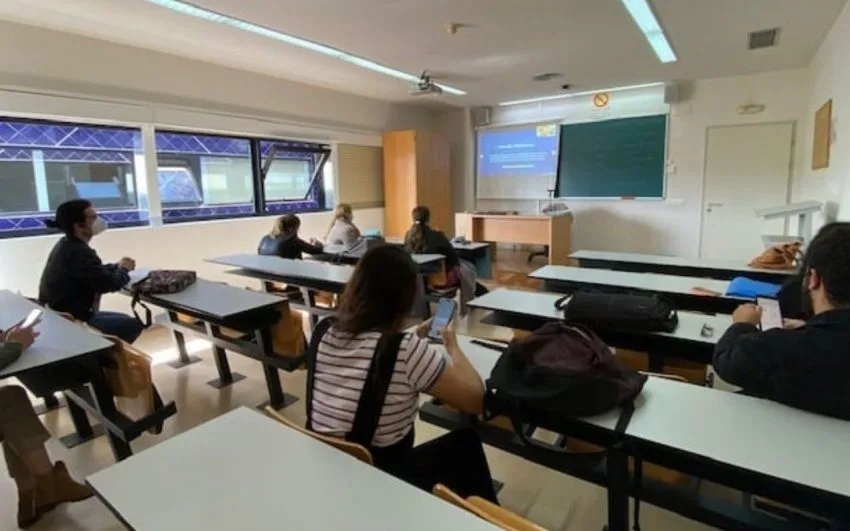
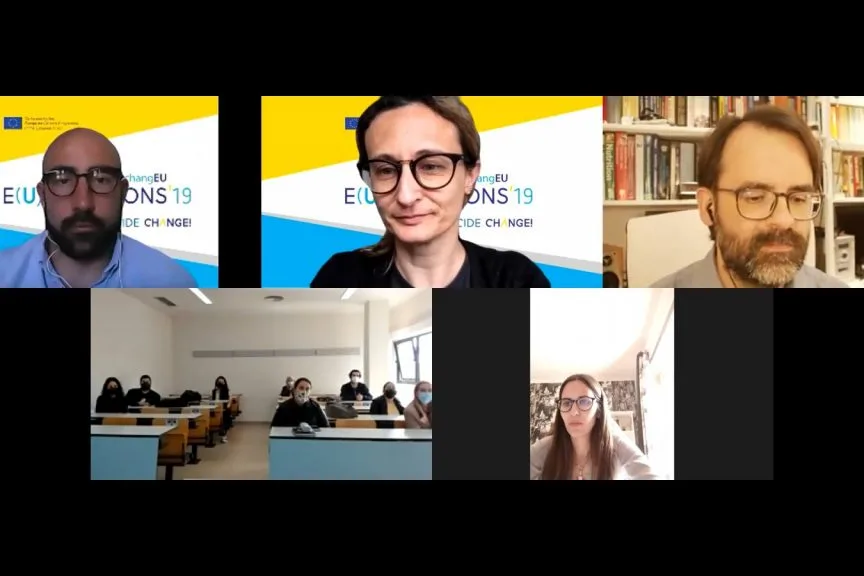
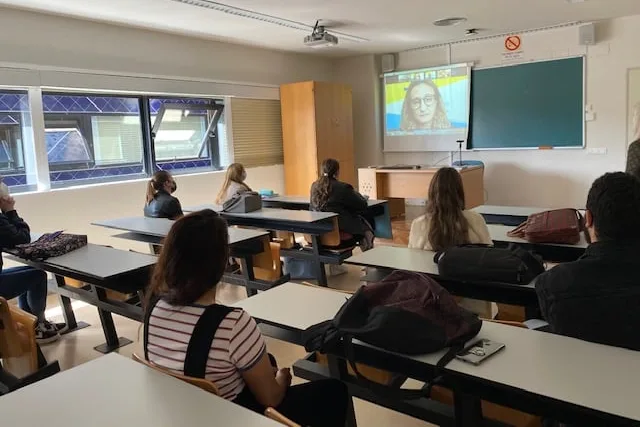
On 12 April, the workshop “Five Scenarios for the Future of Europe” was promoted in collaboration with Camões I.P. and the University of Extremadura. This workshop was organized after an invitation from a Professor and a class of students of Portuguese language at the University of Extremadura. The event involved 14 citizens, including 9 participants from the city of Badajoz, Extremadura, Spain, and 5 participants from the city of Lisbon, Portugal, having been an extra dissemination event. This hybrid workshop was conducted in a mixed format as part of the group was gathered in person at the university classroom at Extremadura and another part was online from Portugal.
The session started with a brief project presentation by the project partners and an overview of the workshop goals. The first activity was the word cloud formed by the words students’ associate with the European Union. The word cloud included words like union, culture, peace, economy, summits, aid, progress, Council of Europe, multicultural. Following the word cloud we challenged students to test their knowledge about EU’s history through a quiz, introduced by a short video.
After the first two introductory activities, we moved to the key theme of the session, the present and the future of the European project. We’ve introduced the debate with a video and a short presentation with key information about the “White Paper on the Future of Europe – Five Scenarios”. Students were then invited to organize in small groups, choose one of the scenarios and debate its pros and cons, with support from the workshop facilitators.
After the discussion, the groups’ representatives shared their reflection about the scenarios for future of the EU. For one of the groups, scenario 5, represents the utopia they associate with the European Union but they also consider it to be very difficult to achieve as European countries have diverse historical and cultural backgrounds and socioeconomic conditions. This is, according to the group, a great challenge to a more ambitious political union able to do more in more areas. In this case, the group considered that its important to keep the support to the social movements fighting against all forms of discrimination.
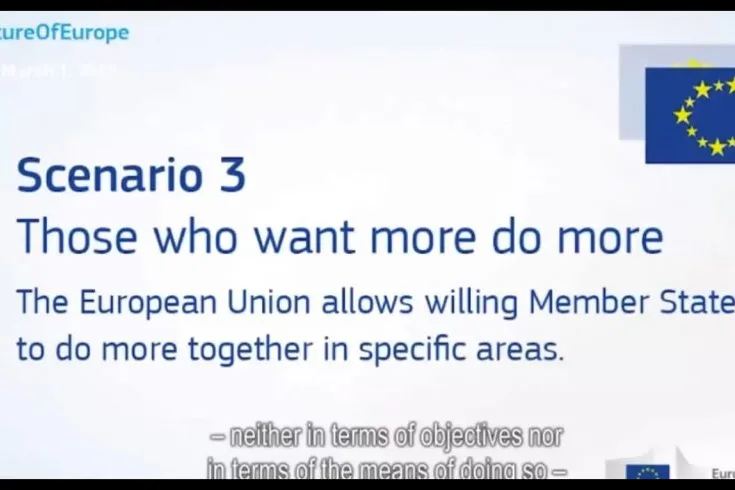
Other group of participants considered that Europe could move forward at different speeds, allowing countries that want to do more, to do it. The group also identified some risks in this option, namely the power differential between richer and poorer countries that could block those who wish to do more.
For a third group, the scenario 4, to do more in specific policy fields, would be the most interesting as it would allow the EU institutions to be more efficient in key sectors like the environment and the digital transition, promoting initiatives to reduce emissions and protect citizens’ data privacy
After the group work we’ve proposed students to individually vote on their favourite scenario for the future of the European project.
The next group of workshop activities were focused on the relationship between the EU and European citizens. Students were invited to present suggestions of ways to improve EU’s response to citizens’ needs, bring EU institutions closer to the people and also reflect on how citizens can contribute to the European project.
Participants highlighted the importance of greater economic equality in all European countries, improve citizens’ knowledge about EU’s activities, bring the EU institutions closer to citizens, promoting cultural development and mutual respect.
The third part of the session was focused on motivating participants to continue their involvement with European issues. With this purpose in mind we’ve presented two important EU initiatives, the European Citizens’ Initiative and the Conference on the Future of Europe, that aim to create spaces for European citizens to influence policies and reflect about the future of the European project. Considering the importance of an informed and active citizenship, students were also introduced to the e-learning training course on the European Union, ‘ChangeEU WebCourse’ that covers EU history, institutions and opportunities for citizens participation at the European level.
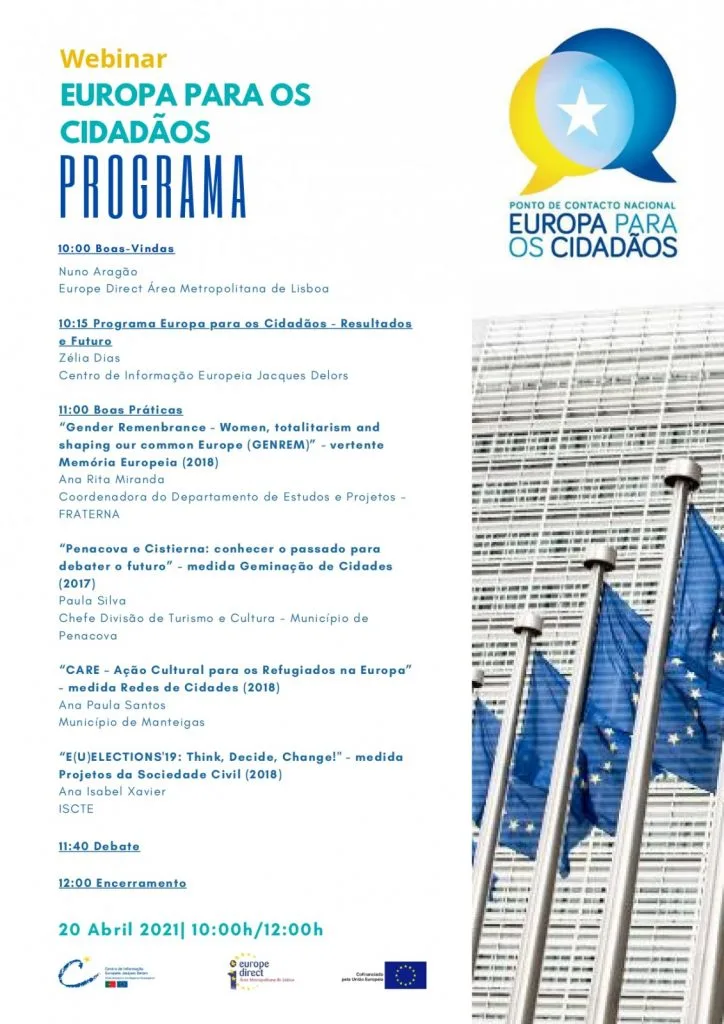
On 20 April (10am), Ana Isabel Xavier, CEI-Iscte’s researcher and EULECTIONS’19 coordinator, will participate in the Webinar: Europe for Citizens
In an initiative organised by Europe Direct from the Lisbon Metropolitan Area, in partnership with the Jacques Delors European Information Centre (Lisbon, Portugal), Ana Isabel Xavier will participate in the panel “Good Practices” (starting at 11am), to present the experience in the project “E(U)LECTIONS’19: Think, Decide, Change!”.
This event aims to inform about the implementation of the Europe for Citizens Programme and its perspectives for the future, presenting examples of good practices.
This initiative will take place in the Microsoft Teams platform.
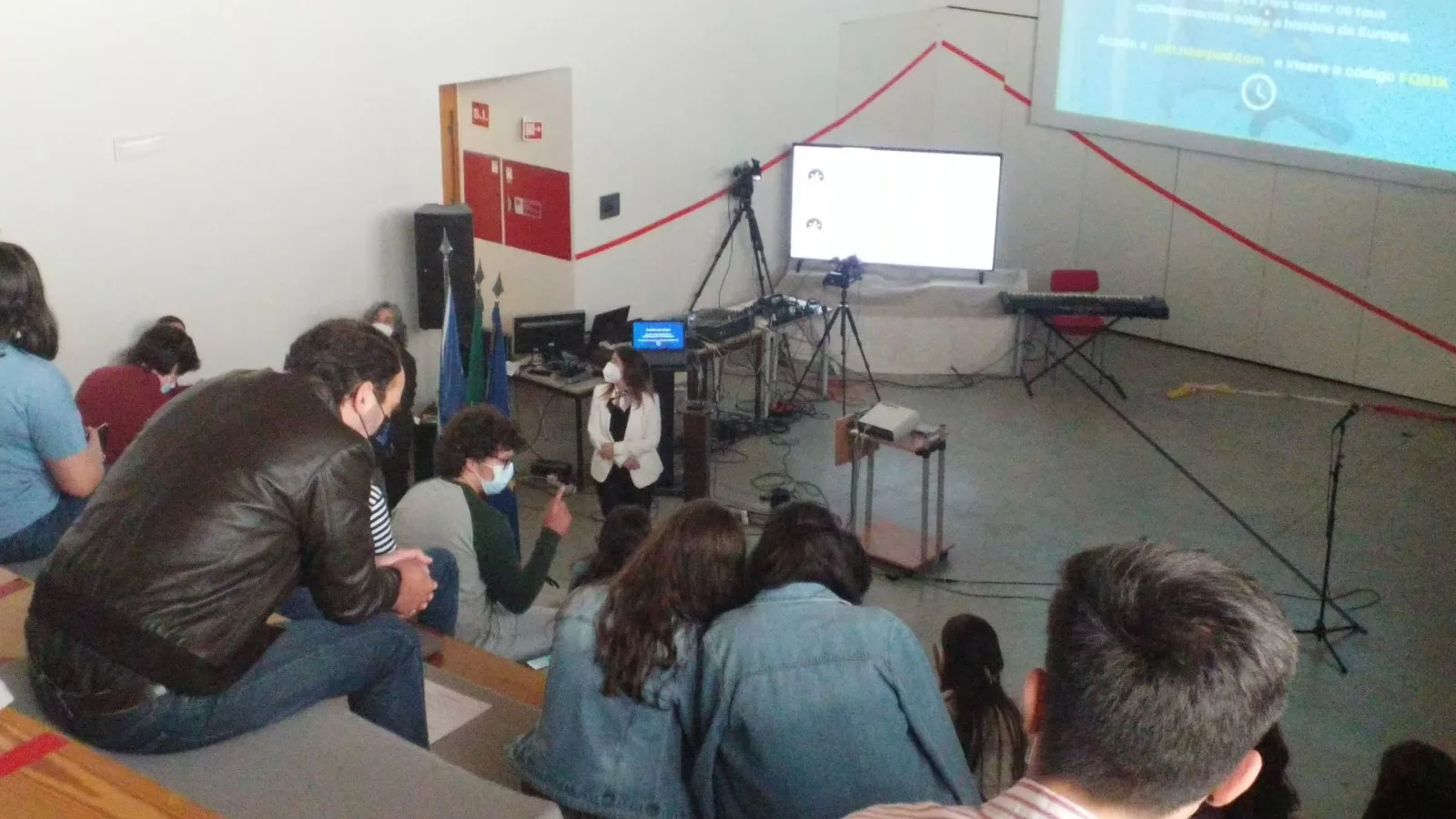
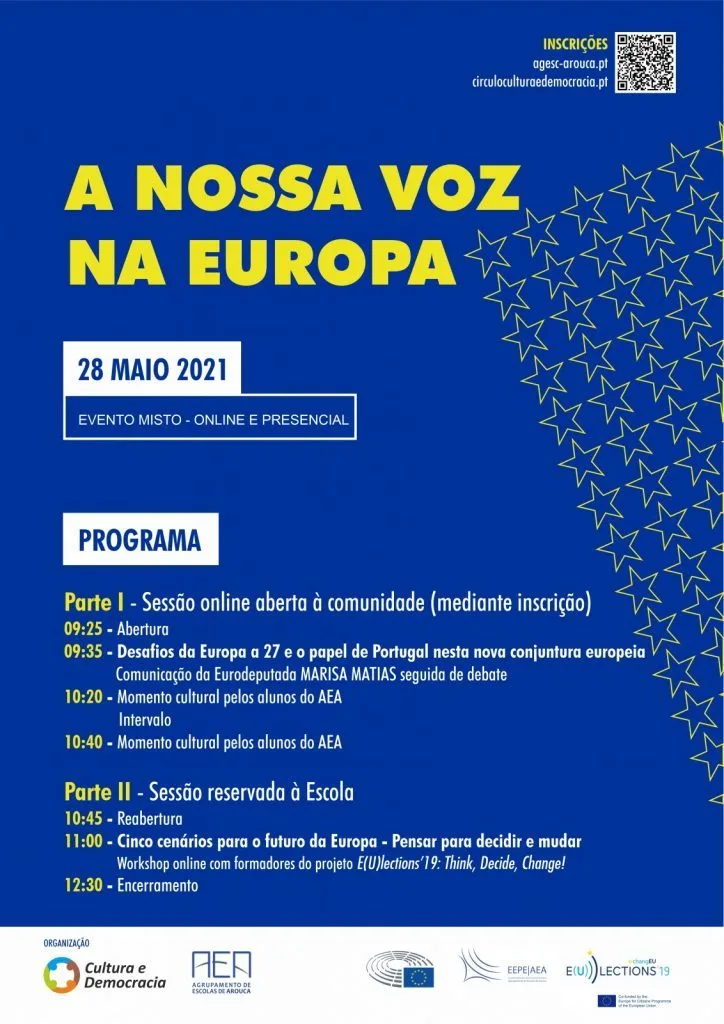
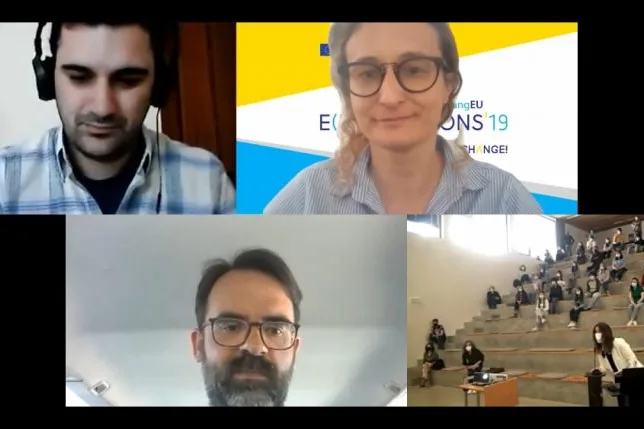
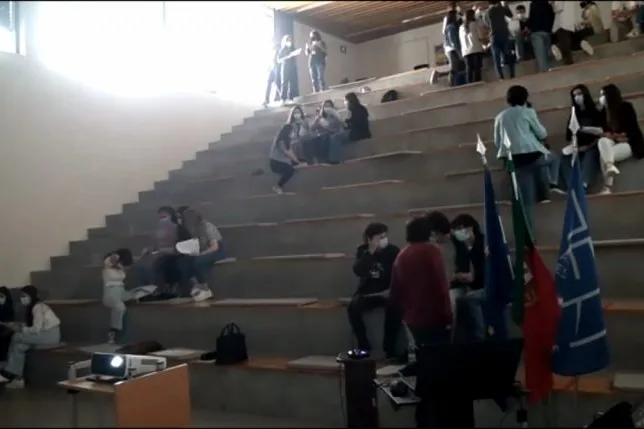
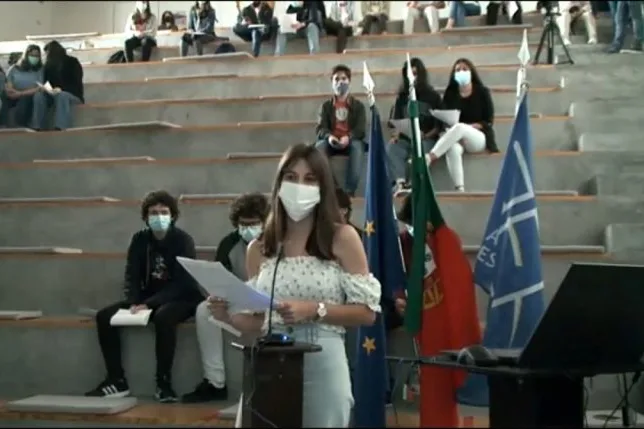
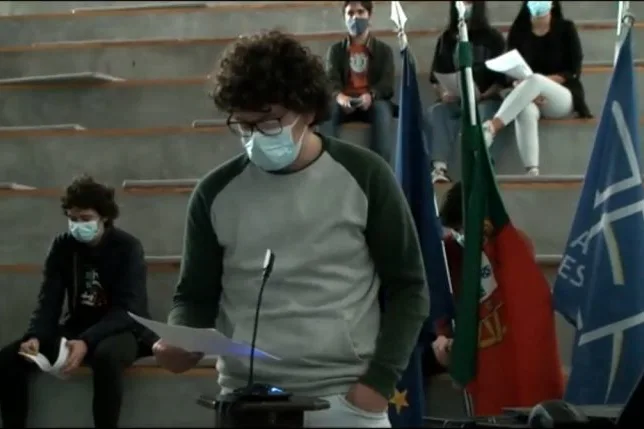
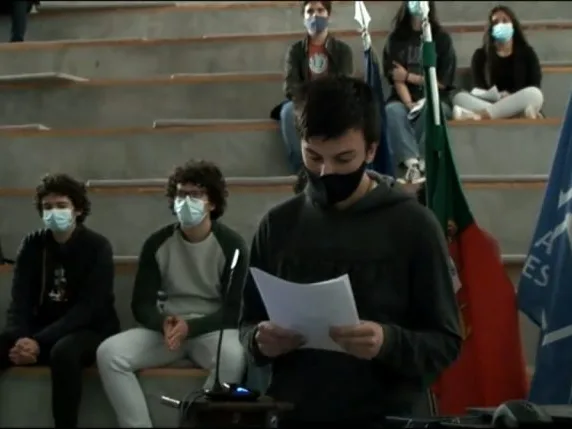
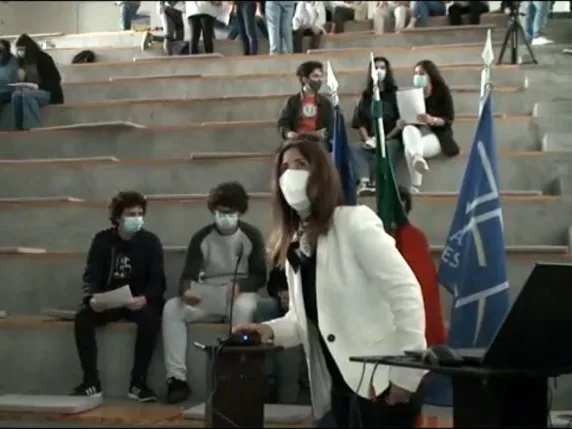
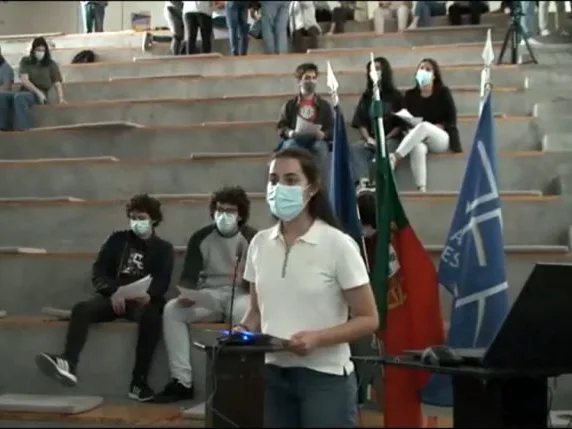
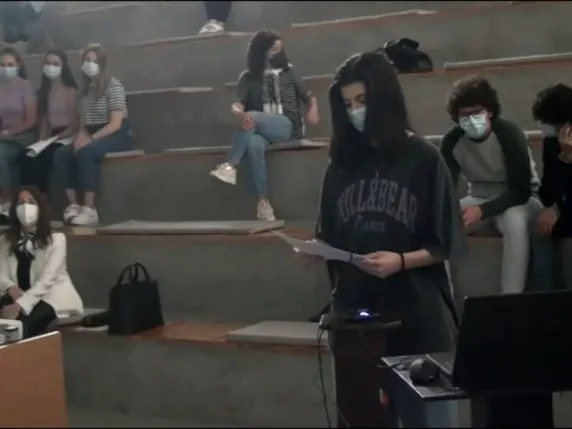
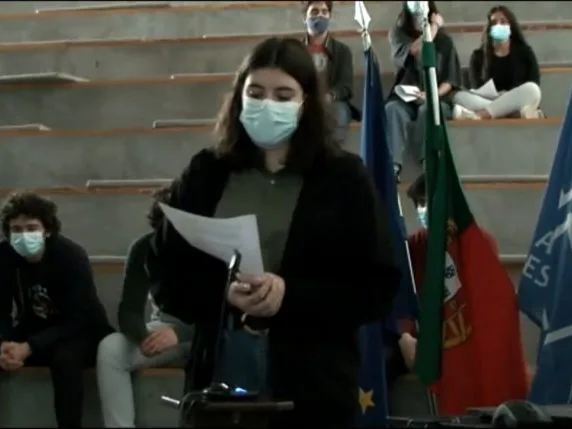
On May, 28, 2021, EULECTIONS’19 partners joined the Agrupamento de Escolas de Arouca (Arouca school group) and the Associação Círculo Cultura e Democracia ( Association Culture and Democracy Circle ) to debate Europe. The EULECTIONS’19 event was integrated in the programme of the initiative “A nossa voz na Europa” (Our voice in Europe) that involved various activities with students, teachers and members of the community. This was a hybrid event with a part of the participants online and the majority at the school’s auditorium, following the health and security protocols. The event involved 43 citizens from the city of Arouca, Portugal.
During the workshop preparatory activities, in collaboration with the coordinator teacher, students from secondary education classes were introduced to the project theme and to some key documents. This process allowed the group to have a greater familiarity with the questions to be debated during the session and hopefully motivated them to engage with European themes before the next European elections in which most of them will be first time voters.
The workshop started with brief presentations by all the entities involved and an overview of the EULECTIONS’19 project and the workshop. We then invited participants to use their mobile phones and share the first word they associate with the EU and test their knowledge of the history of the European project through an online quiz.
After the word cloud, where “union” took central stage, and a brief overview of EU’s history, we’ve moved to the discussion about its present and future.
The debate was introduced by a video and a short presentation about the “White Paper on the Future of Europe: Five Scenarios” followed by a group work. Participants were invited to organize in small groups, choose one of the five scenarios and reflect about its pros and cons. After the discussion, a representative from each group shared their main conclusions with the audience.
A group of participants considered that scenario 1, carrying on, would be the most suitable as it would ensure financial stability, improve the single market and respond to key strategic challenges in defence, security and the environment. In this scenario some EU challenges would remain unsolved, namely the difficulty to respond to urgent matters and to complex transnational problems due to member states’ diverse perspectives on those matters and some policy areas could be neglected.
Regarding the scenario 2, nothing but the single market, it could contribute to a more efficient market, improving competition and consumer choice but, at the same time, it would put at risk other policy areas that are important to EU citizens and also to the market.
For the participants that reflected on scenario 3, those who want more do more, considered that it could have advantages on policy areas where some states agree that the Union should do more, like employment, research, industrial development, security and defence. In this scenario, the main risk would be the increase of disparities and differences within the Union.
The group of participants that debated scenario 4, doing less more efficiently, concluded that it would be beneficial to achieve more in key policy areas like industry, commerce, security and climate change.
Following the participants’ reflection about the most ambitious scenario, doing much more together, it would transform decision making processes, transferring national decisions to the European level. The Union would also be responsible for citizens rights in various areas. This scenario would have as a key risk, the alienation of national groups that don’t recognize EU’s legitimacy or that don’t agree with increasing EU institutions’ powers.
After the collective reflection, we’ve invited the participants to vote on their individual preferred scenario for the future of Europe.
Following the debate about the scenarios for the future of the EU, the session was focused on ways to improve the relationship between European institutions and European Citizens. We’ve presented 3 questions to participants and invited them to brainstorm on 1) What can the Eu do to respond to its citizens’ needs? 2) What can citizens do to improve the EU? 3) How can we improve the relationship between the EU and European citizens? The suggestions presented were mainly to find ways to improve the union and cooperation between member states, listen to citizens’ perspectives and understand their real needs, provide more information about the Parliament’s discussions, increase opportunities for cooperation with citizens in an active and productive way.
Following the main discussions, we’ve shared with the participants two key EU initiatives through which they can take part in the shaping of the European project, its present and future, the Conference on the Future of Europe and the Citizens’ Initiative. Participants were also invited to keep learning about the EU and citizens’ participation through the ChangEU Webcourse.
Watch the video of the online roadshow in Portugal. It includes a summary of the different activities that have been carried out over the past year in an online or hybrid format in Lisbon, Azores, Coimbra, Arouca. It also shows the dissemination event promoted with the University of Extremadura, Spain.
You can watch other EULECTIONS’19 videos on Youtube to know more about the project’s activities in Portugal, Italy and the Netherlands.
EULECTIONS’19 partners have produced a policy paper with key information collected during the project’s events. It summarizes citizens’ perspectives about the future of Europe, the pros and cons of the 5 scenarios and how the EU can improve its relations with Europeans.
About the policy paper
This report presents the main reflections produced by the many participants of different nationalities who, over the last two years, have taken part in the various activities promoted within the framework of this project. In such events, which varied in format over time, they had the opportunity to think about the current state of the European Union, their European citizenship, and to reflect on the future of Europe. Apart from this introductory part, which briefly presents the project, the document is divided into two main parts. In the first, there is a summary of the main pros and cons associated with each scenario of the ‘5 Scenarios for the Future of Europe’ – considerations taken from all the presentations and conversations held in the different countries. In the second part, which is in turn divided into two parts, it is possible to give an account of the main recommendations for the EU on the one hand, and on the other hand, recommendations for the citizens themselves. Both produced throughout the different activities, completed with direct quotes from the participants and the place where those events took place.
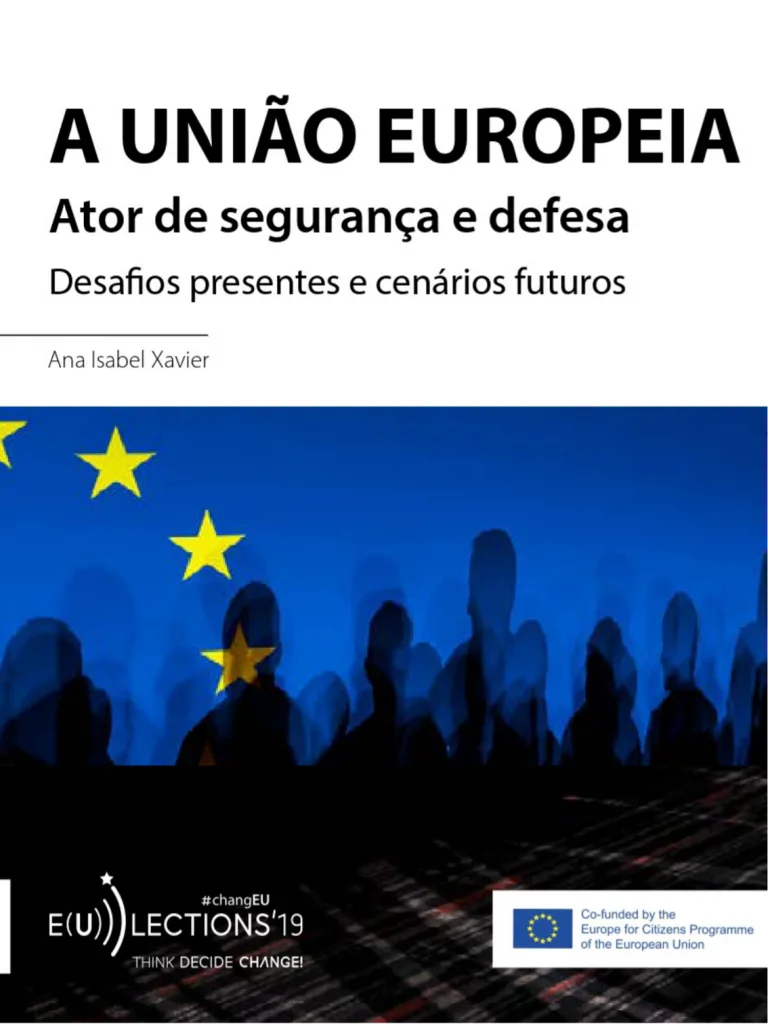
PT | Apresentamos o livro “A União Europeia – Ator de Segurança e Defesa – Desafios Presentes e Cenários Futuros” da autoria da coordenadora do projecto e investigadora Ana Isabel Xavier. Este documento, sobre o desafios presentes e cenários futuros da União Europeia enquanto ator de segurança e defesa, constitui um dos recursos desenvolvidos durante o projeto E(U)LECTIONS’19.
ENG | The book “The European Union – Security and Defence Actor – Present Challenges and Future Scenarios” by the project coordinator and researcher Ana Isabel Xavier. This document, on the present challenges and future scenarios of the European Union as a security and defence actor, constitutes one of the resources developed during the E(U)LECTIONS’19 project.