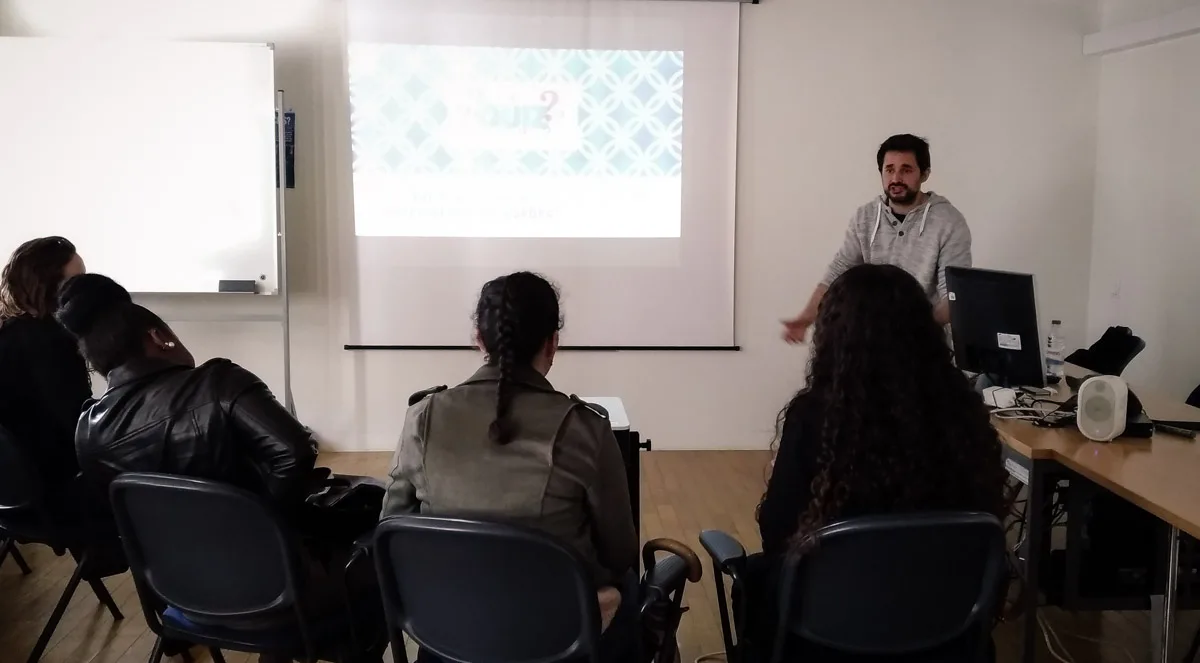
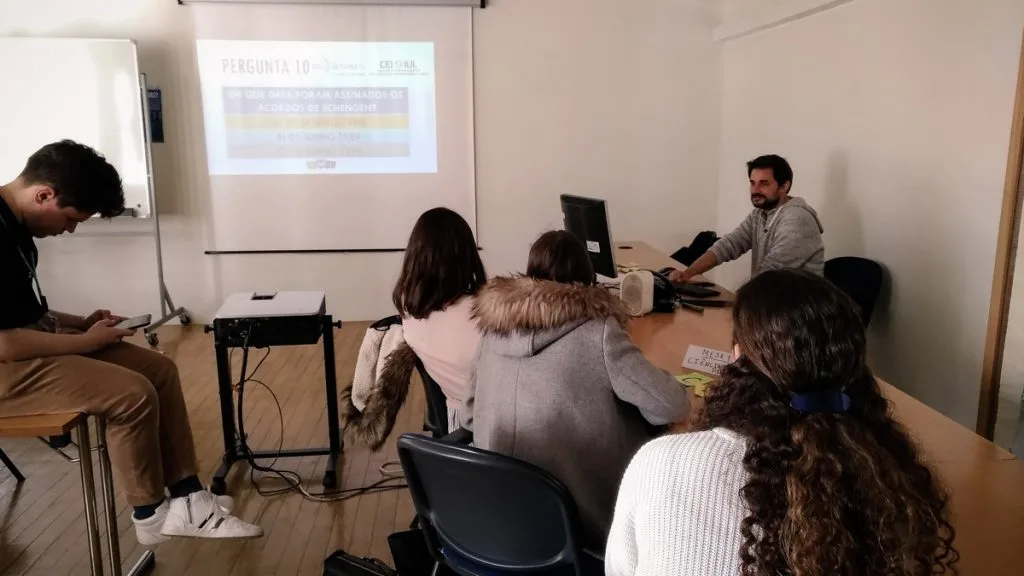
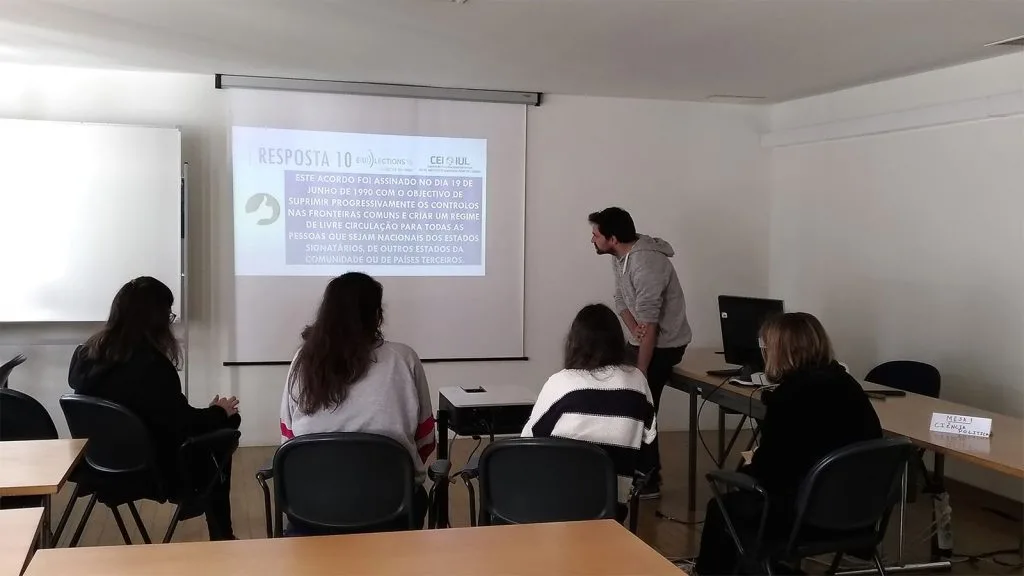
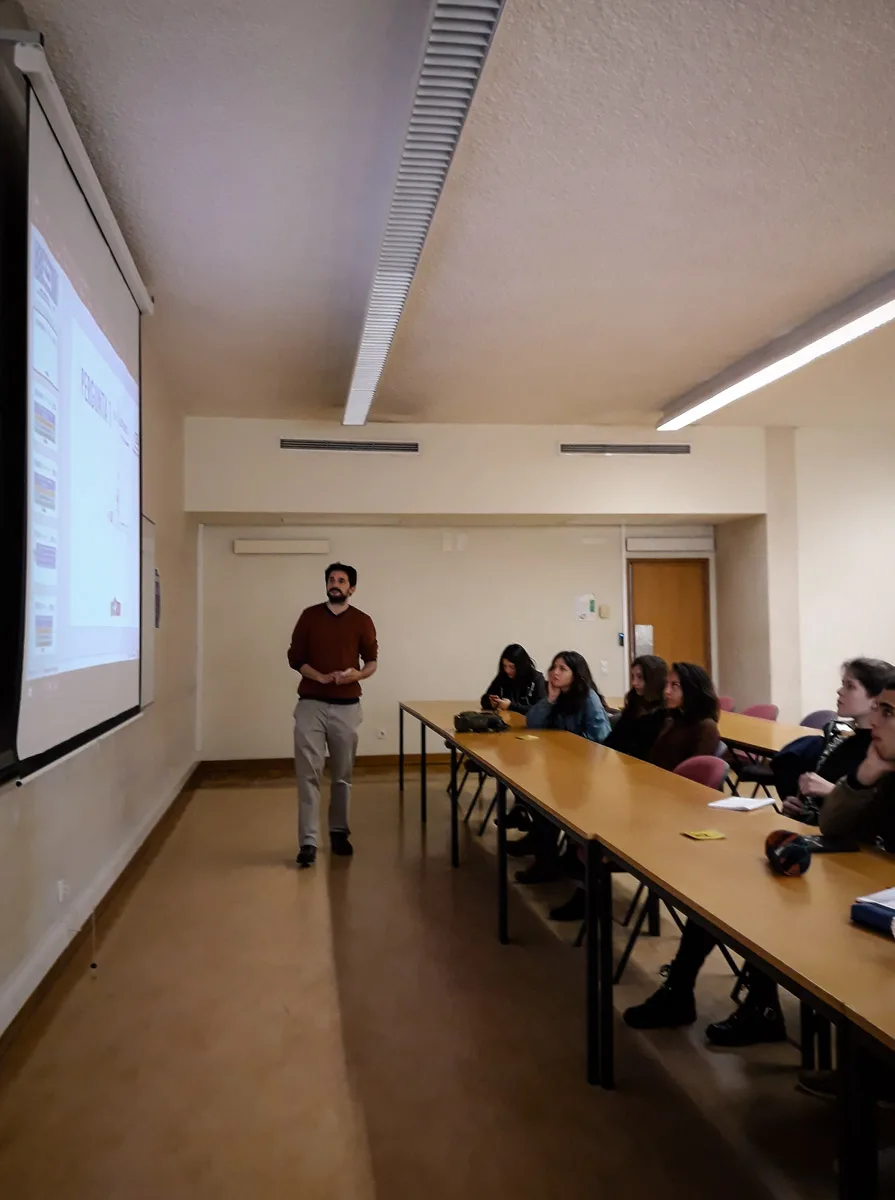
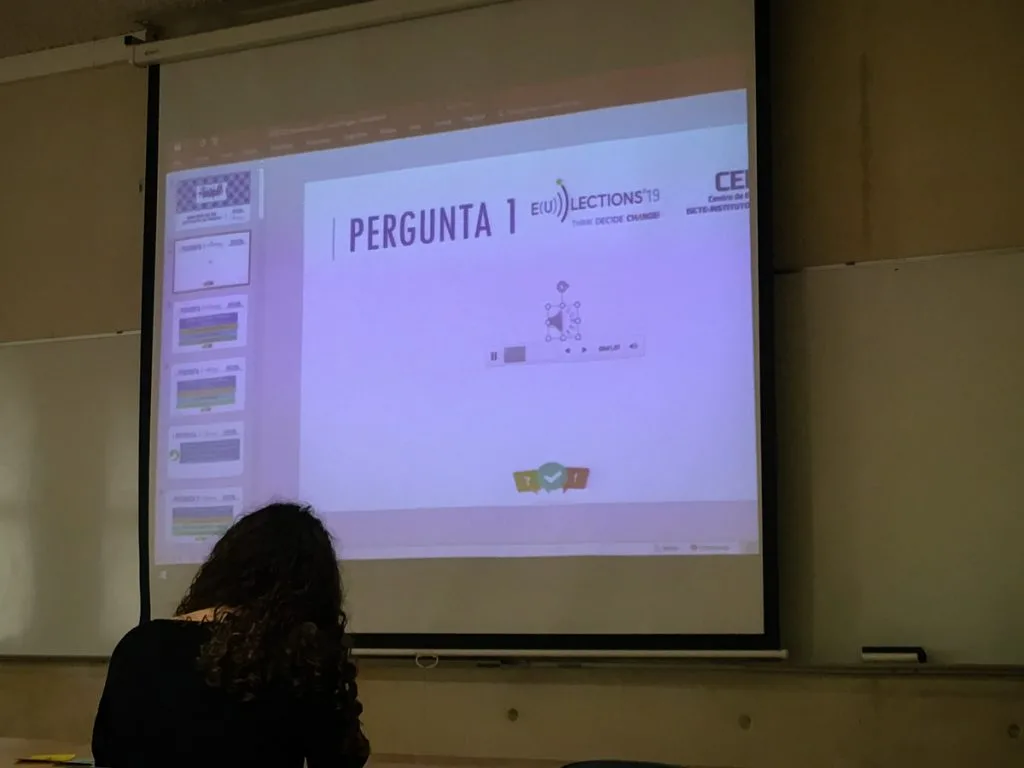
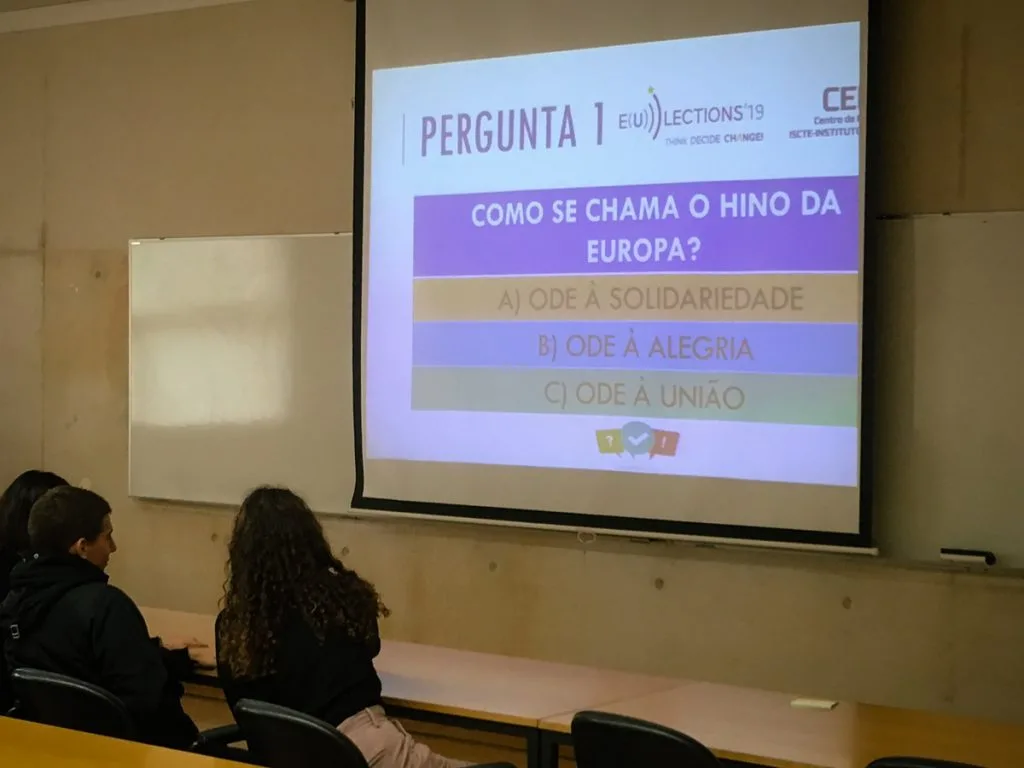
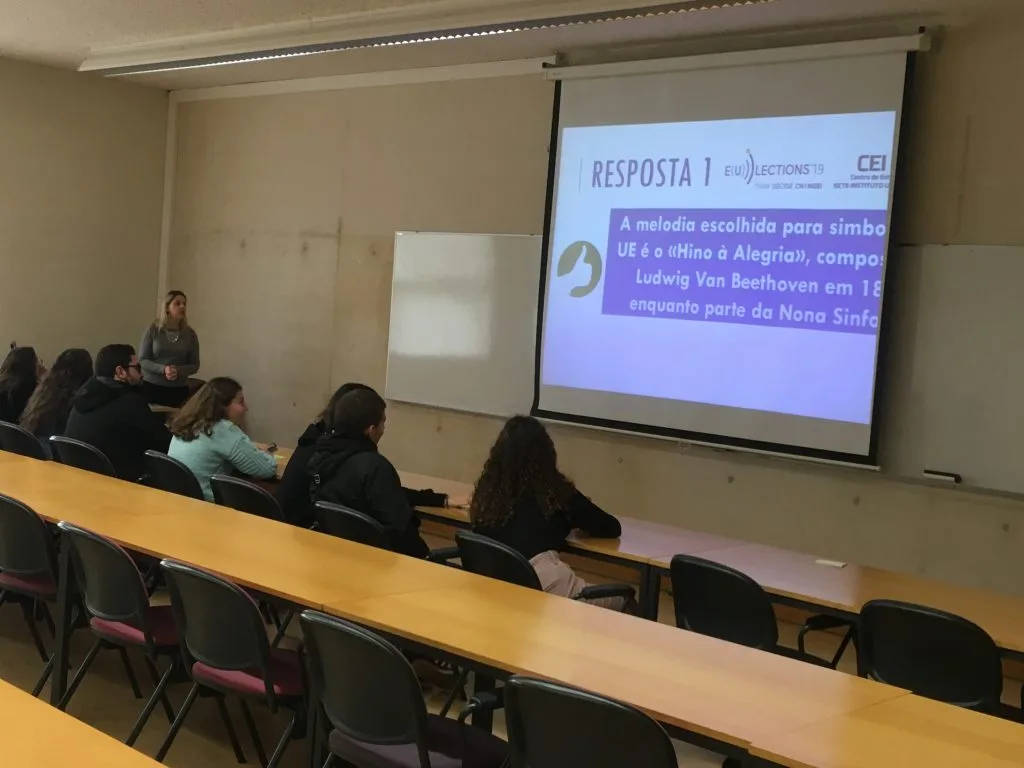
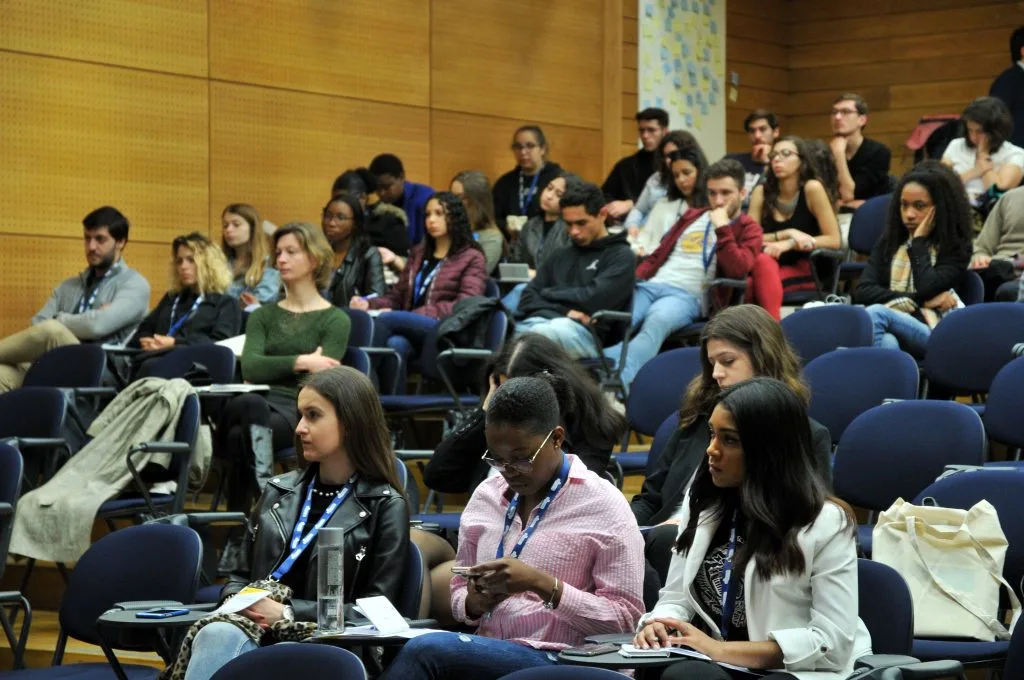
On April, 9, 2019, an initiative for high school students took place at ISCTE-IUL. The Academy ISCTE-IUL opens the doors of the University to the students and gives them the opportunity to live and experience the university and the job market.
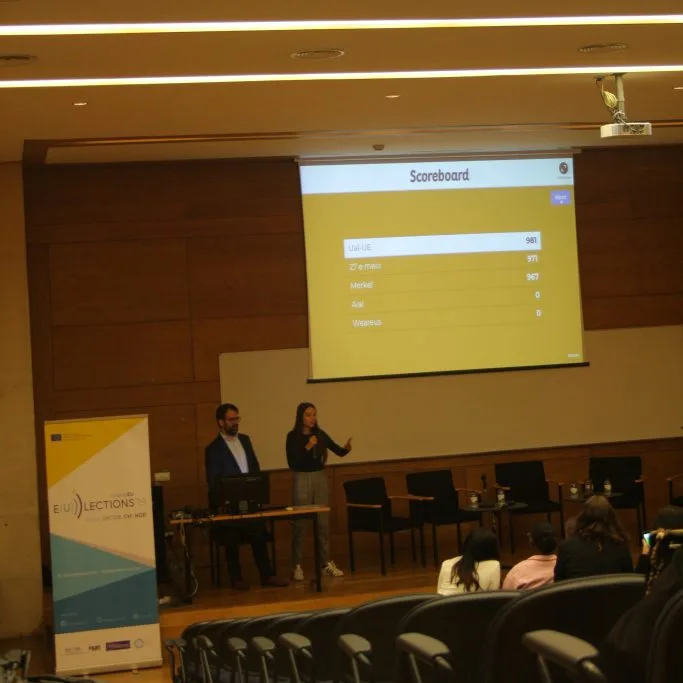
This was a great opportunity to present the EULECTIONS’19 project, through a quiz with questions about the European Union and a debate, to students who will vote for the first time in the forthcoming elections for the European Parliament.
E(u)lections´19: Think, Decide, Change! was represented by its project manager, and was also a great opportunity to collect inputs from young people in the preparation of the project’s activities.
The second edition of Academy ISCTE-IUL happened on the 17th April and it was an opportunity to present the project to high school students and collect inputs from young citizens regarding the project’s activities. Through the “Who wants to be Euromillionaire” quiz and a debate, they had an opportunity to know more about European Union and about the objectives of E(u)lections´19 project, which was represented by the project coordinator and project manager.
The students were also invited to participate on the first event of the project which will take place on 10th May at ISCTE-IUL.
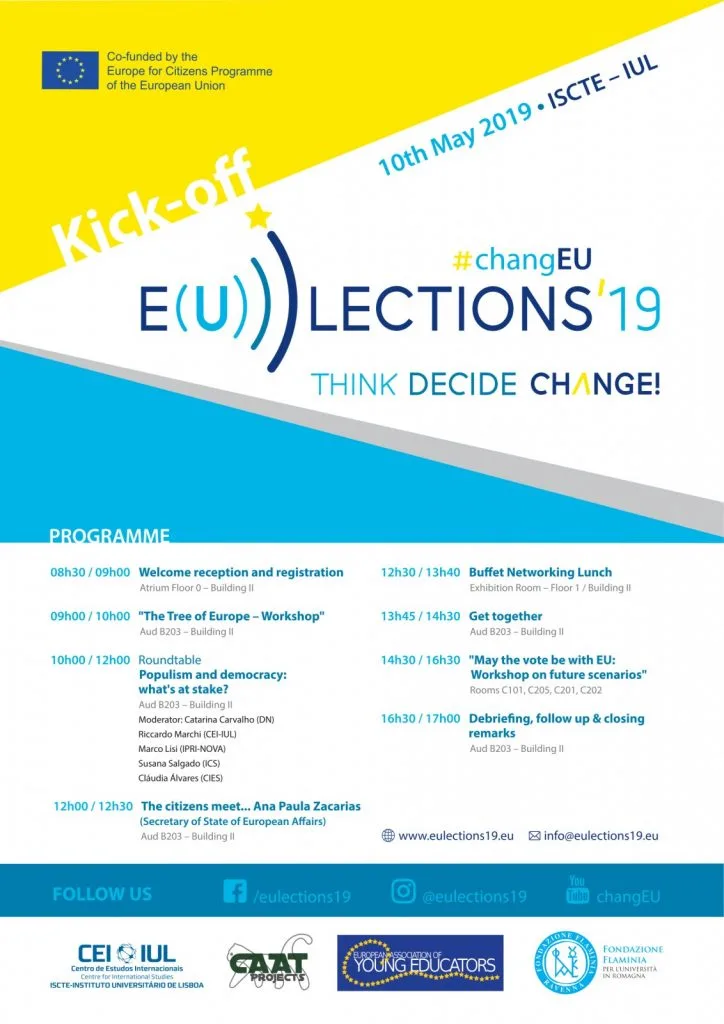
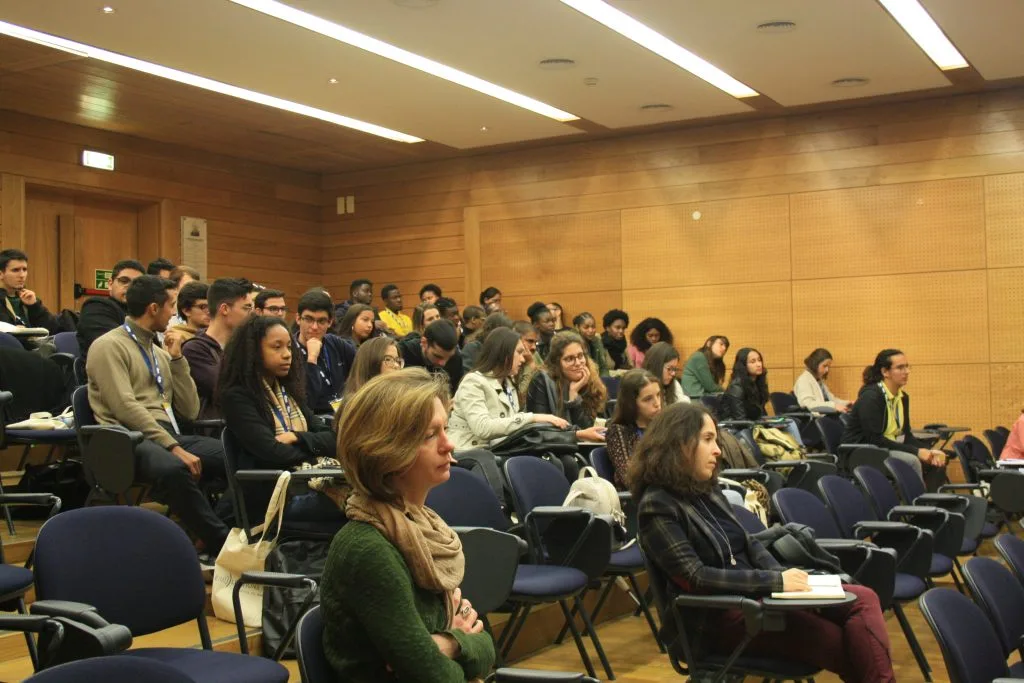
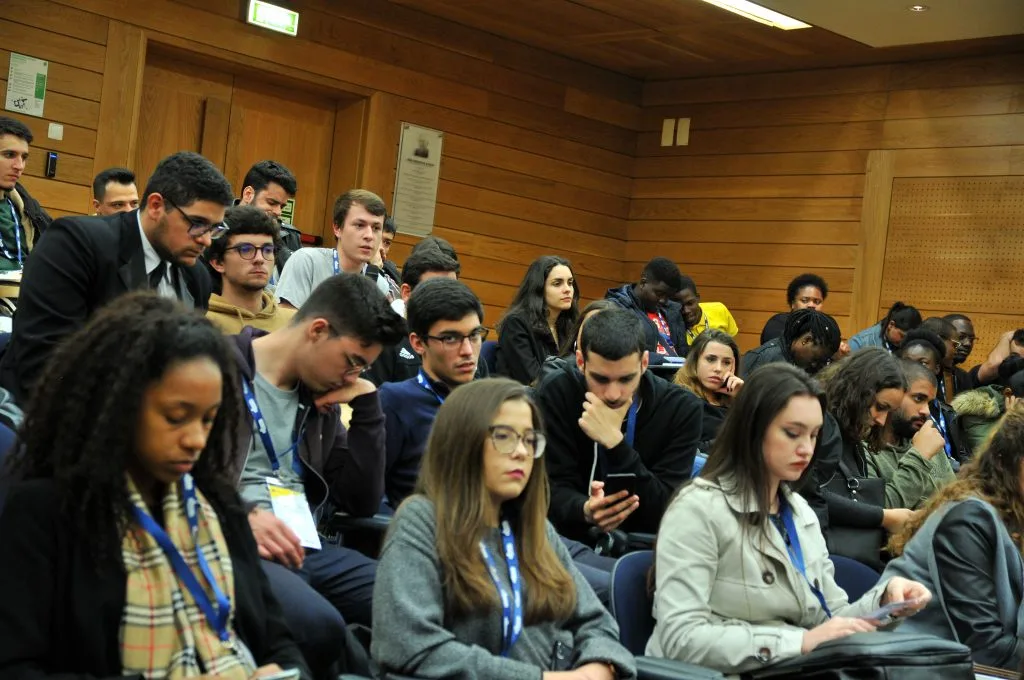
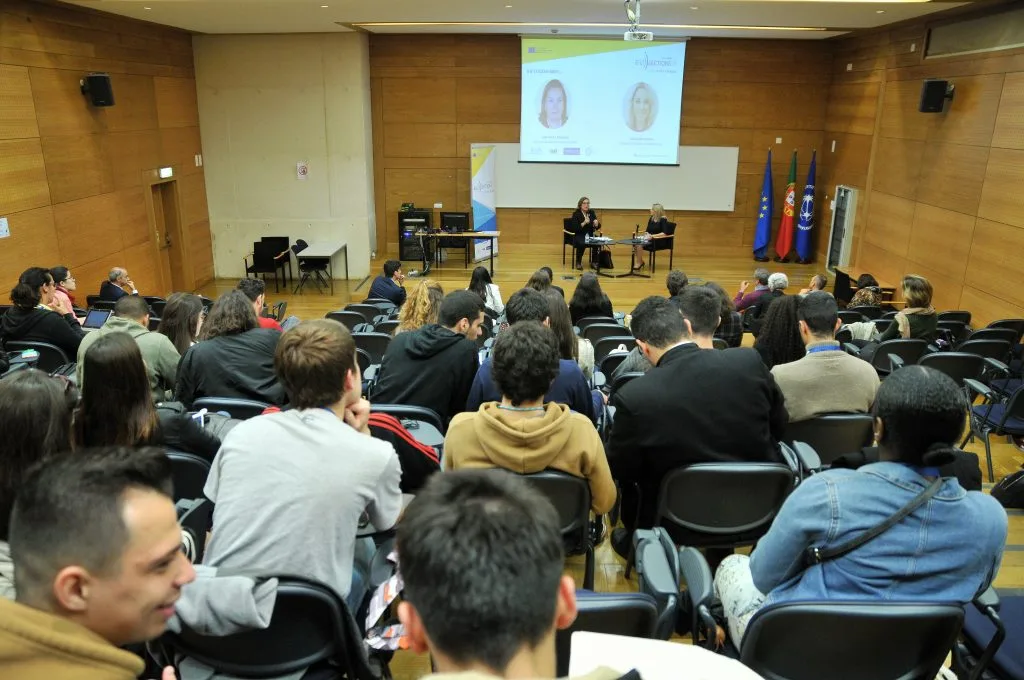
The first EULECTIONS’19 event in Portugal took place on May, 10, 2019, at Iscte- Instituto Universitário de Lisboa. This full event involved 92 citizens from the city of Lisbon, Portugal, mostly university students, for a full day dedicated to the European elections and the future of the EU.
This event aimed to bring awareness to the importance of youth participation at the 2019 elections for the European Parliament, question populist and extremist views and promote an informed and open debate about the current and future challenges of the European project and ways forward.
The event included various activities and methods (brainstorming, quizzes debates, workshops) and involved students, teachers, researchers, media, government officials and youth activists.
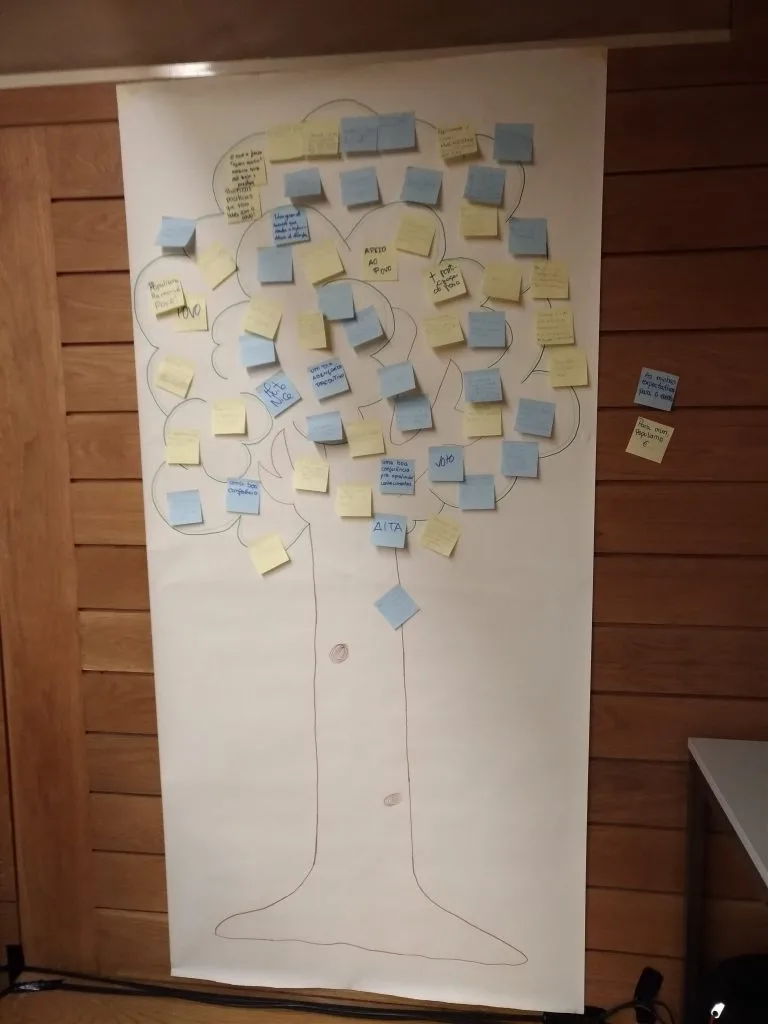
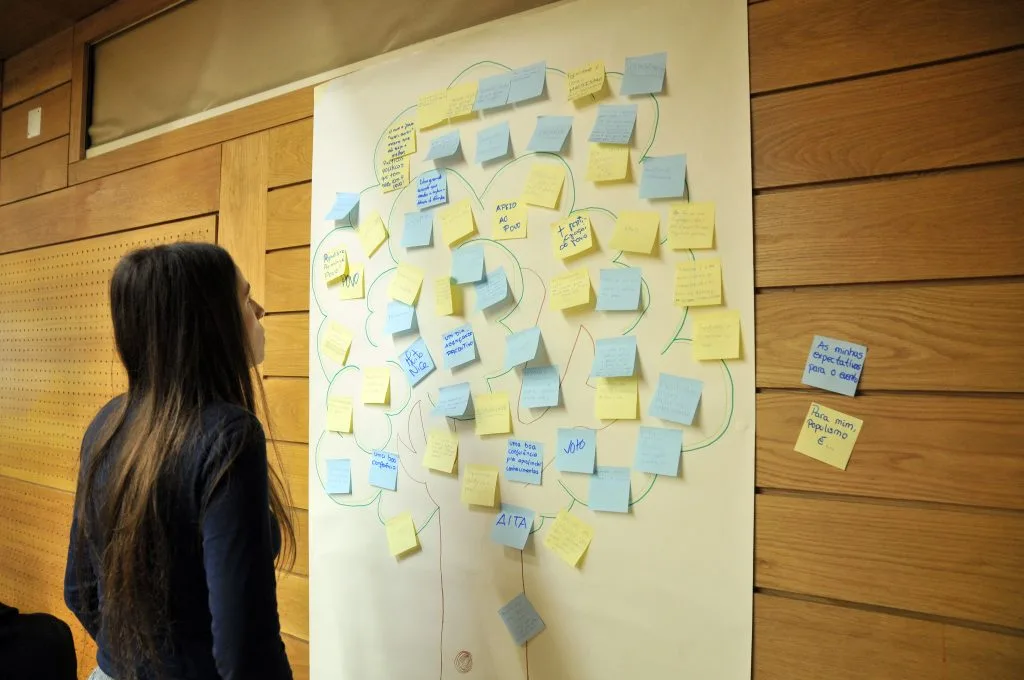
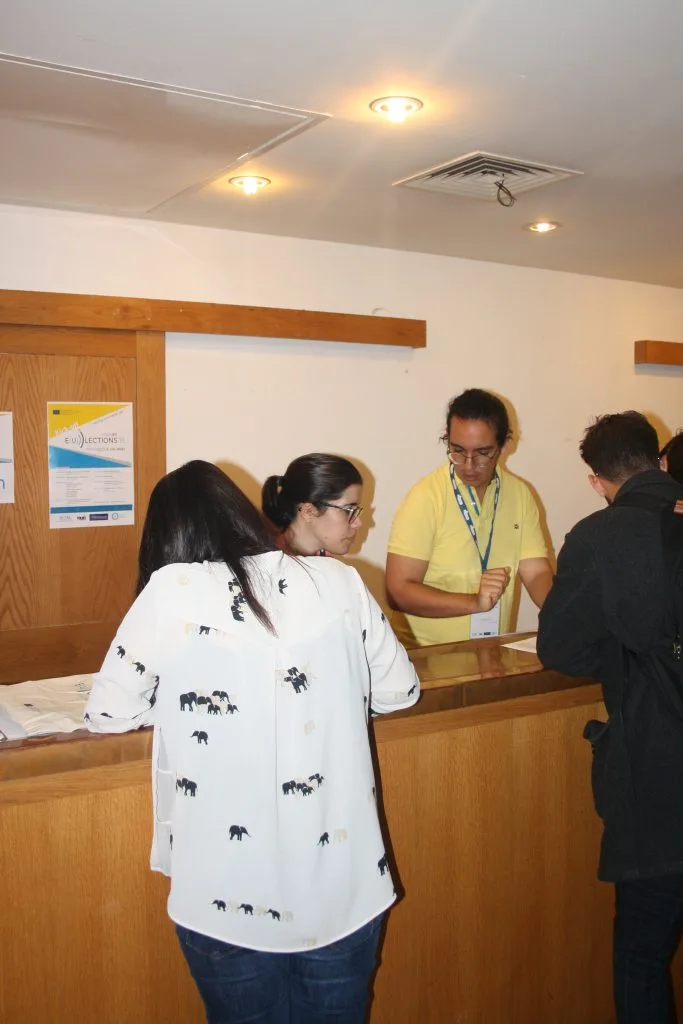
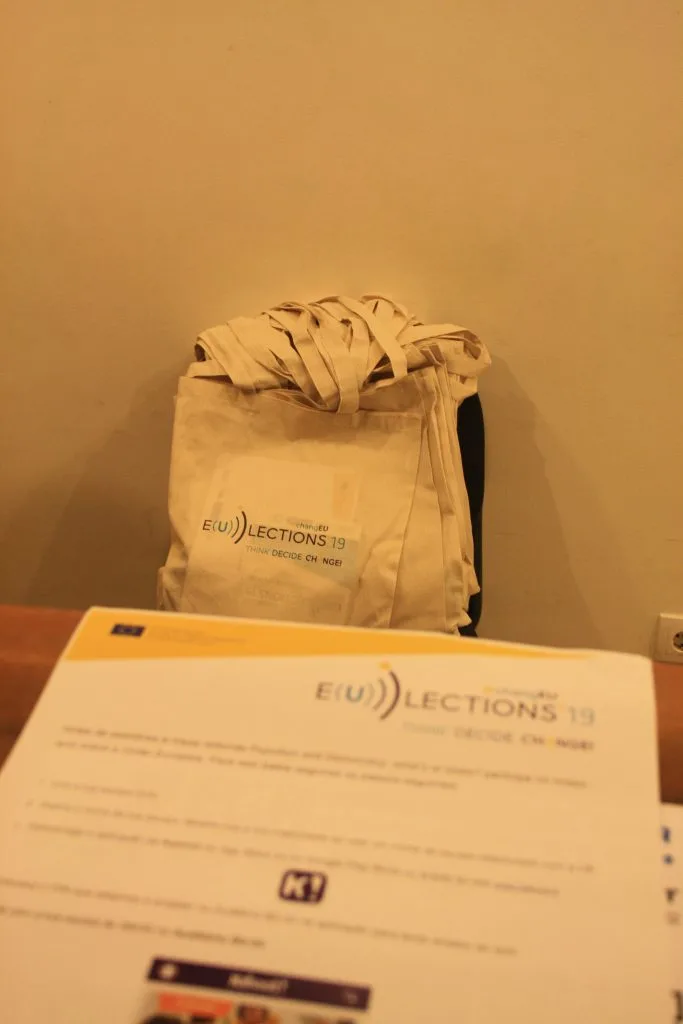
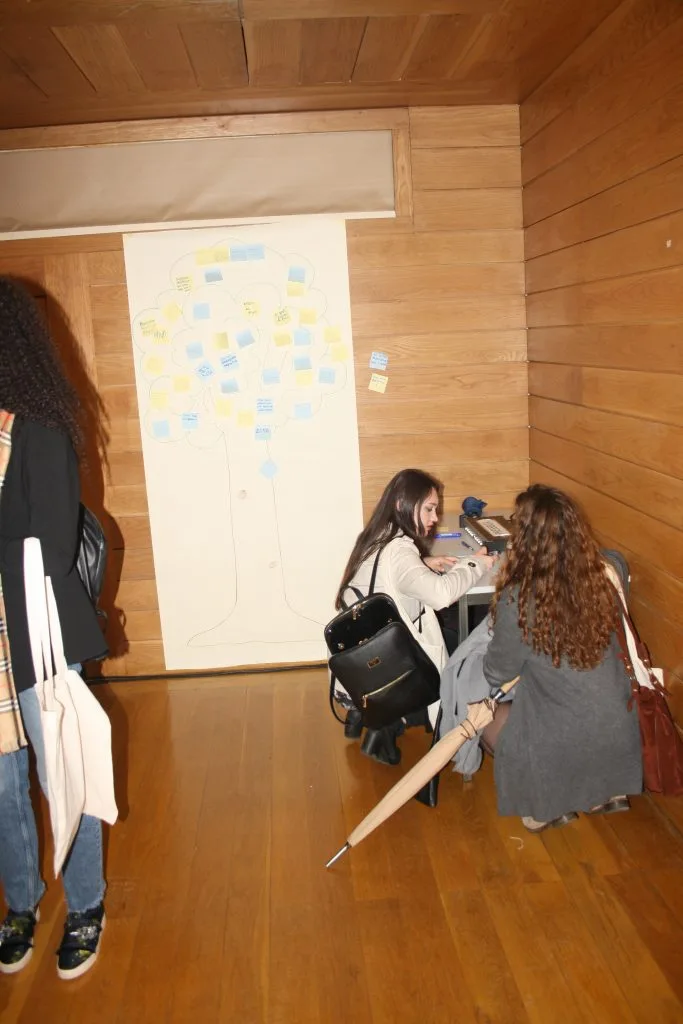
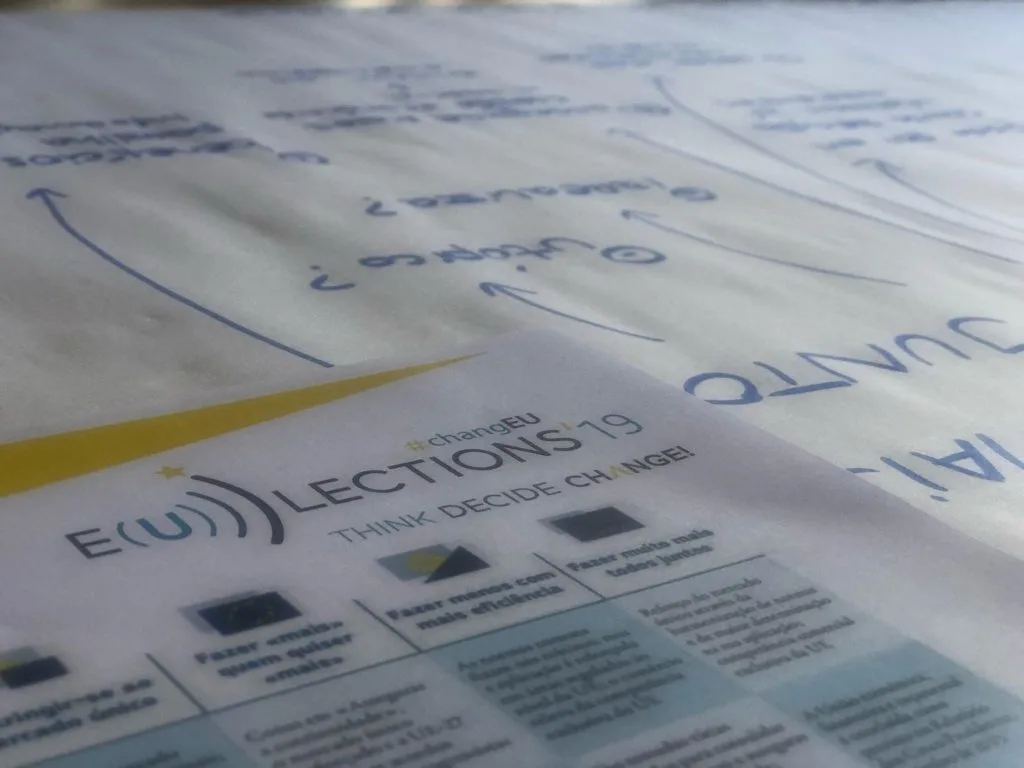
The day started with the participants’ welcome and registration at the event desk where everyone received a bag with promotional gifts, workshop materials and a brochure with information about the project. Then, in the first activity of the day, we invited participants to think and express their views about a very important topic for the 2019 European elections: the rise of populism. The “Tree of Europe” was built from the perspectives on the topic and showed youth’s perspectives about populist ideas and the elections.
Considering the central role of information in questioning populist and extremist views, and also in promoting electoral participation, we invited participants to gather in groups and play the “Who wants to be an European Expert” quiz. This question and answer activity aimed to improve participants’ understanding of the importance and presence of the European Union in our daily lives and engage young people in the debate about Europe and the 2019 elections.
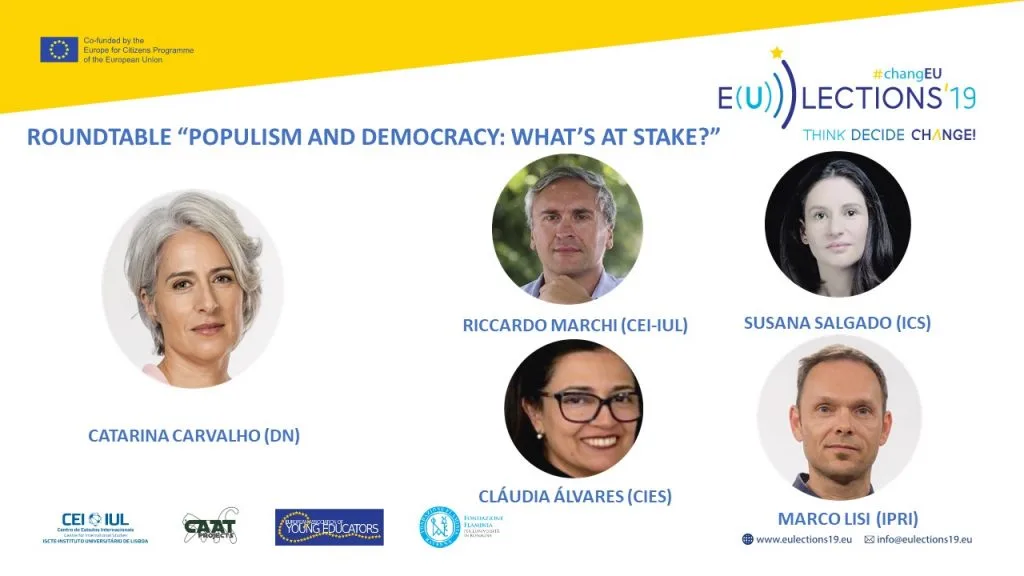
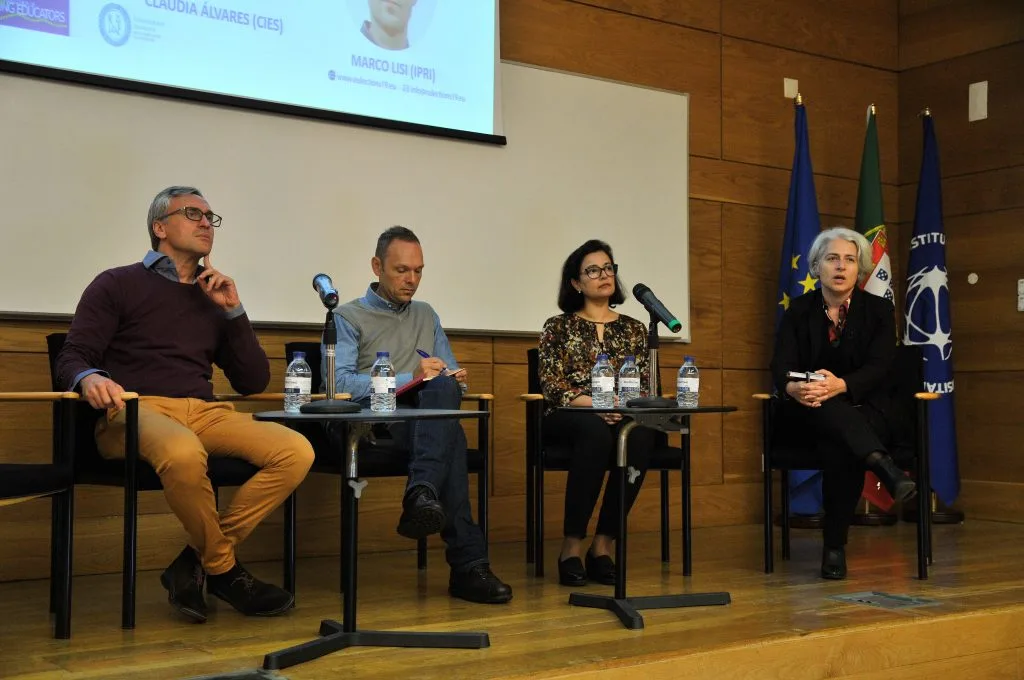
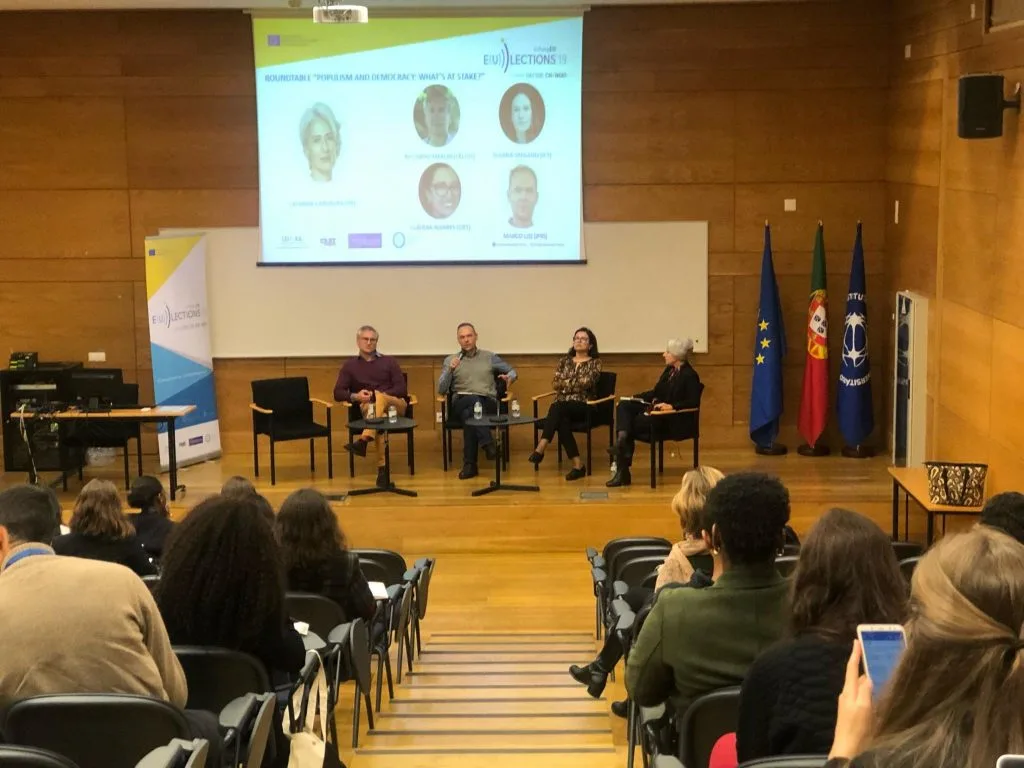
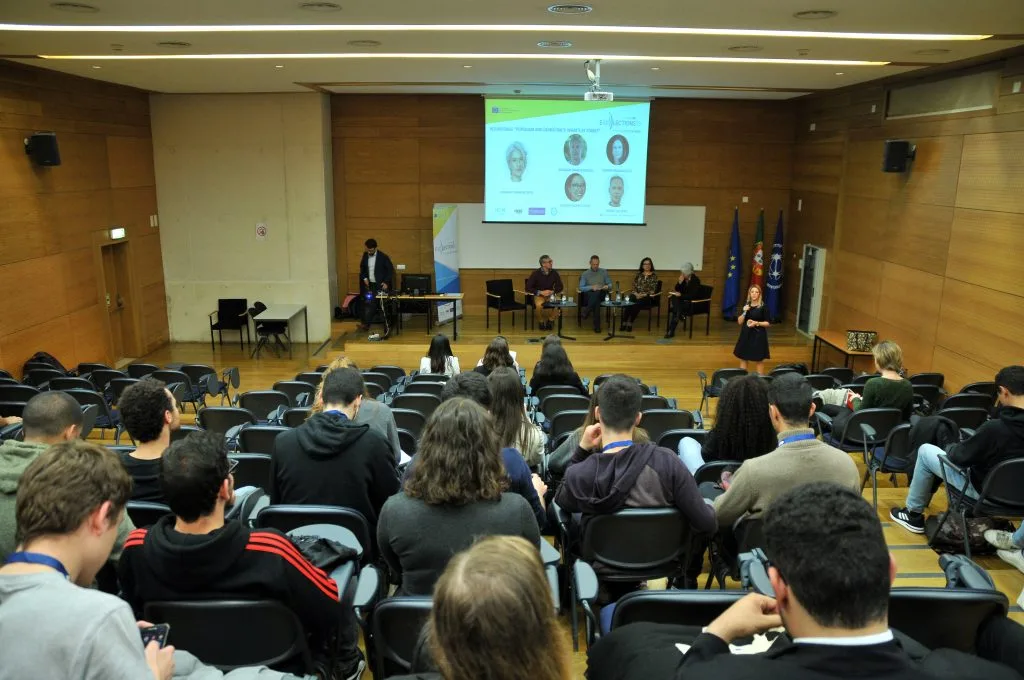
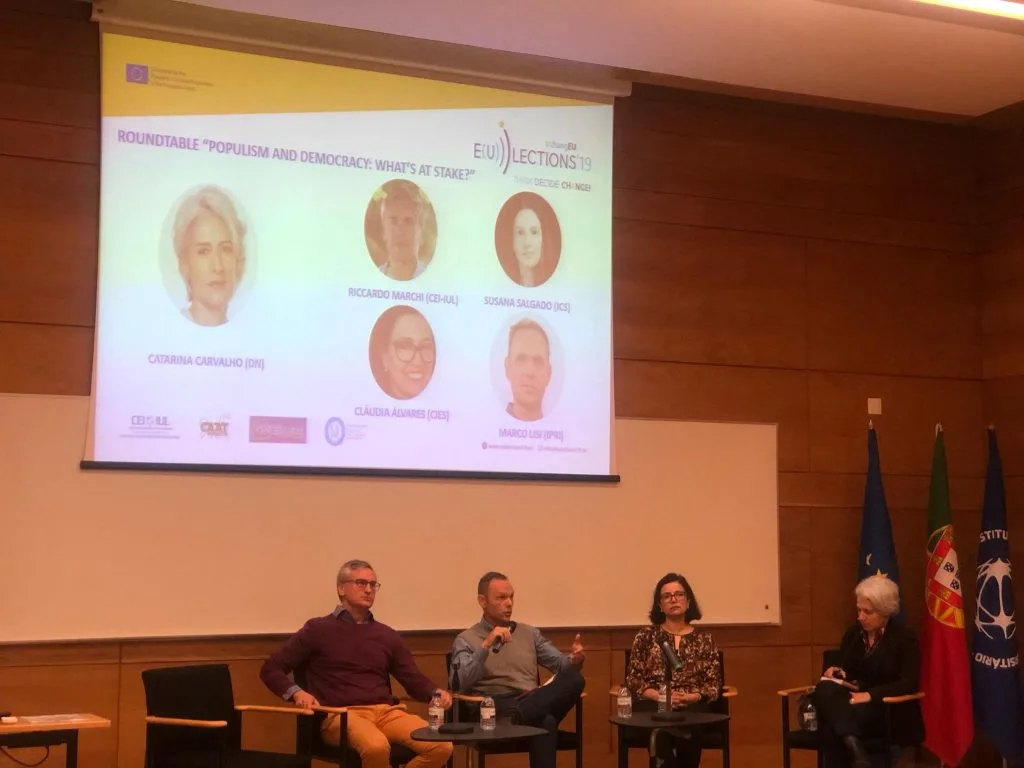
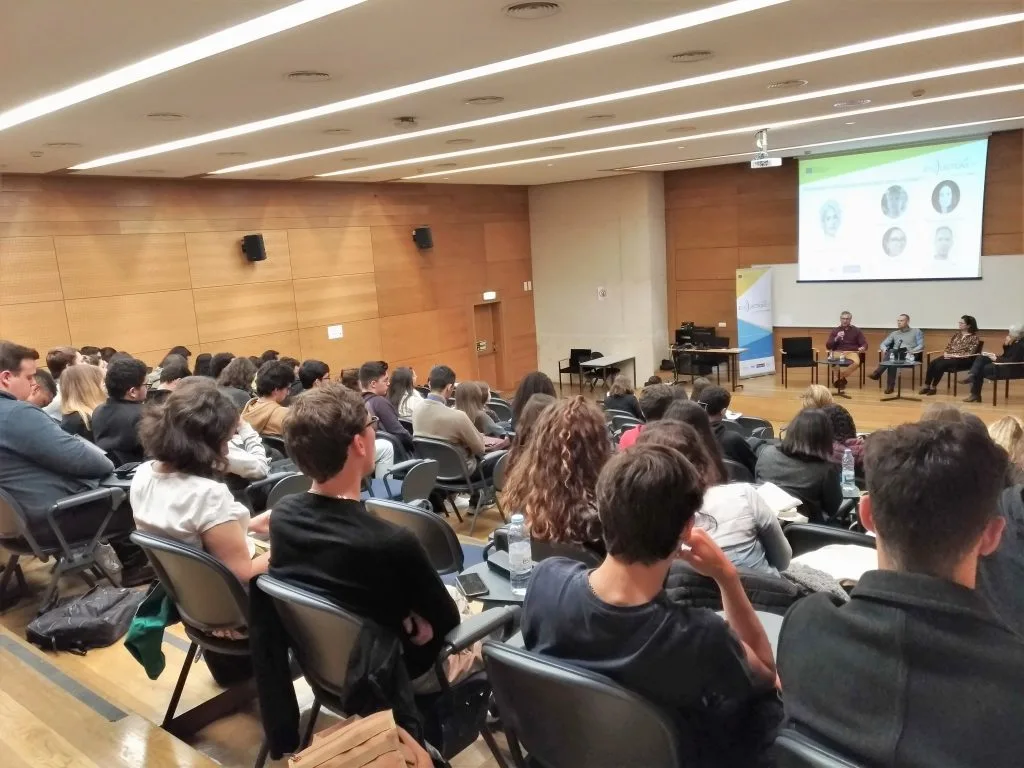
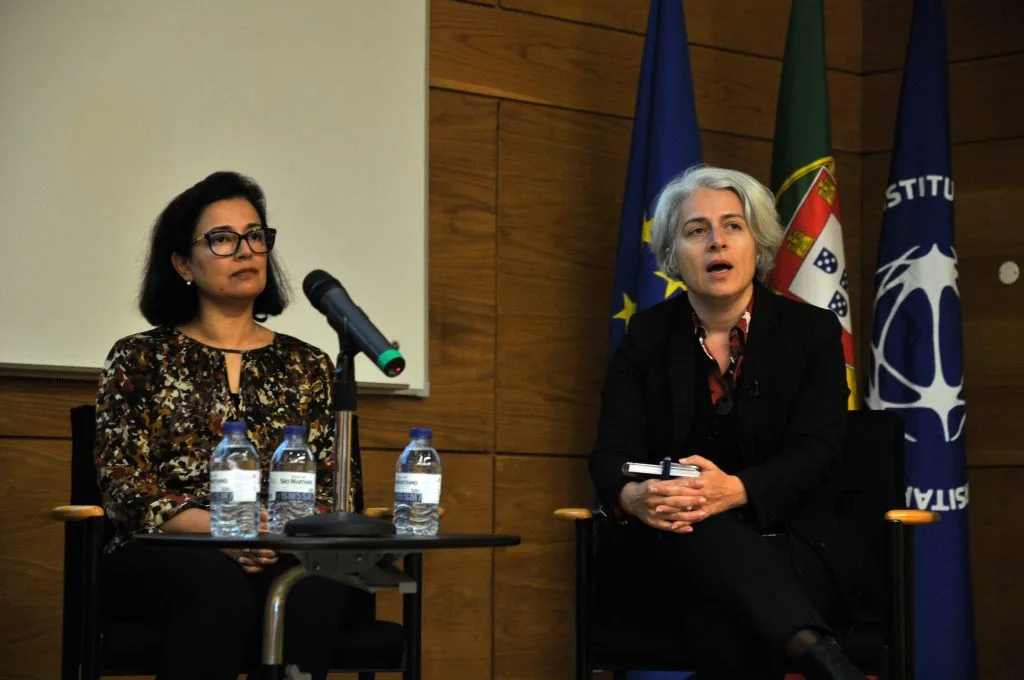
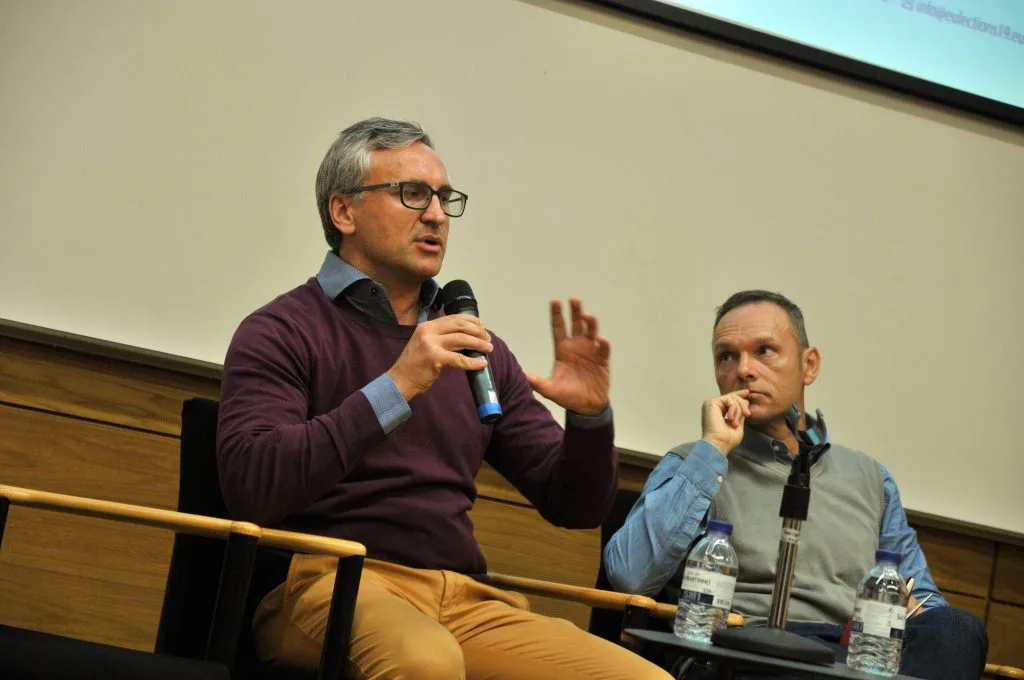
After the “warm up” activities, participants had the opportunity to discuss with academics, the rise of populism and its threats to the European Union, in a round-table entitled “Populism and democracy: what´s at stake?”. The debate aimed to give a broader view, based on research, of the challenges to the European democracies brought by populist and extremist movements and explore how citizens and governments at the national and European level can respond to these trends. The debate was moderated by the Executive Editor in Chief of the Portuguese newspaper “Diário de Notícias”, Catarina Carvalho.
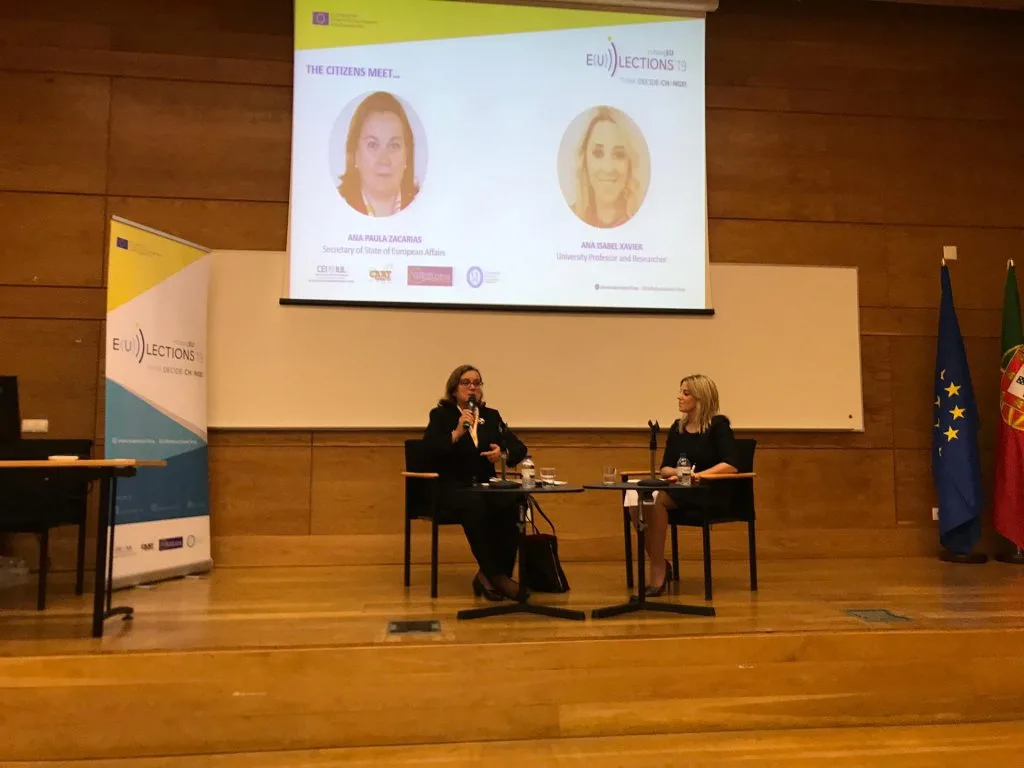
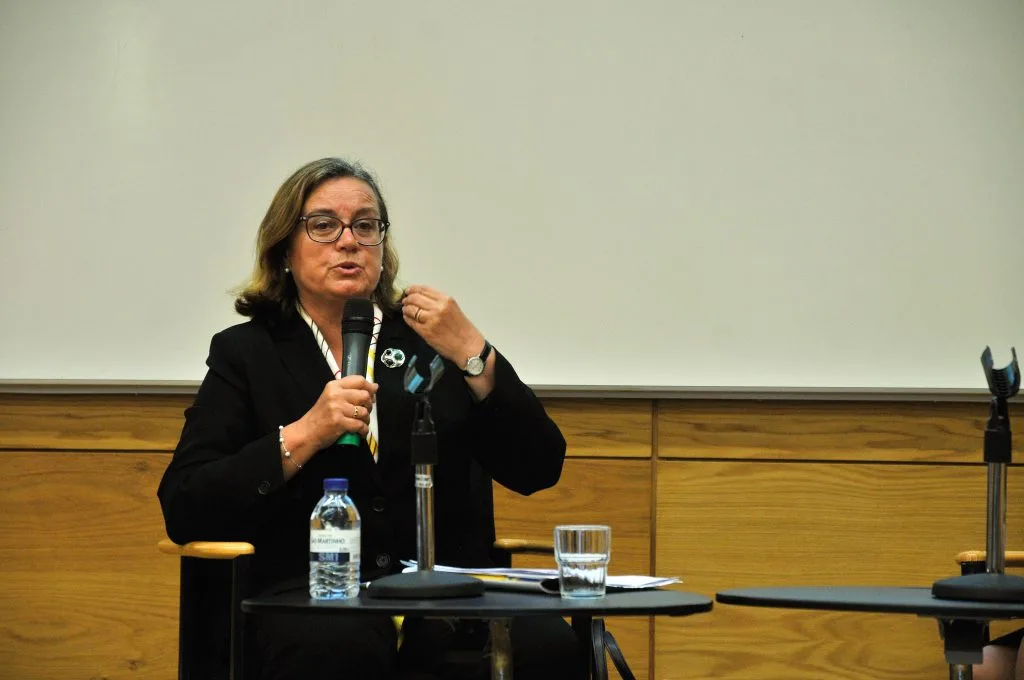
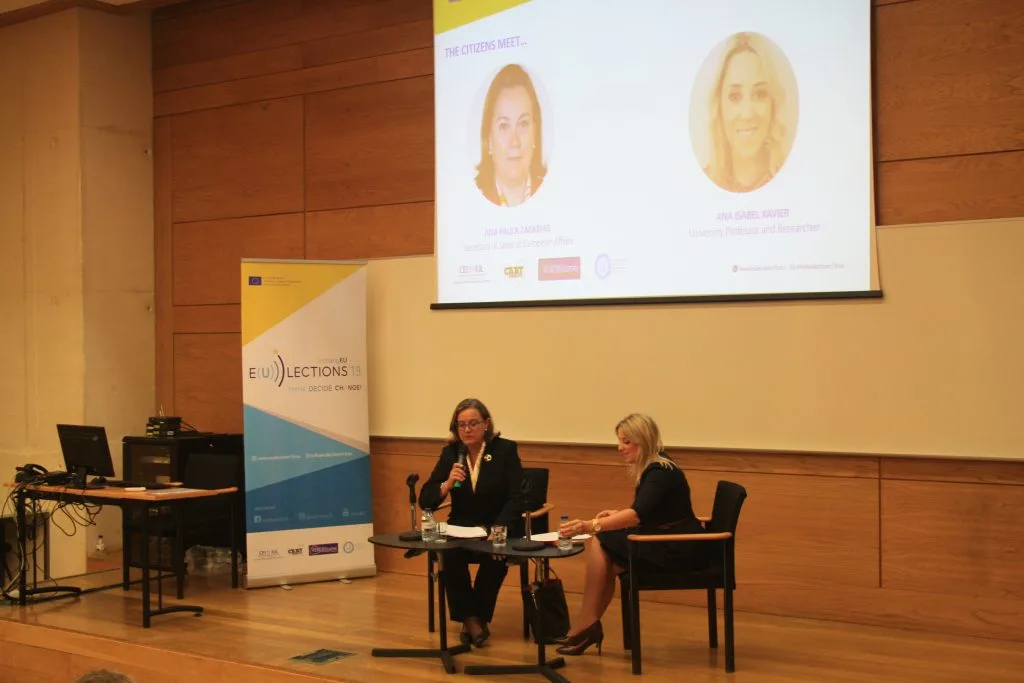
Following the debate with academics and the media, we welcomed the Portuguese Secretary of State of European Affairs, Ana Paula Zacarias. In this activity, entitled “The citizens meet… Ana Paula Zacarias”, participants had the opportunity to learn more about the work done within this State Secretariat and to present questions about the European neighbourhood policy and the future of the European Union. This conversation was hosted by the project coordinator, Ana Isabel Xavier.
This activity aimed to promote a closer interaction between young citizens and government representatives in charge of European affairs and contribute to a better understanding of how European institutions work, the EU current challenges and ways forward.
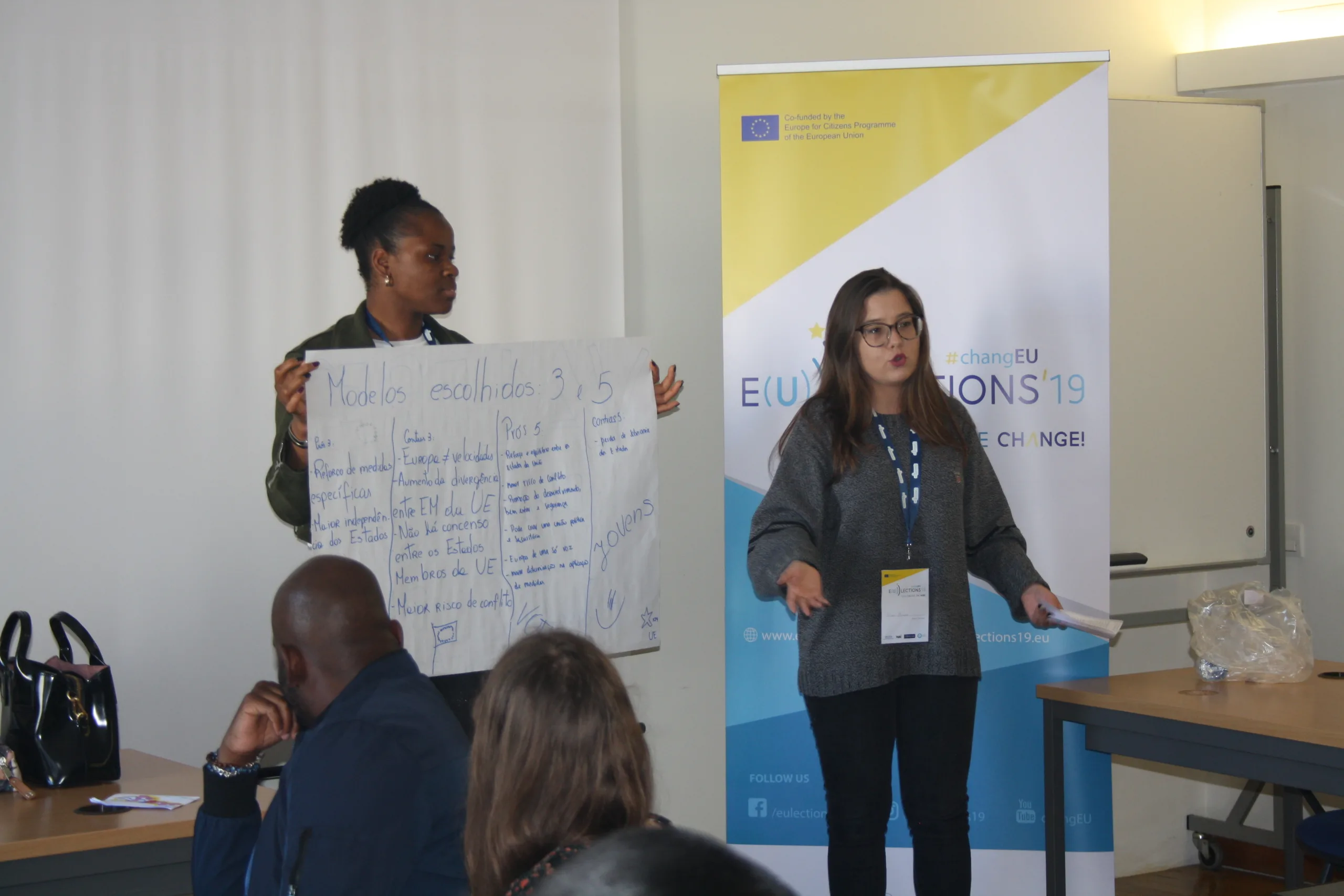
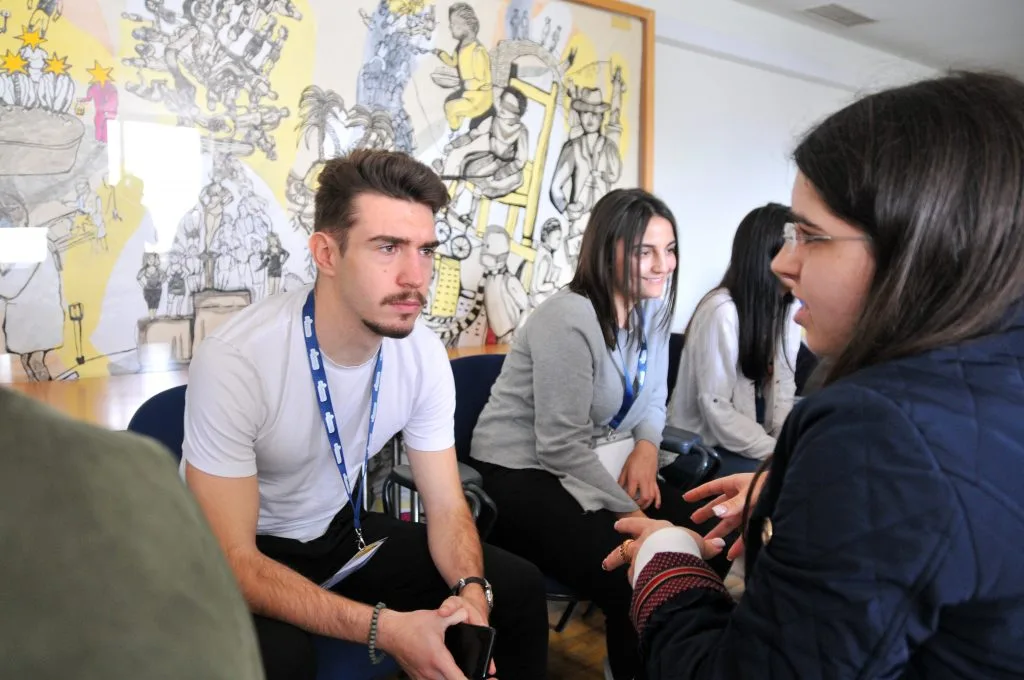
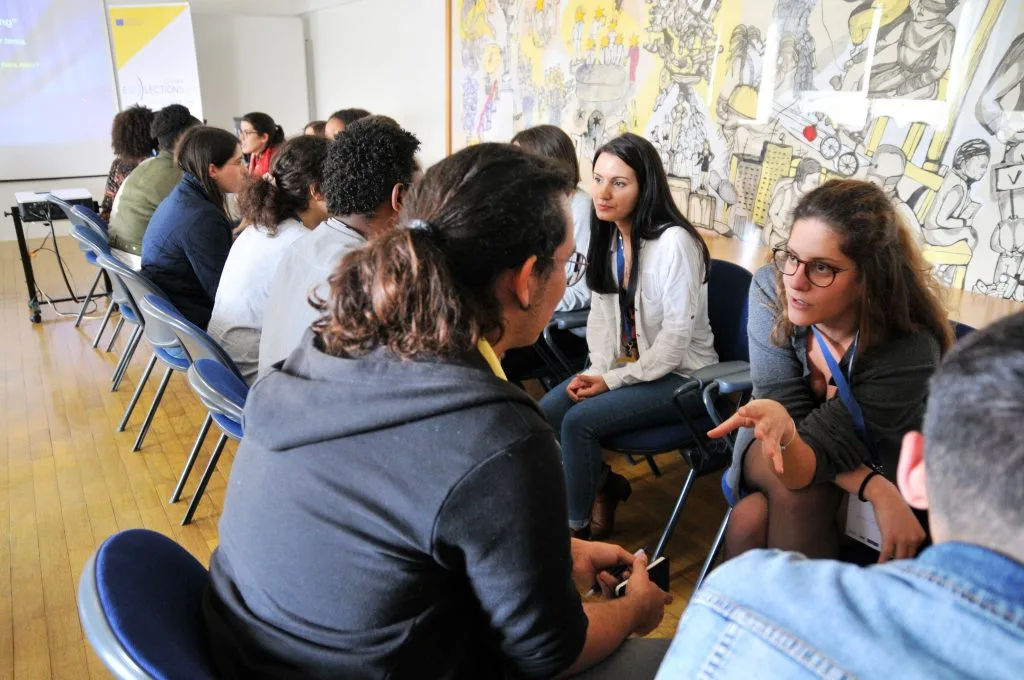
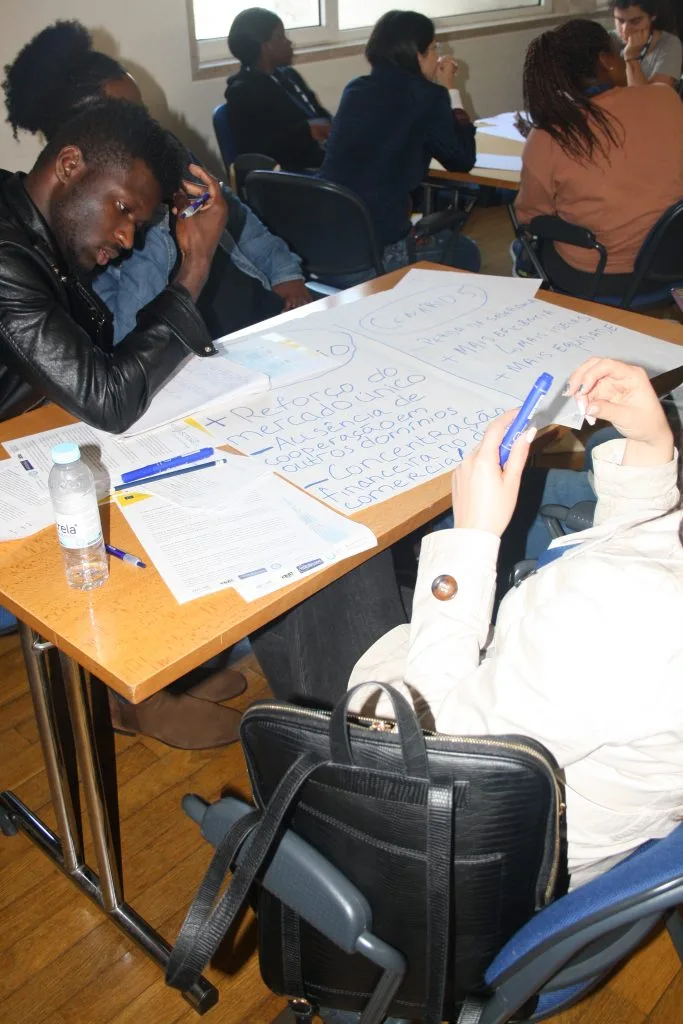
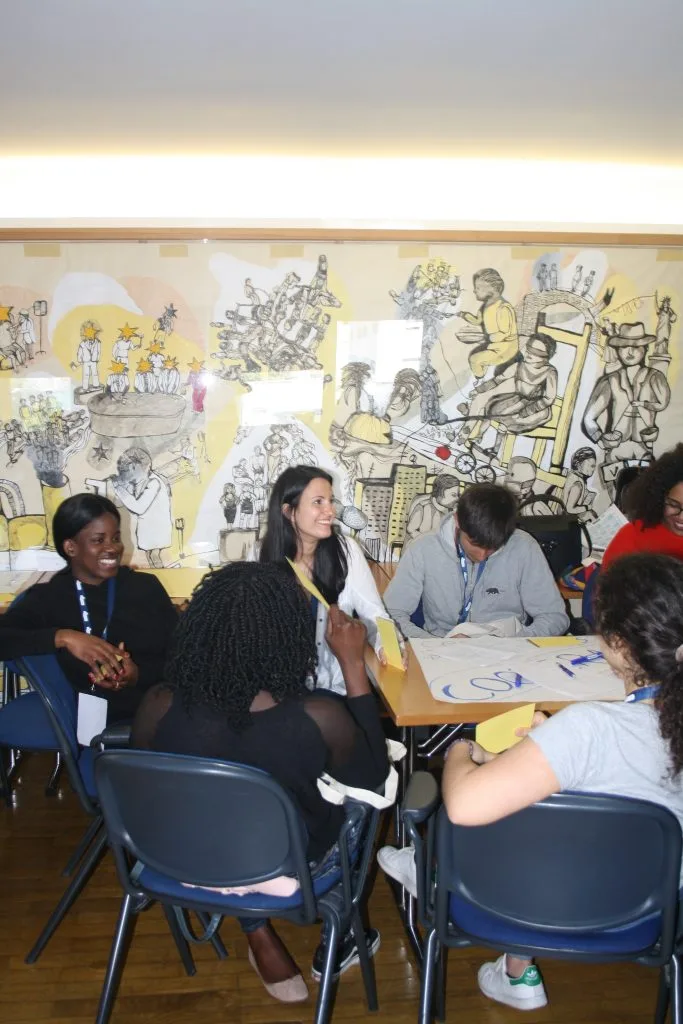
The last part of the event was the training session “May the vote be with EU: workshop on future scenarios”. It started with a “EU dating” in which participants had to share with each other their answers to questions like “What does it mean to be an European Union citizen” and “Why will I vote for the future European Parliament elections?”.
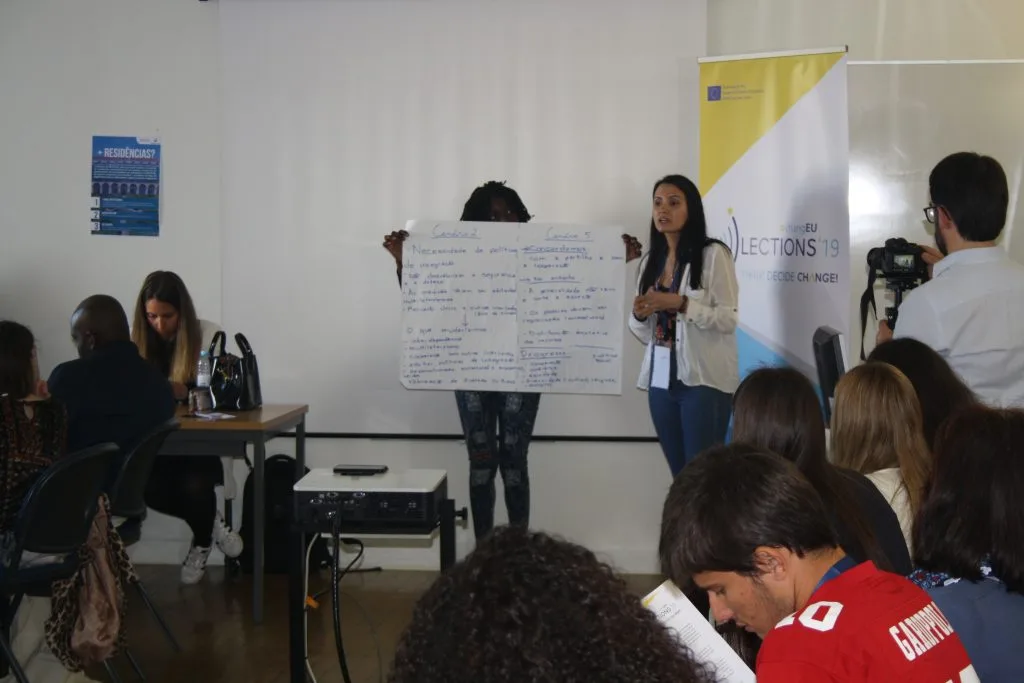
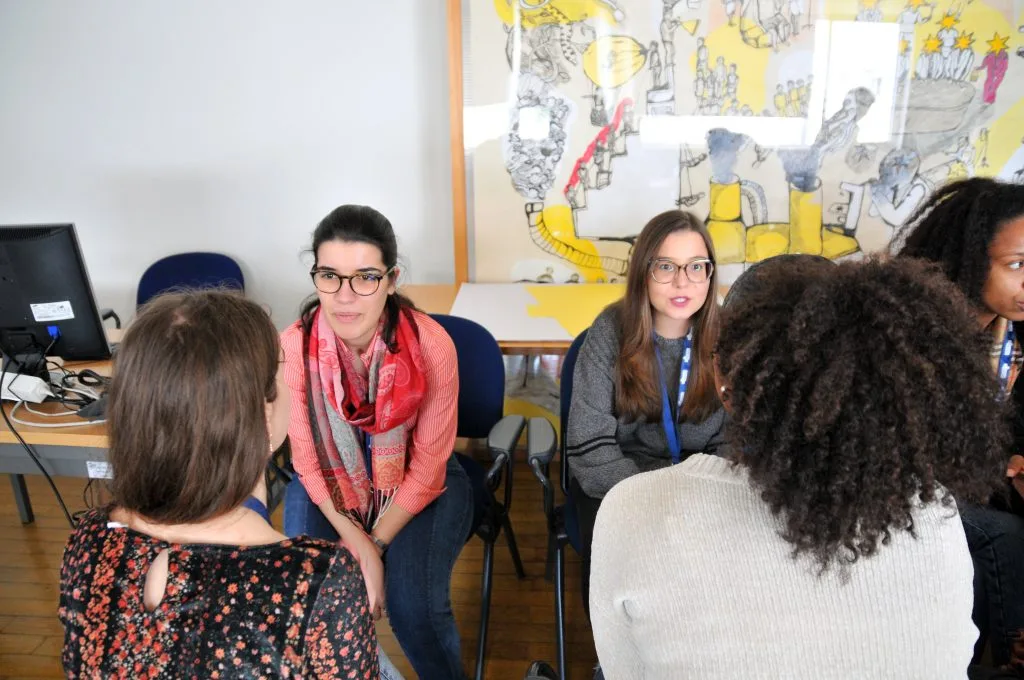
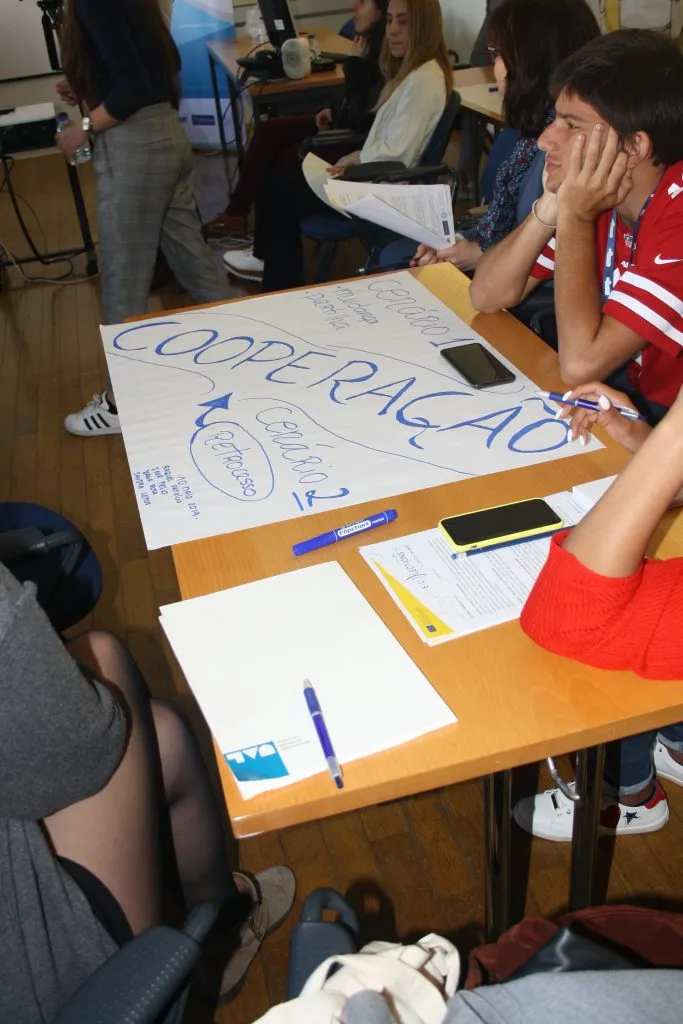
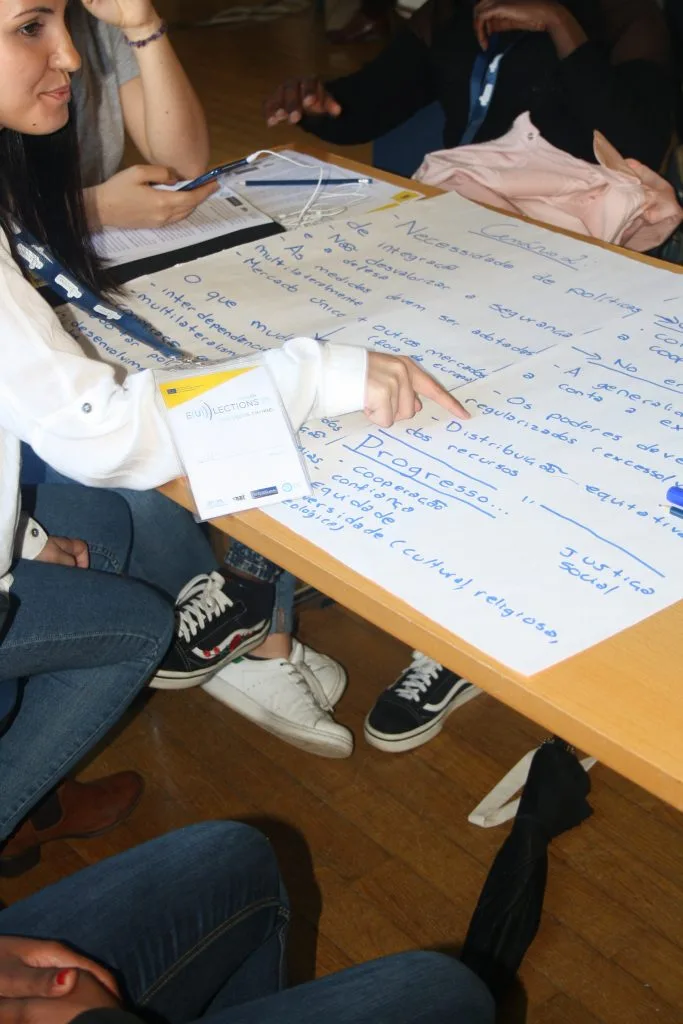
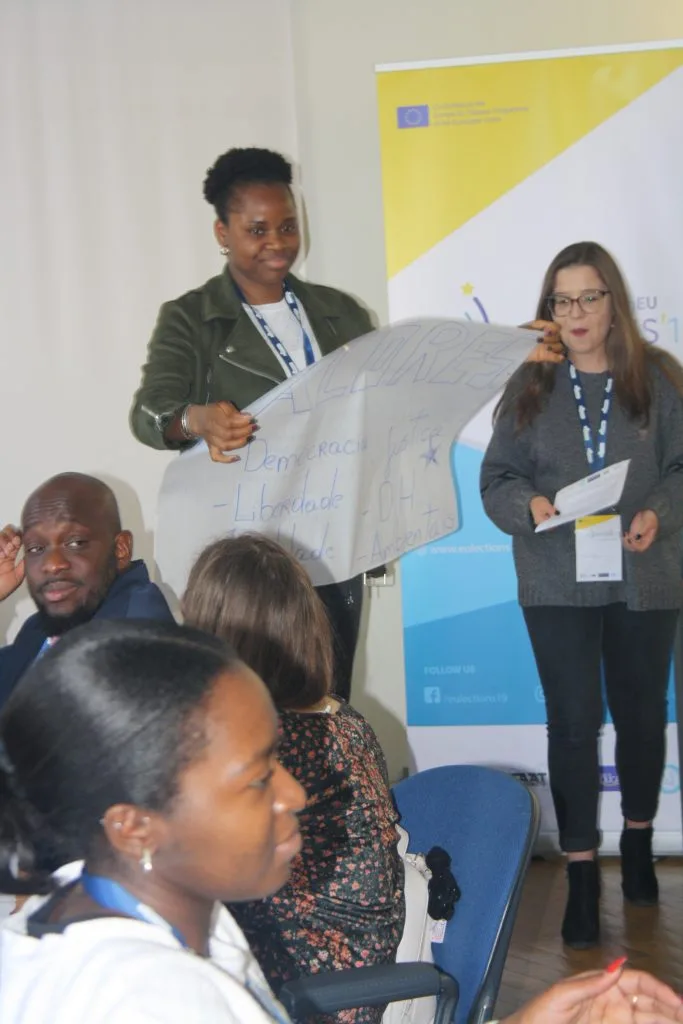
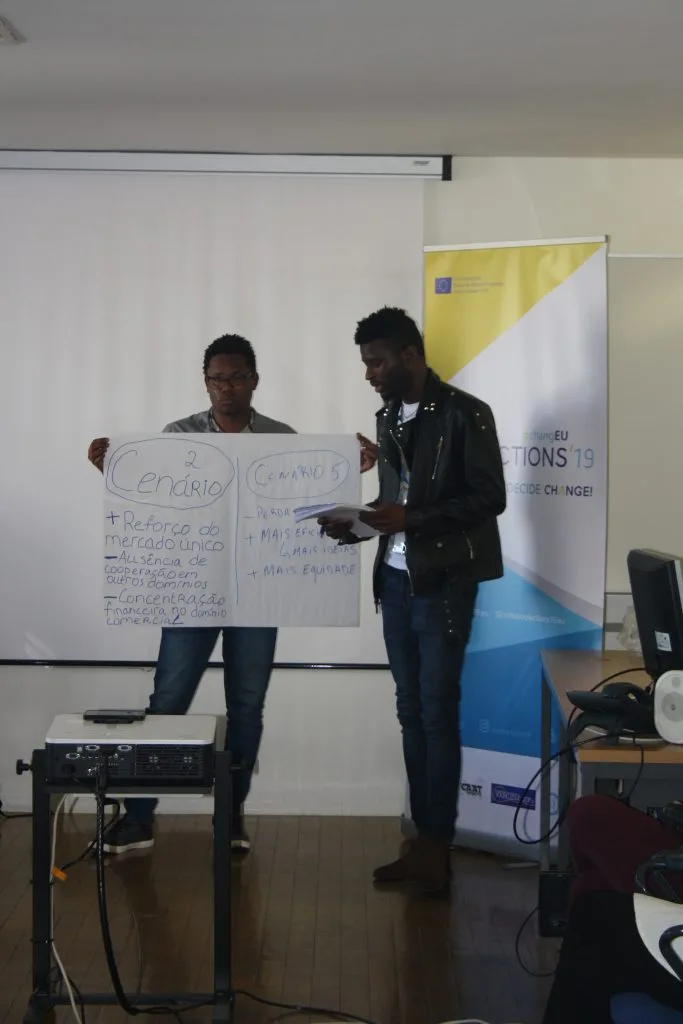
Afterwards, divided in small groups, each group had to discuss the pros and cons of each scenario reflected in the “White Paper on the Future of Europe: Reflections and scenarios for the EU27 by 2025” of the European Commission and present it to the whole group. In the end of this activity, each group created what they considered to be an “ideal scenario” for the future of European Union, with their recommendations and opinions.
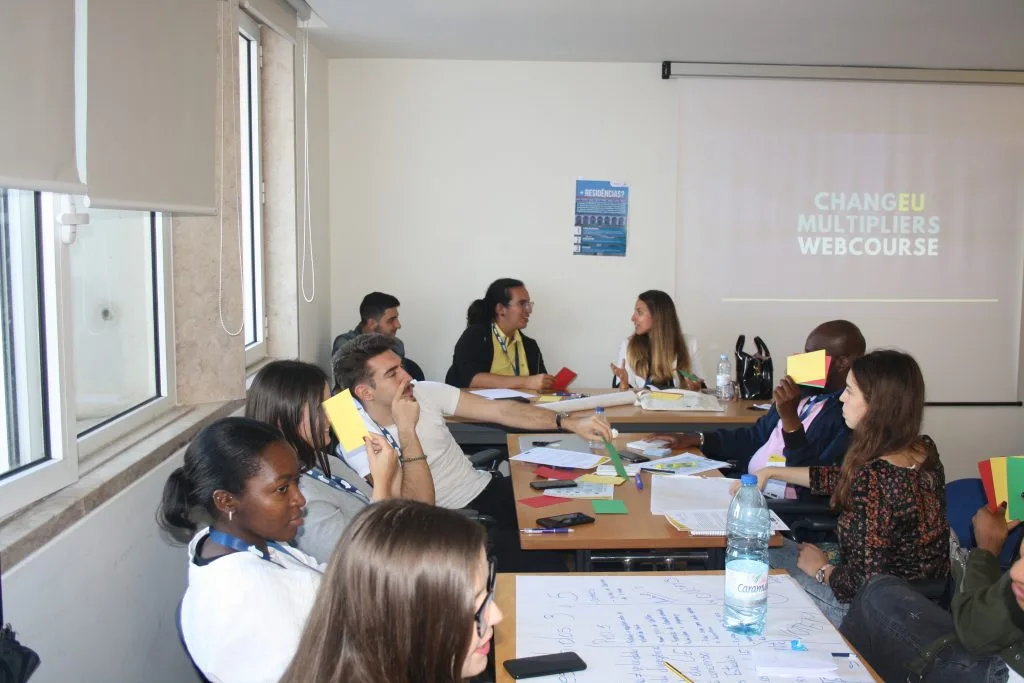
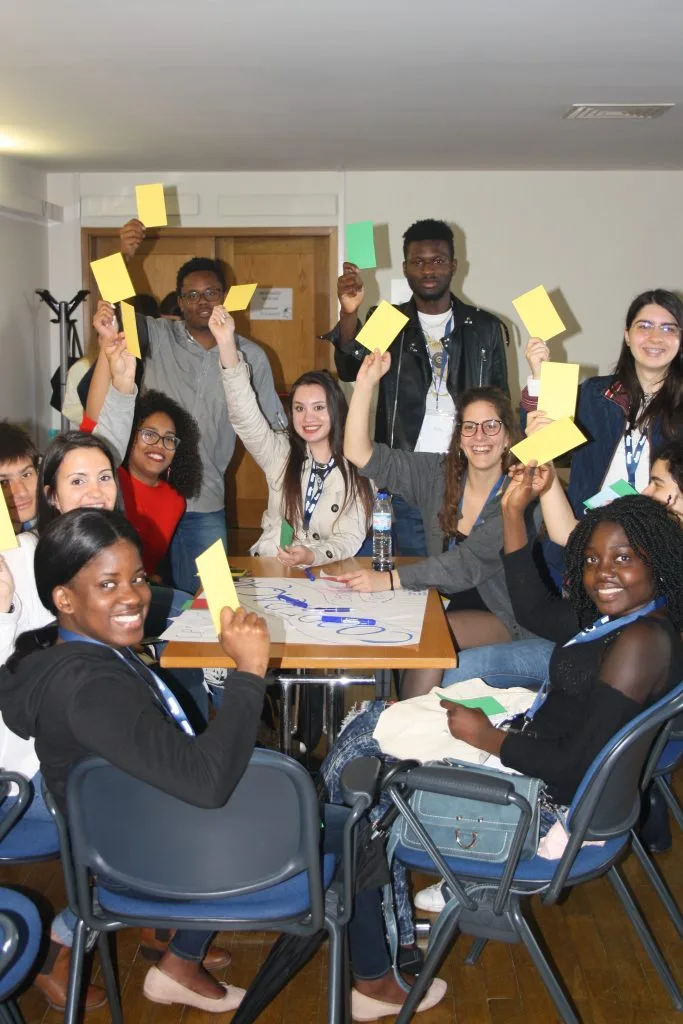
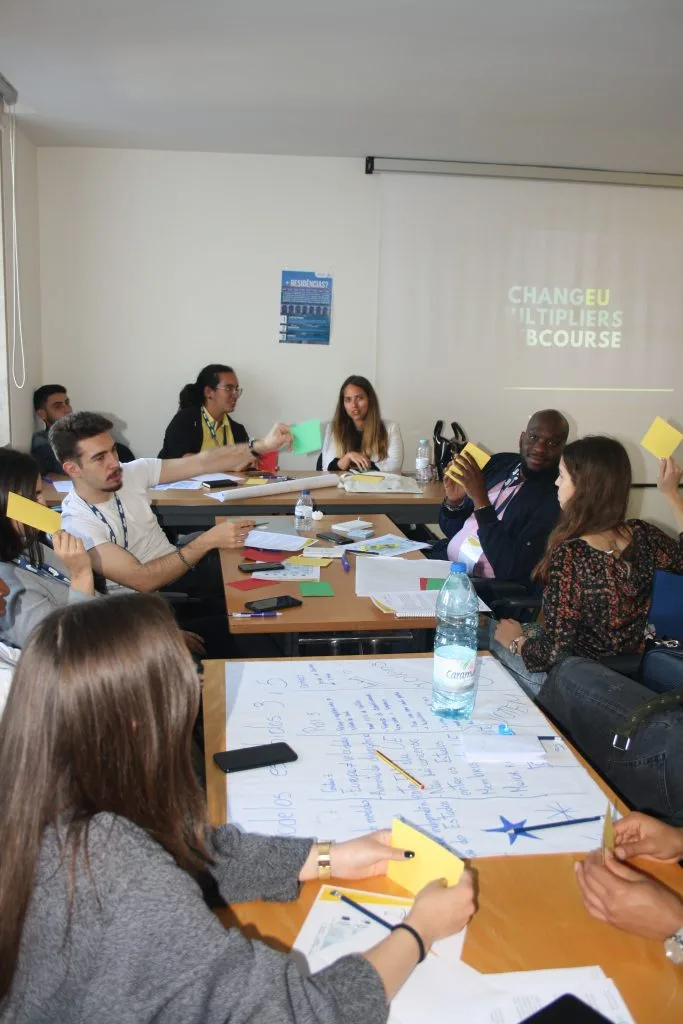
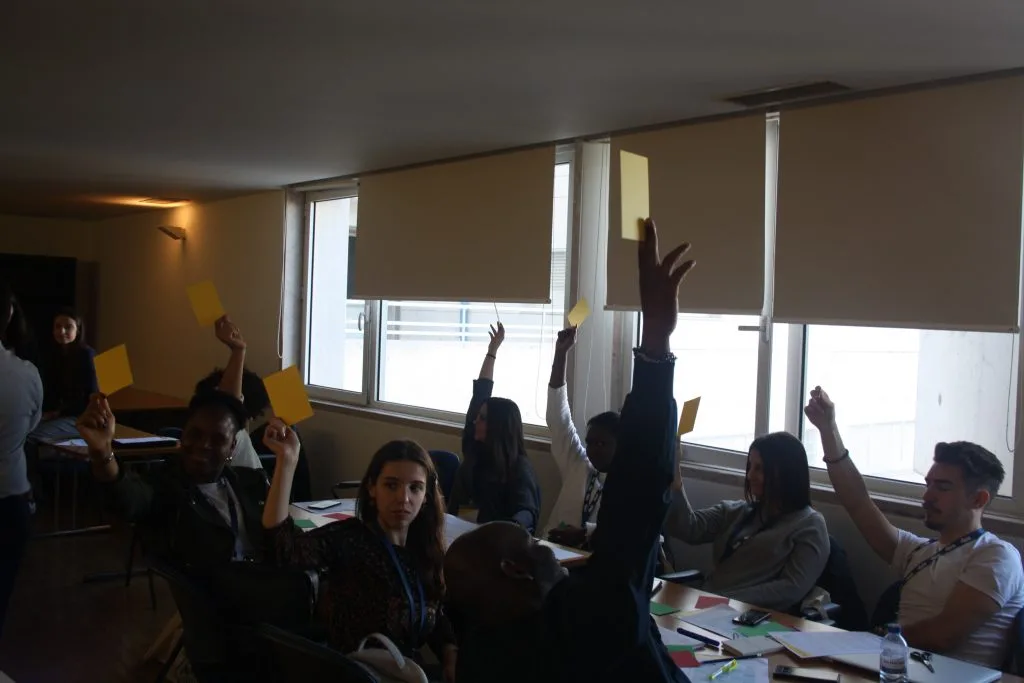
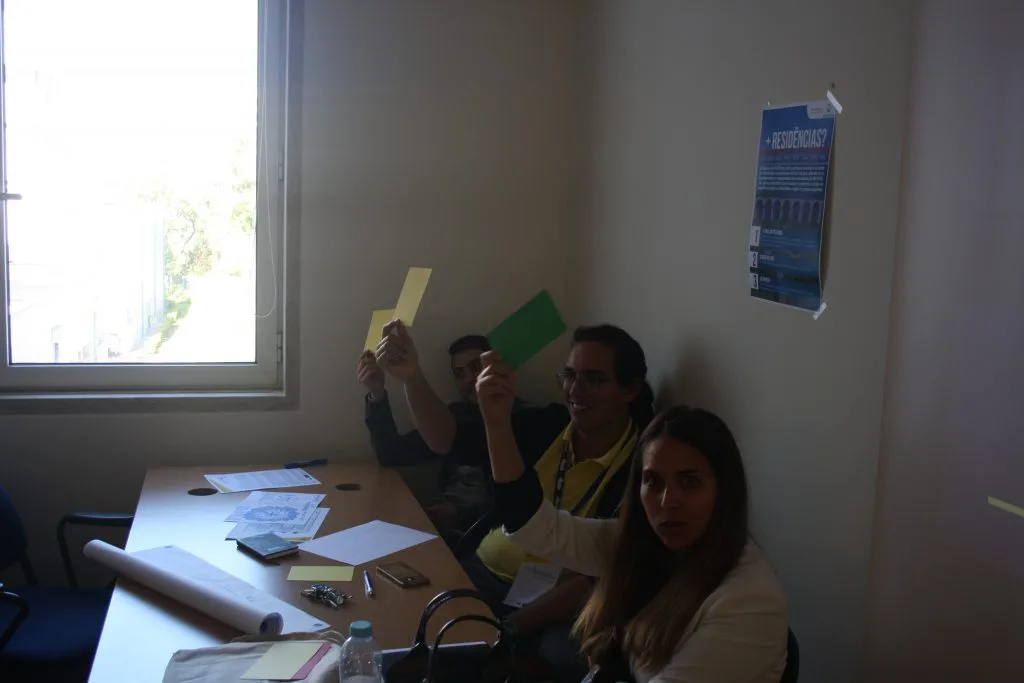
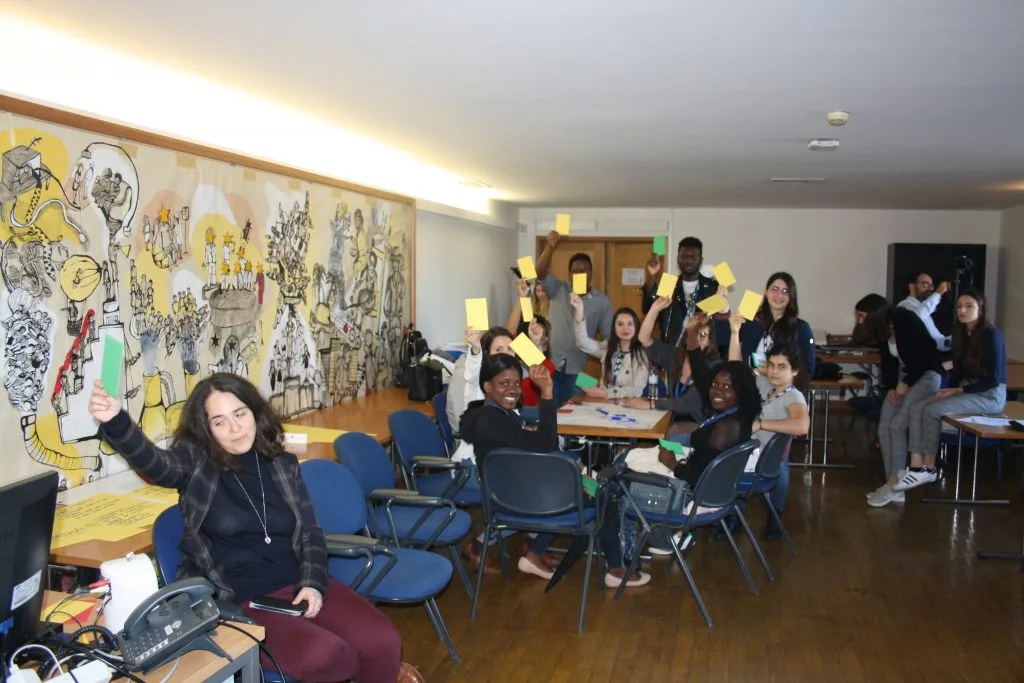
This event ended with the presentation of the web-course “ChangEU Multipliers” and with each participant showing a card to the actual European Commission, where Green meant that they feel European Commission aligns with their interests and opinions, Yellow meaning that they somehow feel connected with the European Commission work, but they feel some lack of representation and Red signalizing that they don´t feel represented at all by the work done by the European Commission.
During this event, some of the young participants also shared with us their expectations regarding European Union and the European Parliament.
Ana Isabel Xavier, CEI-Iscte’s researcher and EULECTIONS’19 coordinator was interviewed for the last number of ENTRECAMPOS, Iscte’s magazine. The talk was focused on youth participation in European affairs, including in the electoral processes, ways to promote a citizens’ engagement with the EU and how the project has been promoting a dialogue with youth from various countries about the future of the European project.
Looking at the feedback the project has had from the participants, Ana Isabel Xavier highlighted young people’s ambitious visions for the future of the EU. When questioned about the 5 scenarios put forward by the Juncker Commission, they tend to choose those where the Union has a greater role and emphasize the need for more solidarity and action in areas like the environment and jobs. But they also recognize EU difficulties and challenges in responding to important events like the financial crisis and to the COVID19 pandemic.
Recognizing the importance of improving participation and communication channels between the EU and European citizens, Xavier believes that progress has been made but also considers that the links between citizens’ perspectives and policy making must be enhanced.
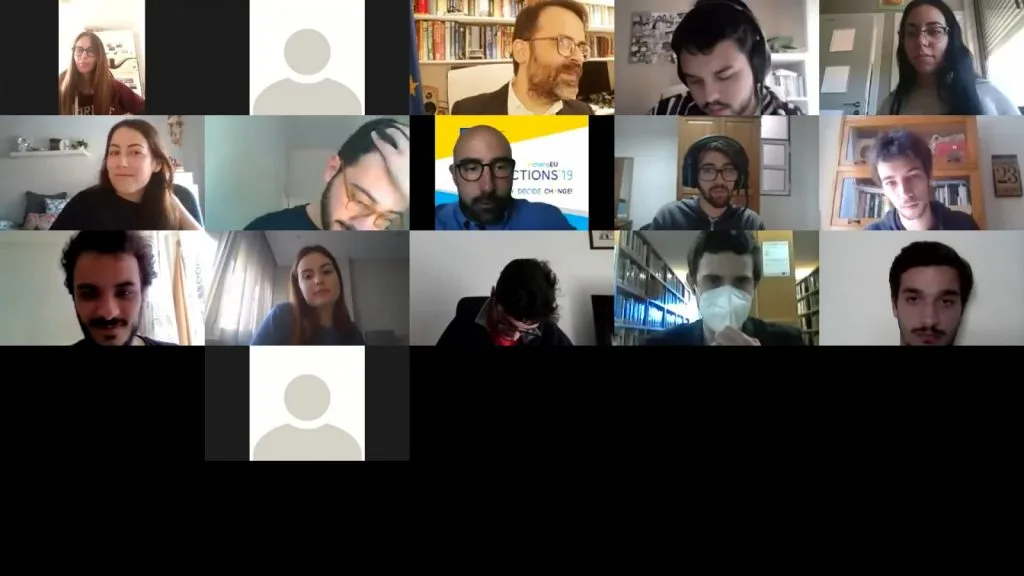
On May, 4, 2021, the EULECTIONS’19 roadshow returned to Iscte, to promote an online workshop with Political Science students. The event involved 29 citizens, including 28 participants from the city of Lisbon, Portugal, 1 participant from the city of Madrid, Spain
The workshop started with a project presentation by the coordinator and the partners, followed by an introductory activity in which students where invited to share the first word they associate with the EU.
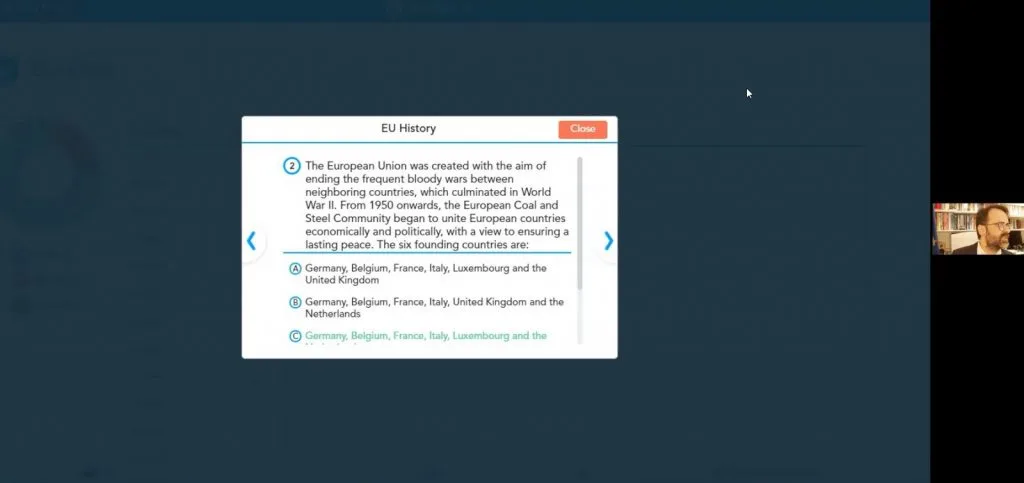
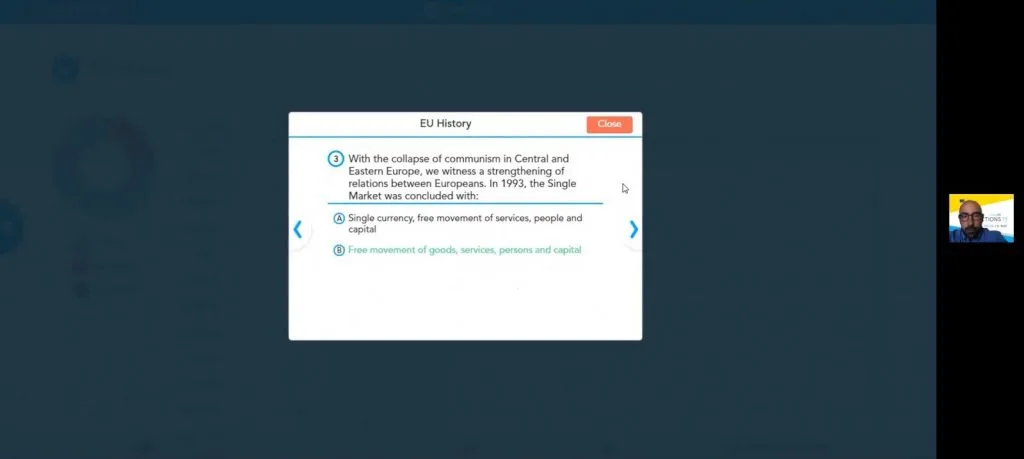
After the introduction, we’ve invited students to watch a short movie about the history of the EU and test their knowledge about the building of European community through a quiz. The first activities of the workshop aimed to set the floor to the discussion about the present and future of the European Union.
Following the quiz about Europe’s past and a brief commentary by the facilitators, we’ve presented a short video and additional background information about the White Paper on the Future of Europe and – Five scenarios. This was the starting point for the next activity, a group reflection about the pros and cons of the various scenarios. Participants were then divided in small groups to chose one of the five scenarios and reflect about it.
Each group’s main conclusions were presented and debated. For some of the participants, it’s important to set more ambitious goals for the future of the EU by developing the political union and improving its representativeness, although recognizing the risks of alienating those groups of citizens who oppose increasing the EU’s political role. For others, the more ambitious scenarios for the future of the EU are also difficult to achieve or even unrealistic in the short term, due to the very diverse socioeconomic conditions in the member states.
Another group of students considers important to improve and consolidate the current European model and its institutions and only then, advance to more ambitious goals. This strategy would contribute to improve EU’s relations with European citizens and reduce Eurocepticism although key important challenges remain, namely the international role of the EU and its ability to respond to international events and the development of common tax policies. The debate was wrapped up with the individual vote on the preferred scenario for the future of the EU.
We then proceeded with the next activity in which we invited participants to present their suggestions regarding priority areas to be addressed by the EU to respond to its citizens’ needs and ways to improve the relationship between the European institutions and European citizens.
Regarding the priority areas for EU’s intervention, participants mentioned climate change and sustainability, the socioeconomic inequalities between countries and the refugees crisis. In order to improve its relationship with European citizens, EU institutions should be more transparent, promote participatory decision making, take into account each countries’ specificities and reduce bureaucracy. Citizens should also be more involved in European issues.
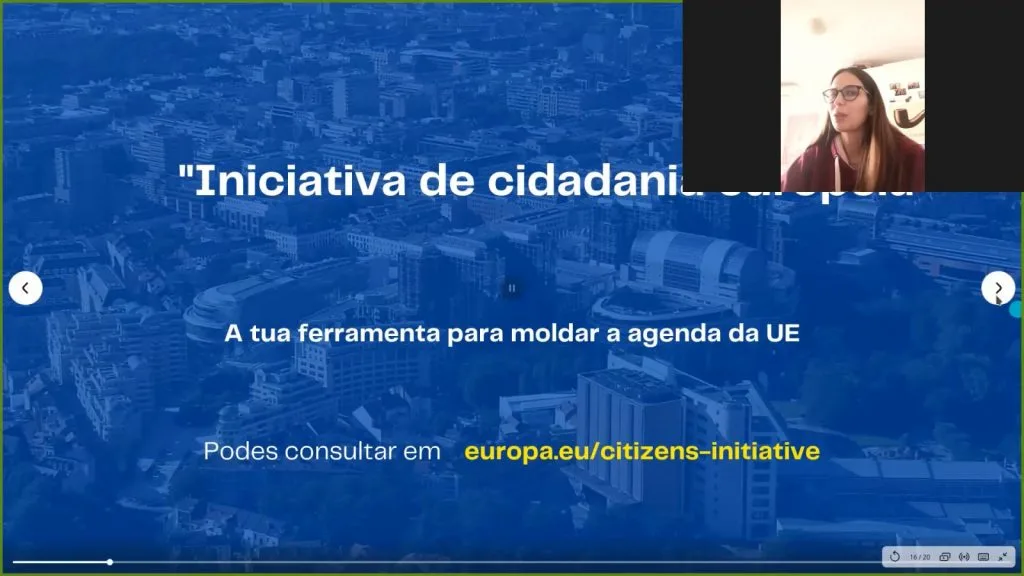
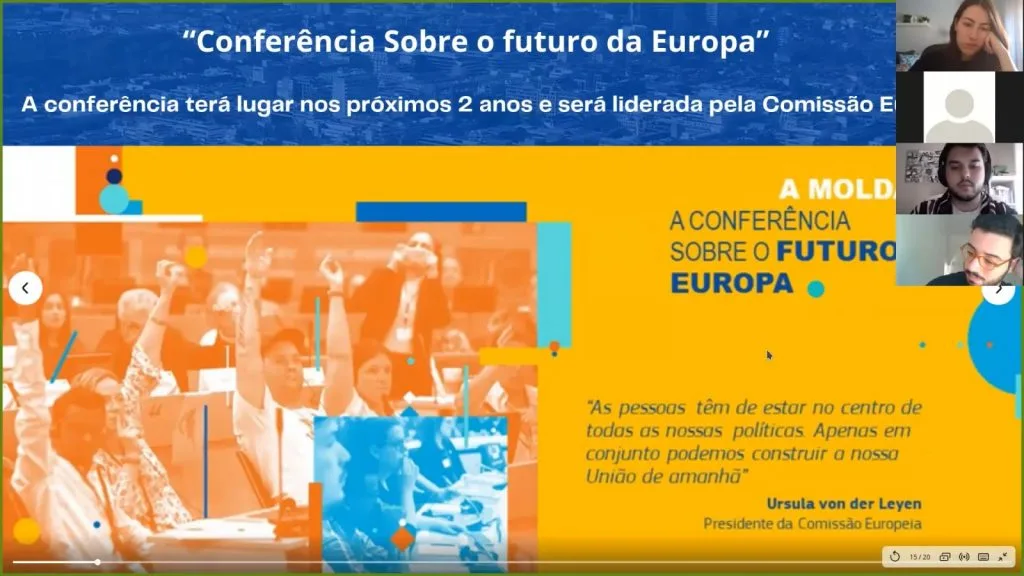
Following the collection of the students’ perspectives suggestions about European citizenship, we’ve shared two important initiatives regarding the future of Europe and citizens’ participation, the Conference on the Future of Europe and the European Citizens’ Initiative.
Finally, we’ve invited participants to continue to learn and share information about Europe through the online resource created by EULECTIONS’19, the ChangEU Webcourse.