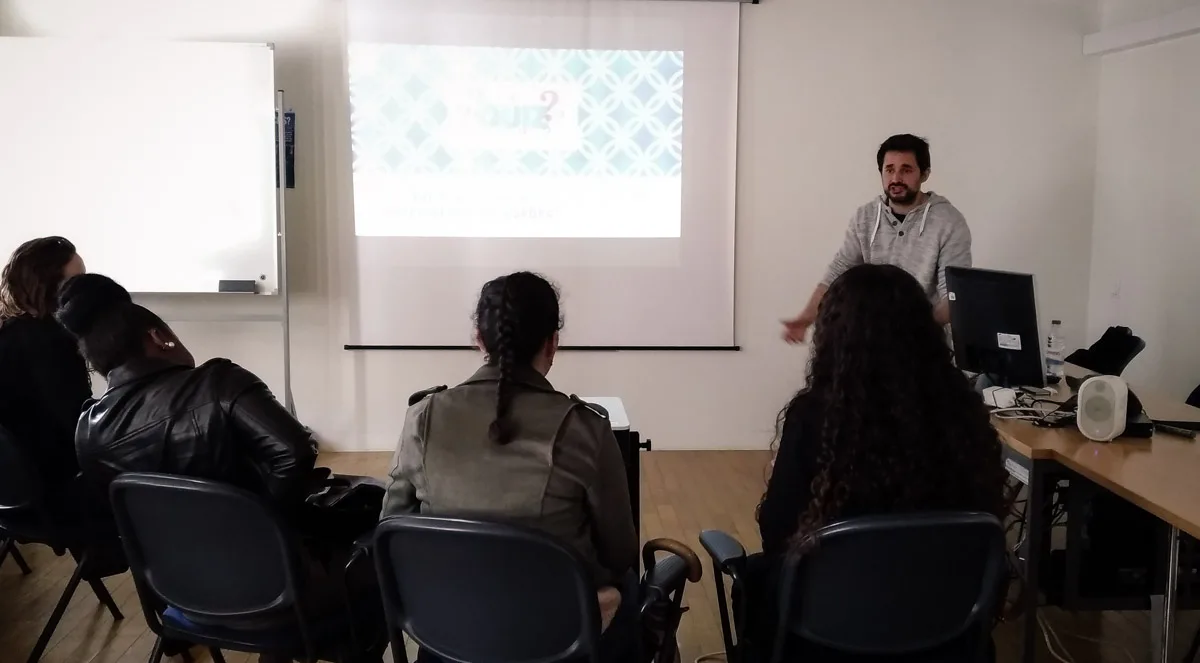
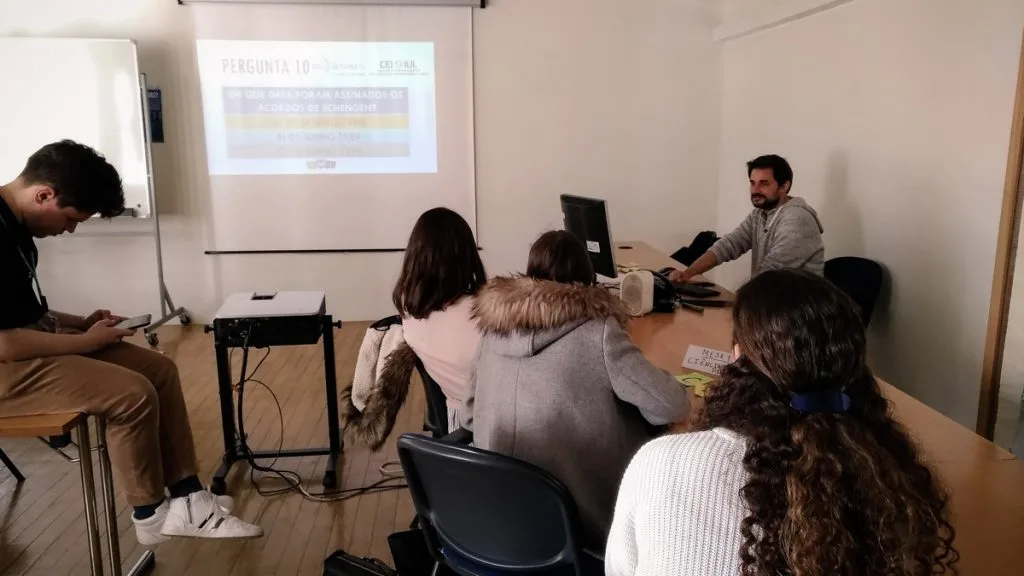
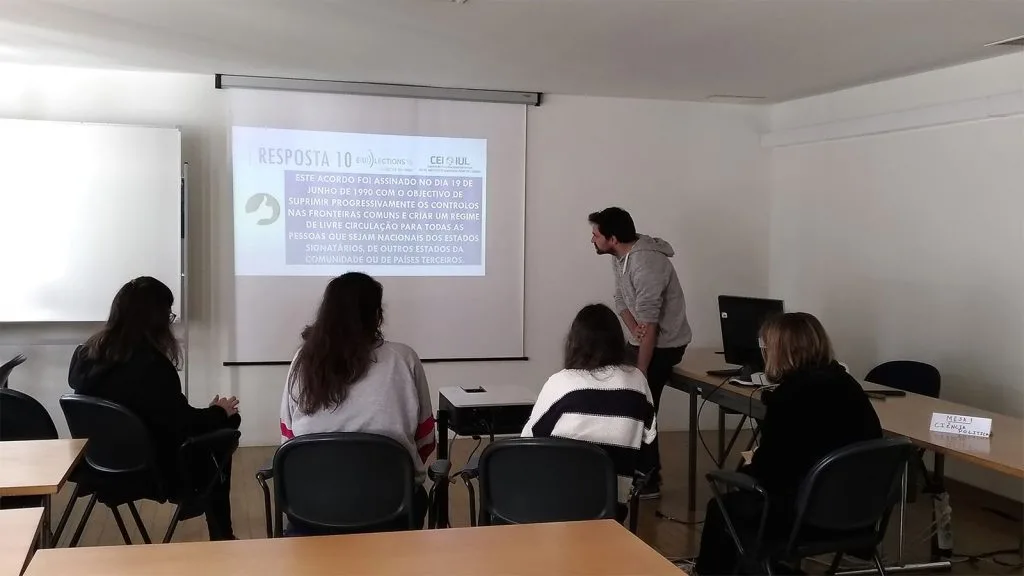
On April, 9, 2019, an initiative for high school students took place at ISCTE-IUL. The Academy ISCTE-IUL opens the doors of the University to the students and gives them the opportunity to live and experience the university and the job market.
This was a great opportunity to present the EULECTIONS’19 project, through a quiz with questions about the European Union and a debate, to students who will vote for the first time in the forthcoming elections for the European Parliament.
E(u)lections´19: Think, Decide, Change! was represented by its project manager, and was also a great opportunity to collect inputs from young people in the preparation of the project’s activities.
Ana Isabel Xavier, CEI-Iscte’s researcher and EULECTIONS’19 coordinator, participated in the ‘Webinar Parlameter 2020: What Europeans think about Europe?’. An event organized by the European Parliament’s office in Portugal, where the data from Parlameter (2020) – an annual Eurobarometer survey that monitors the public opinion on the European Parliament and the EU – were presented and discussed.
Due to the current context, Ana Isabel Xavier highlighted the importance of 2020 edition of Parlameter. It was with some anticipation that this assessment of European citizens regarding the public image and the role of the European Parliament was expected. As well as their feelings towards European identity and citizenship and the hierarchization of policies and values within the European project. In Xavier’s words, the changes that took place since January 2020, namely the generalized focus on national and European responses to Covid-19, the Brexit process already underway, and the new US administration, have demonstrated the importance of the European project in times of instability and uncertainty.
The rest of the intervention was divided into five major points, where different indicators were introduced by the researcher. Among others, Xavier developed some considerations on data that demonstrate a high expectation of European citizens towards EU’s social and economic response to the pandemic; but also spoke about the improvement of respondents’ attitude towards EU’s institutional dimension, with an increase of ten percentage points compared to the 2019 edition.
Watch the full intervention here (in Portuguese, from minute 17).
The initiative on the Conference on the Future of Europe was approved by the Council of the European Union (EU), now under the Portuguese Presidency.
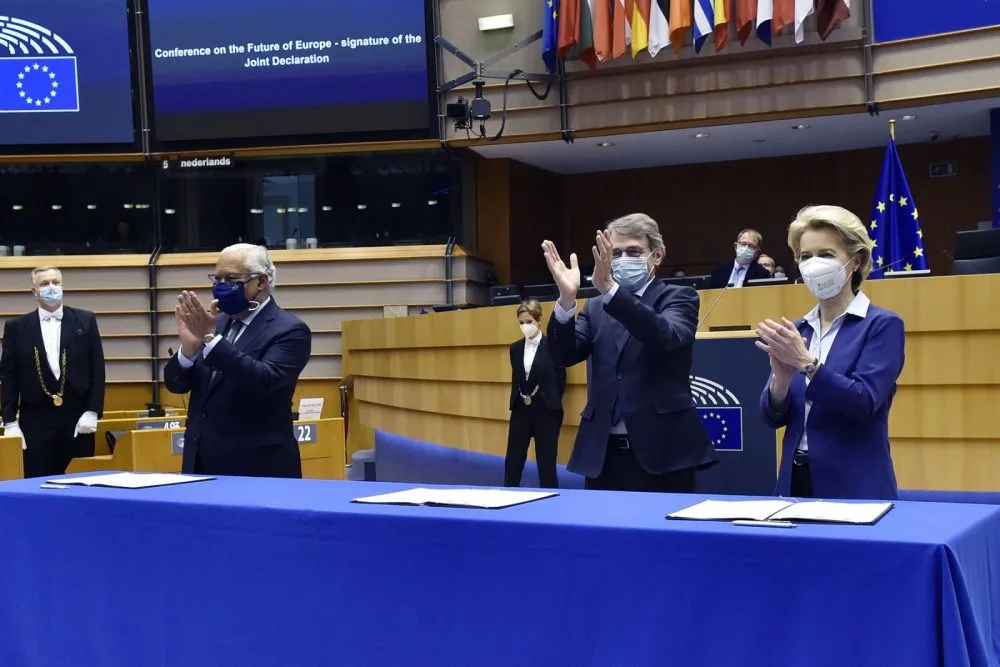
First announced in the end of 2019, this joint declaration of the Council, the European Parliament and the Commission aims to involve citizens in the debate on Europe’s future in the coming decade and beyond, including in the light of the COVID-19 pandemic. In order to give citizens a stronger voice, a series of events will be organised by the three institutions, where citizens will have the opportunity to express their views on different issues and areas.
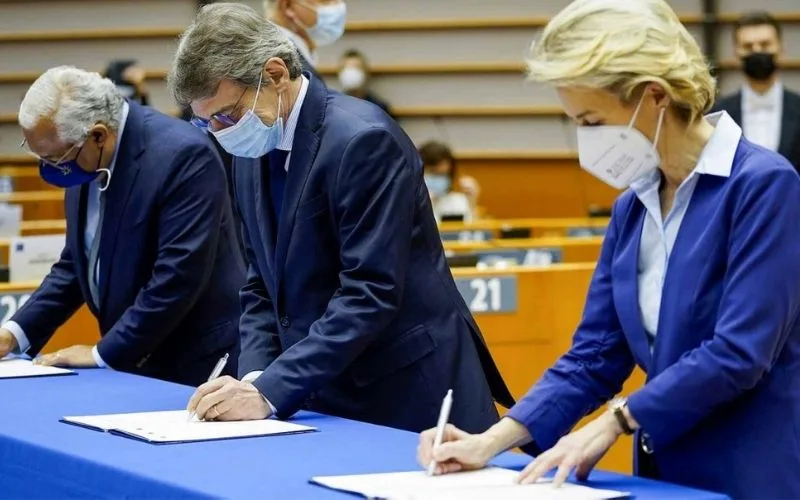
On 10 March, took place the signature of the joint declaration by the Presidents of the European Parliament (David Sassoli), the Council (António Costa) and the European Commission (Ursula Von der Leyen).
The next European elections, scheduled for 2024, will be the tenth time that European Union (EU) citizens will be able to cast their votes to choose the Members of the European Parliament (MEPs).
The elections for the EP take place every five years and are the largest transnational elections in the world, with over 400 million voters spread across the current 27 member states.
But how did they start?
The road to the first direct European election in 1979 was a long one. Since 1952, with the foundation of the predecessor to the current EP, the Parliamentary Assembly of the European Coal and Steel Community (ECSC), and with its political authority to represent citizens “within the newly developing supranational political system of European integration, it seemed self-evident that it should be directly elected”. Direct elections were foreseen as an option both in the Treaty of Paris (1951), which created the ECSC, and in the Treaty of Rome (1957), which founded the European Economic Community (EEC). Nevertheless, until the introduction of direct elections, the Members of the European Parliament, renamed in 1962, “were appointed by each of the Member States’ national parliaments”, at a time when Members had a dual mandate.
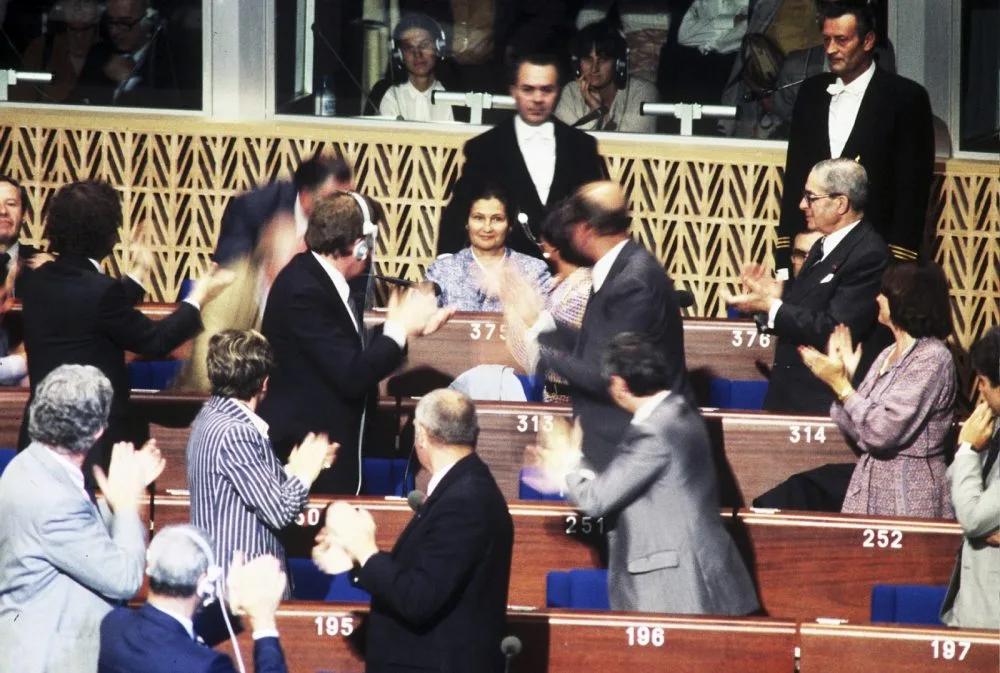
In September 1976, 16 years after the first proposal for European elections, the Council of Ministers issued an Electoral Act “concerning the election of the Members of the European Parliament by direct universal suffrage” (Salm, 2019). Despite the initial plan that elections would take place in 1978, the act had to be rectified by all Member States, and it was not until June 1979 that the first elections took place (Box, 2021). For the first time, the then 180 million European citizens, had the opportunity to vote on their representatives. Former German Chancellor, Willy Brandt, the leader of the Italian Communist Party, Enrico Berlinguer, and the former French Minister of Health, Simone Veil, were some of the high-ranking politicians that stood for election (Salm, 2019).
With a turnout around 63%, in a universe of 410 parliamentary seats, divided among nine Member States, the election led to the formation of seven political groups. In the beginning of the 1979-1984 legislative period, Socialist Group had the most seats (112 seats, 27,32%), closely followed by the Group of the European People’s Party (108 seats, 26,34%). Simone Veil, a Jewish survivor of the Nazi concentration camps, become “the first President of the first directly elected European Parliament”, constituting as a “symbolic stand against the nationalism that was one of the causes of the First and Second World Wars” (Salm, 2019).
References
Salm, C. (2019). European elections: A historical perspective. European Parliamentary Research Service
Box, U. (2021). The European Parliament: Historical Background. Fact Sheets on the European Union
After the signature of the joint declaration on 10 March, the work on the Conference on the Future of Europe has officially started. The Executive Board of the Conference on the Future of Europe, composed of representatives from the three institutions (European Parliament, Council and Commission), held its constitutive meeting on 24 March in Brussels.
As the Commission’s statement reads: “In this first meeting, the Executive Board agreed on a series of essential items needed to get the Conference started. They took the first steps to ensure that citizens can soon start to contribute to the Conference without delay, in particular on the multilingual Digital Platform, including the Charter for citizen’s participation and the visual identity.”.
As for next steps, the Executive Board will convene again on 7 April in the European Parliament and the Digital Platform will be launched on 19 April.